Morphology of Flowering Plants
- 1. Roots: what holds a plant in the ground?
- 2. The stem: how is it different from a root?
- 3. The leaf: base, stalk and blade
- 4. How are leaves and flowers arranged?
- 5. What is a flower?
- 6. Sepals, petals and aestivation
- 7. Stamens, carpels and placentation
- 8. The fruit: what does an ovary become?
- 9. Inside a seed: gram and maize
- 10. How to read a floral formula
- 11. Three families: Solanaceae, Fabaceae, Liliaceae
- Review
3 of 11·NCERT §5.3 · §5.3.1 · §5.3.2·pp. 59–61·7 min
The leaf: base, stalk and blade
The big ideaA leaf is a flat green outgrowth at a node of the stem, built from a base, a stalk and a blade, and it is the plant's main kitchen for photosynthesis.
In simple words
A leaf is a thin green plate that sticks out from the side of a stem. It is joined to the stem at its foot, held up by a stalk and spread wide to catch sunlight. Lines run through it like pipes, carrying water in and food out. Some leaves are one whole piece. Others are cut into many small pieces that only look like separate leaves.
A leaf is a lateral (side) growth from the stem, usually flat. It always grows at a node, and there is a bud in its axil, the angle between the leaf and the stem. That axillary bud can later grow into a branch.
Leaves arise from the shoot apical meristem, the growing tip of the shoot, and they form from its outer layers (they are exogenous). They are laid down in acropetal order: the oldest leaves are lower down and the youngest are near the tip. Leaves are the most important vegetative (non-flowering) organs for photosynthesis.
Three parts of a leaf
- Leaf base: the foot that joins the leaf to the stem. It may carry two small leaf-like flaps on either side called stipules. In monocots the leaf base spreads into a sheath that wraps part or all of the stem; peel a sugarcane or maize plant and you will find these sheaths. In some plants of the pea family the leaf base is swollen into a pulvinus, as in the touch-me-not plant (Mimosa).
- Petiole: the leaf stalk. It holds the blade up to the light. A long, thin, bendy petiole lets the blade flutter in the wind, which cools the leaf and brings fresh air to its surface. That is why peepal leaves tremble in the slightest breeze.
- Lamina or leaf blade: the green, spread-out part with veins and smaller veinlets. Usually one strong vein runs down the middle: the midrib. Veins make the blade stiff and carry water, minerals and food. The shape, margin (edge), apex (tip), surface and depth of cuts in the lamina differ from plant to plant.
Find the three parts on a real leaf. A peepal leaf is the easiest: a long stalk, a heart-shaped blade and a long tail at the tip.
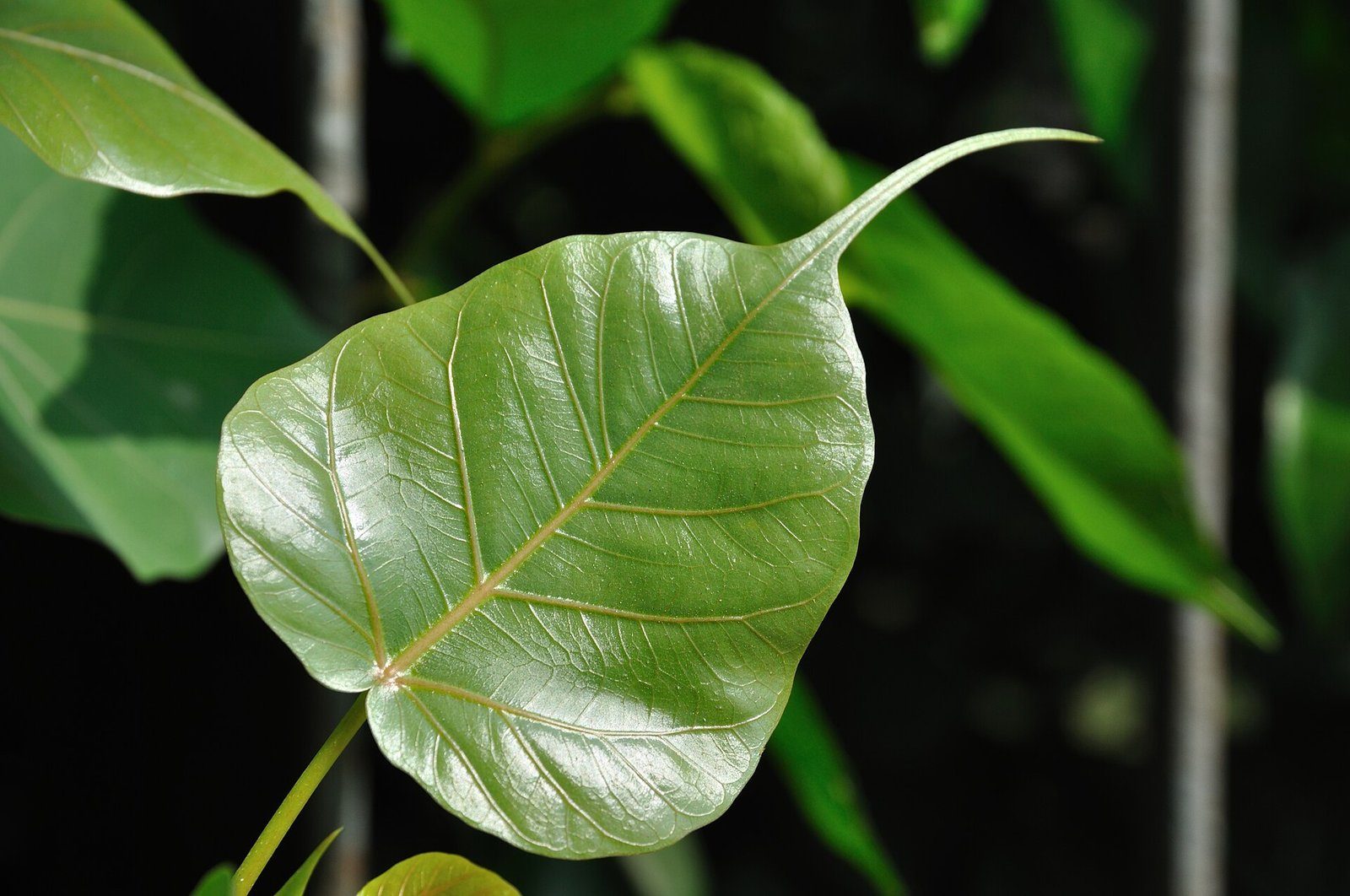 petiolelaminamidriblong tip
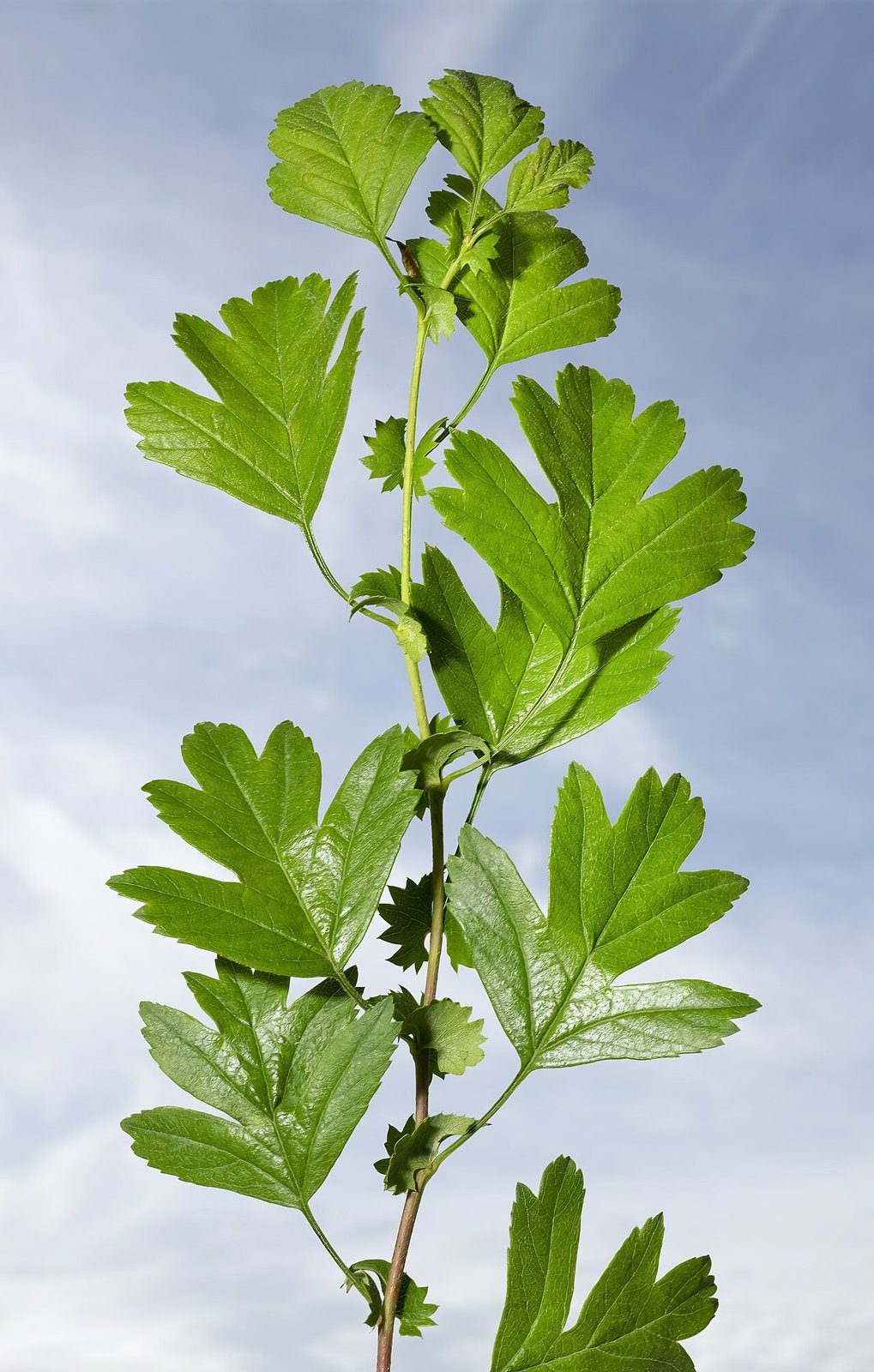 stipulestipulespetiolelamina
The leaf base is where the surprises are. In a pea, the stipules are bigger than some of the leaflets. In maize and banana the base wraps the stem like a sleeve. In the touch-me-not, the swollen base is a hinge with a motor in it.
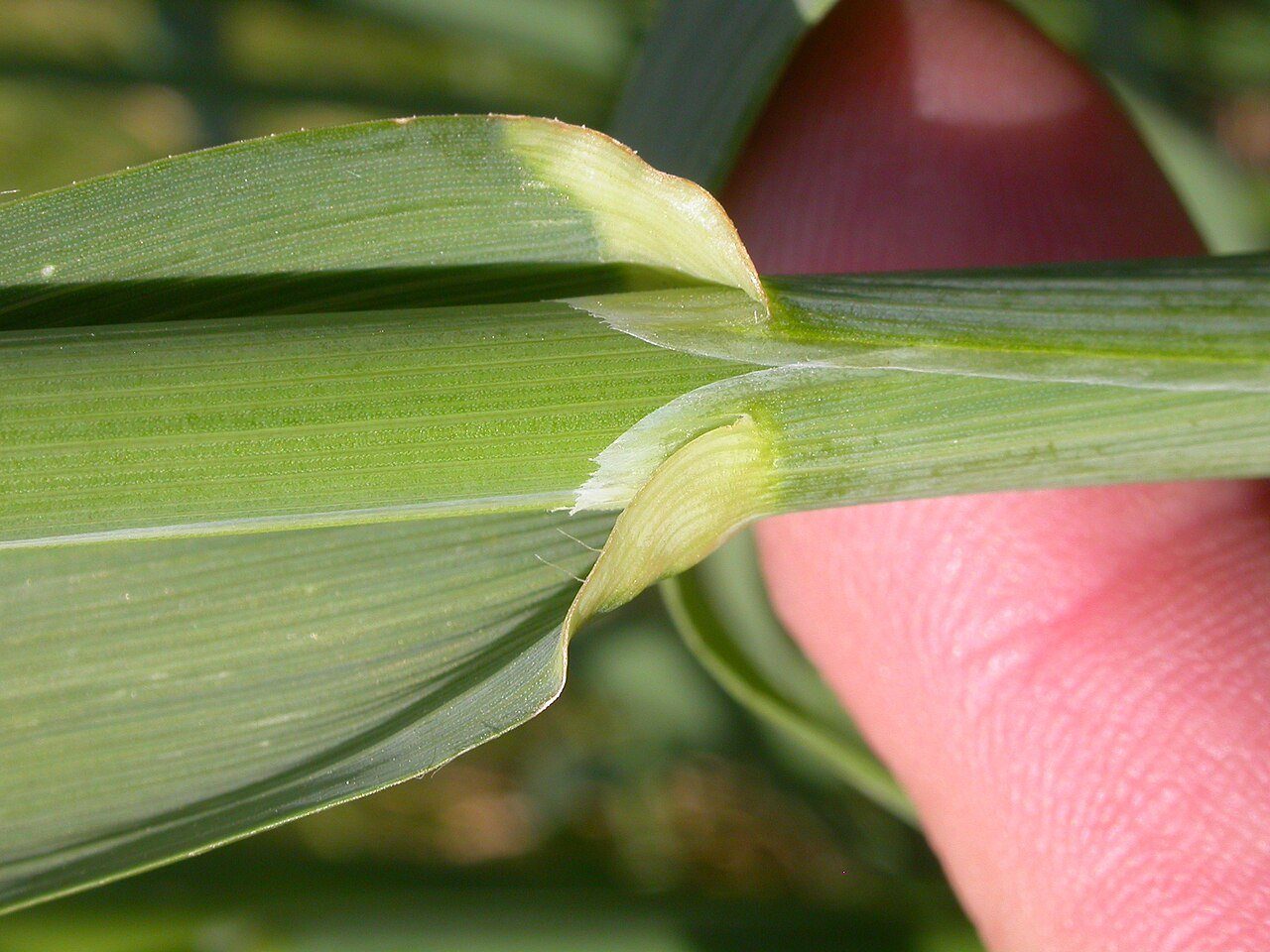 leaf bladesheath round the stem
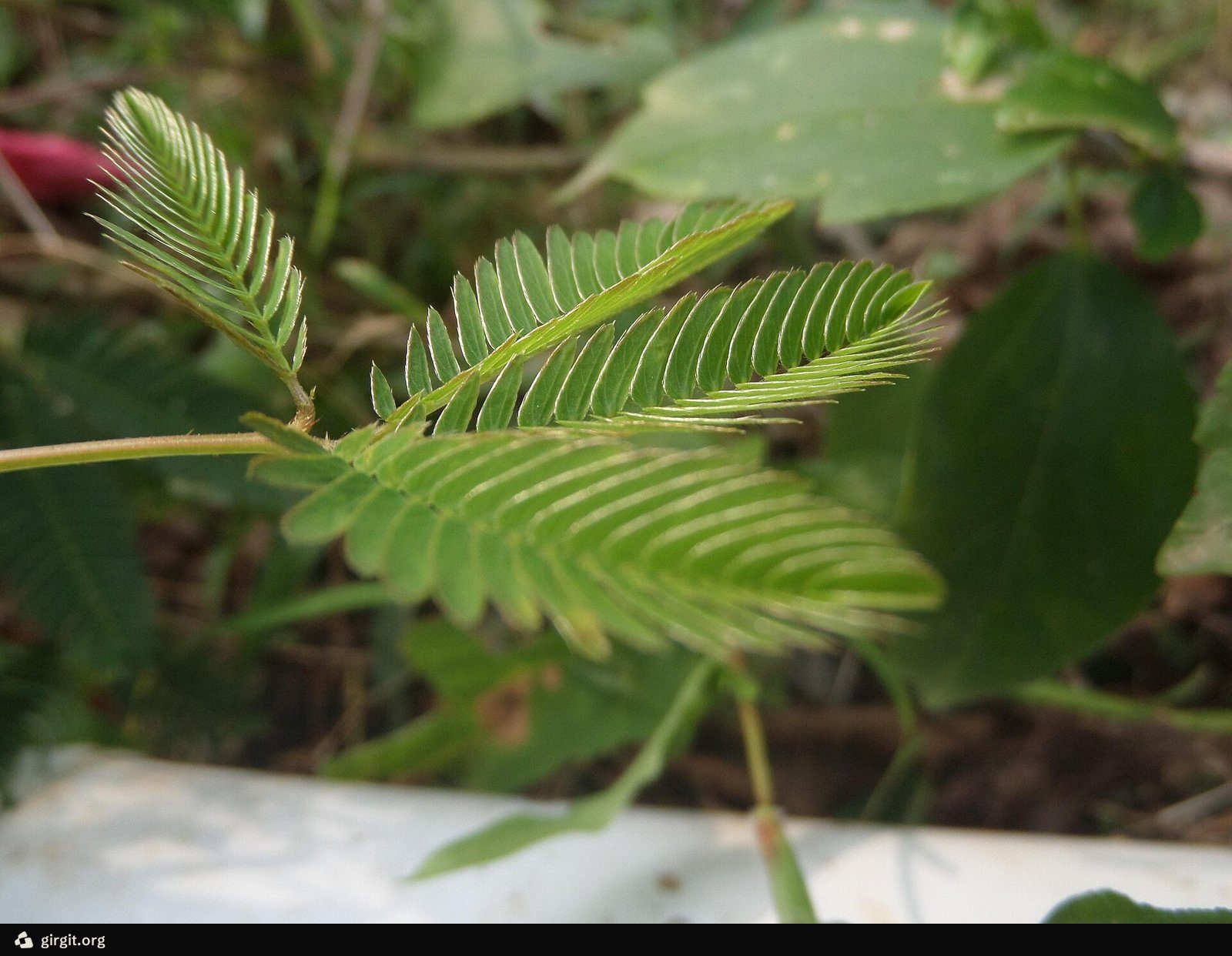 leafletspetiole
Venation
The pattern of veins and veinlets in the lamina is called venation.
| Type | Pattern | Usually in | Examples |
|---|---|---|---|
| Reticulate | Veinlets form a net | Dicots | Mango, peepal, china rose |
| Parallel | Veins run side by side along the blade | Most monocots | Sugarcane, wheat, banana, grass |
Hold a mango leaf and a sugarcane leaf up to the light: the mango leaf shows a mesh, the sugarcane leaf shows long straight lines.
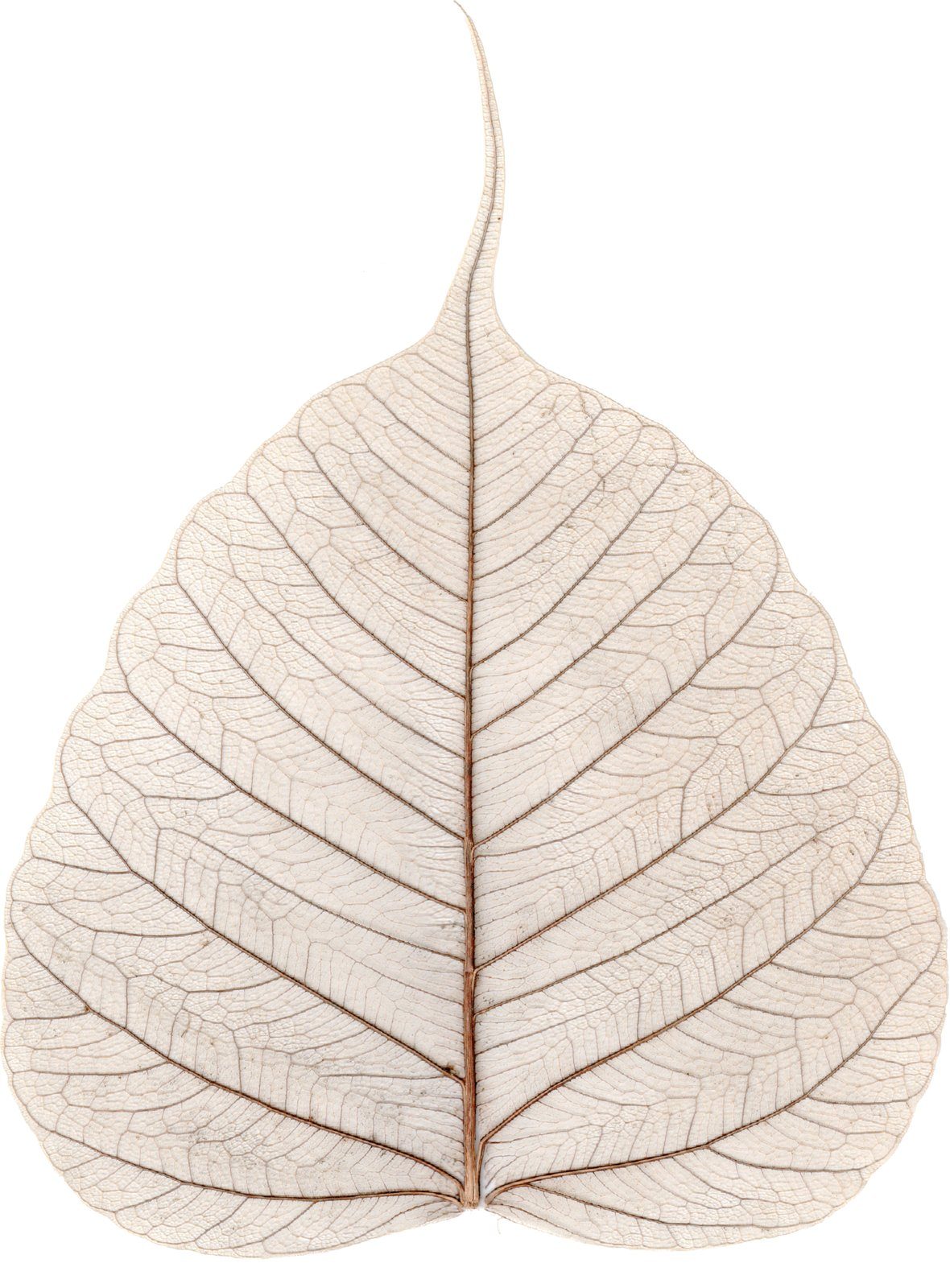 midribveinveinlets: a net
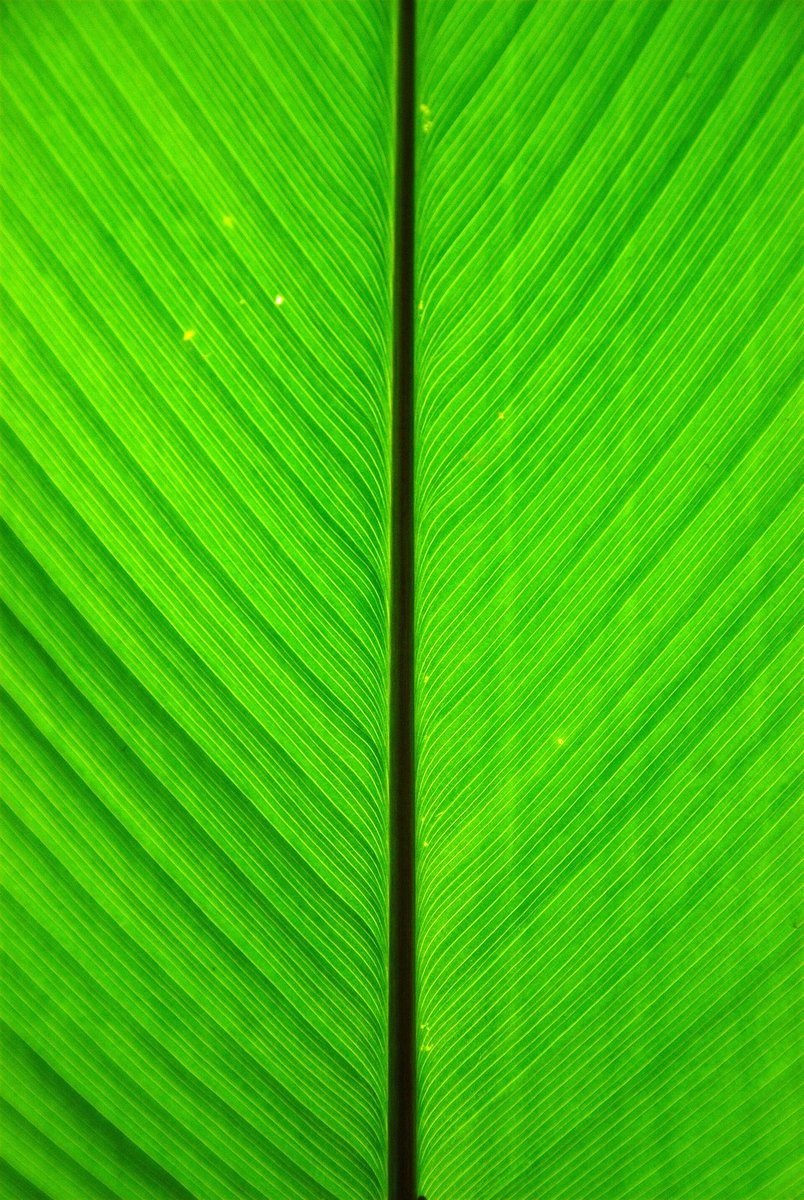 midribveins side by side
Sort these leaves by their veins.
Simple and compound leaves
- A simple leaf has a lamina that is whole, or cut only partly, so the cuts never reach the midrib. Mango, guava and banyan leaves are simple.
- In a compound leaf the cuts reach all the way to the midrib, breaking the blade into separate leaflets.
Try it: cut a leaf blade deeper and deeper, and find the exact moment it stops being one leaf blade.
How do you tell one compound leaf from a twig carrying many small simple leaves? Look for buds. A bud is found in the axil of the petiole of every leaf, simple or compound, but never in the axil of a leaflet.
| Compound leaf | How the leaflets are attached | Example |
|---|---|---|
| Pinnately compound | In two rows along a common axis, the rachis, which stands for the midrib | Neem |
| Palmately compound | All from one point, at the tip of the petiole, like fingers from a palm | Silk cotton (semal) |
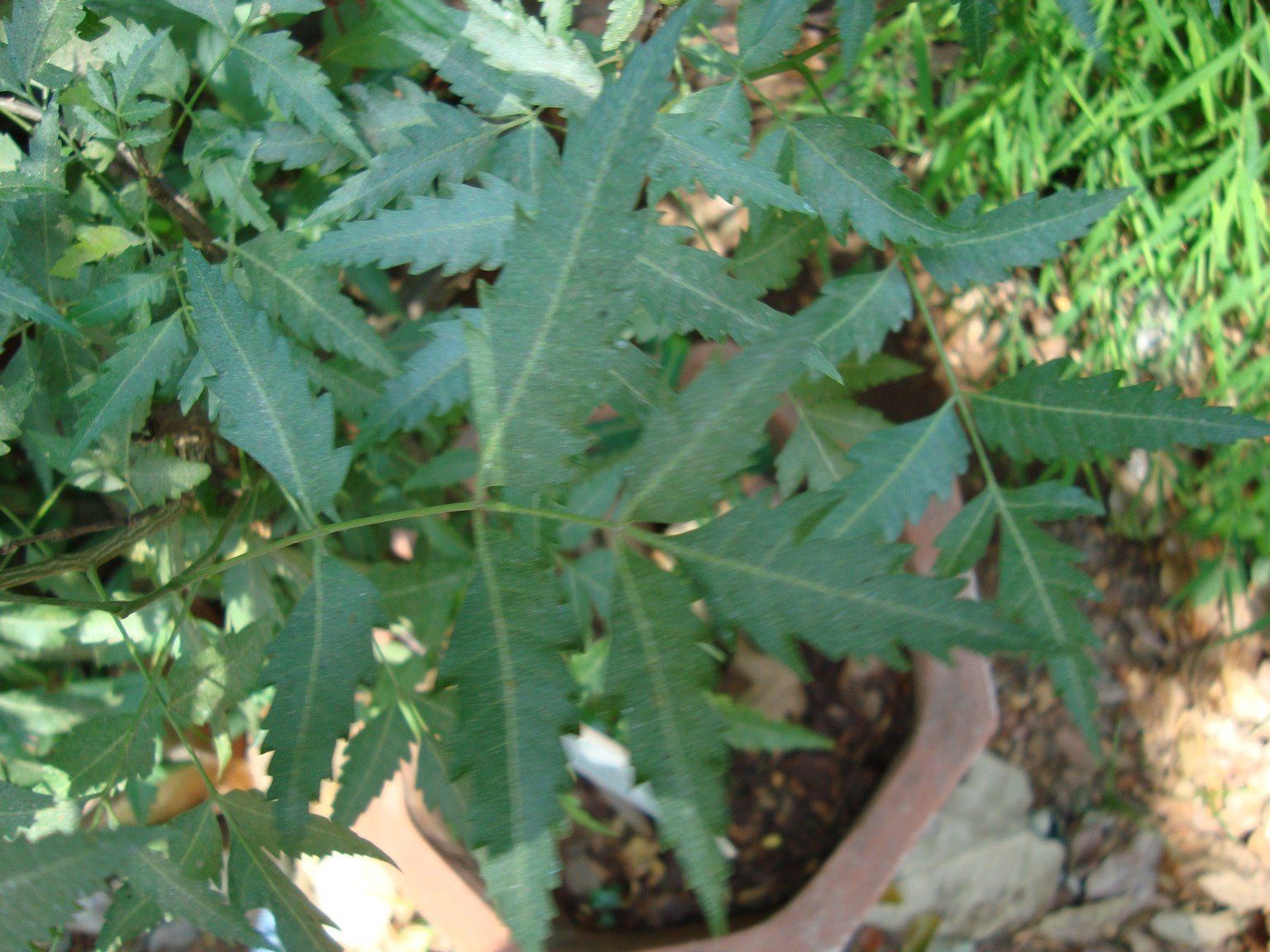 rachisleaflet
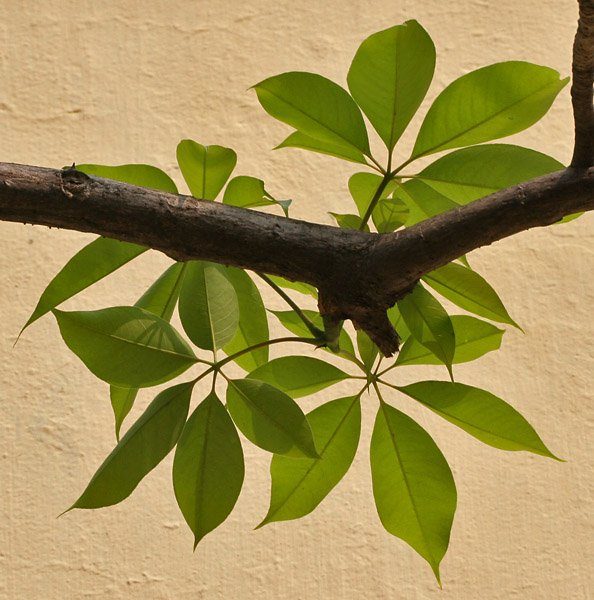 leaflets from one point
Leaves in disguise
Not in the current textbook, but NEET has asked it: leaves too can change shape for other jobs. In pea, some leaflets become tendrils for climbing. In cacti, leaves become spines for defence. In onion and garlic, fleshy leaves store food. In the Australian Acacia the leaves are small and short-lived, and the petiole becomes flat and green to make food (a phyllode). In the pitcher plant and Venus flytrap, leaves become traps for catching insects.
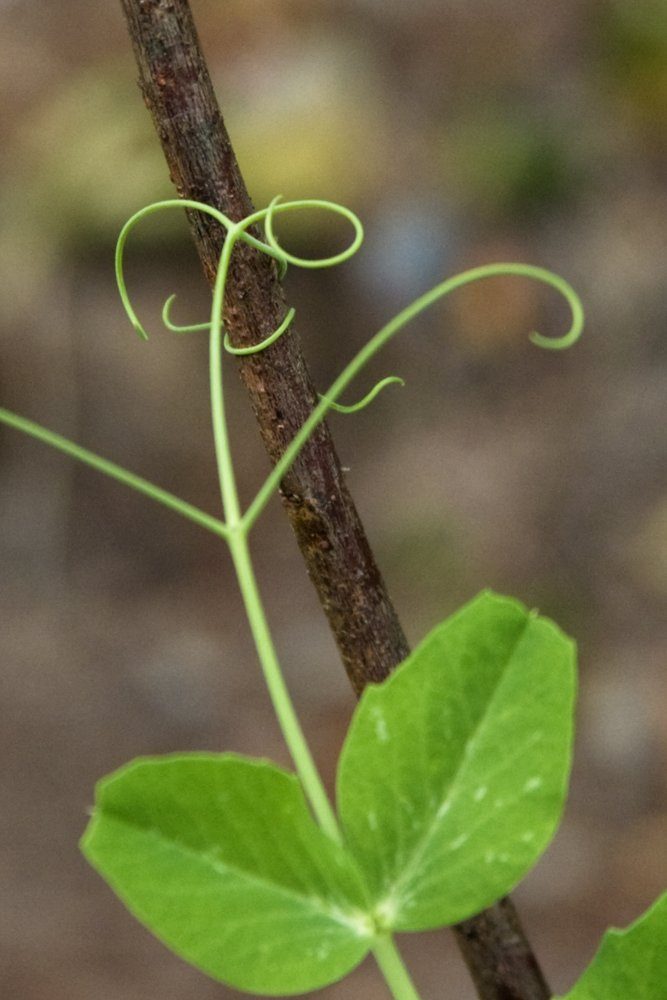 tendrils: changed leafletsleaflets
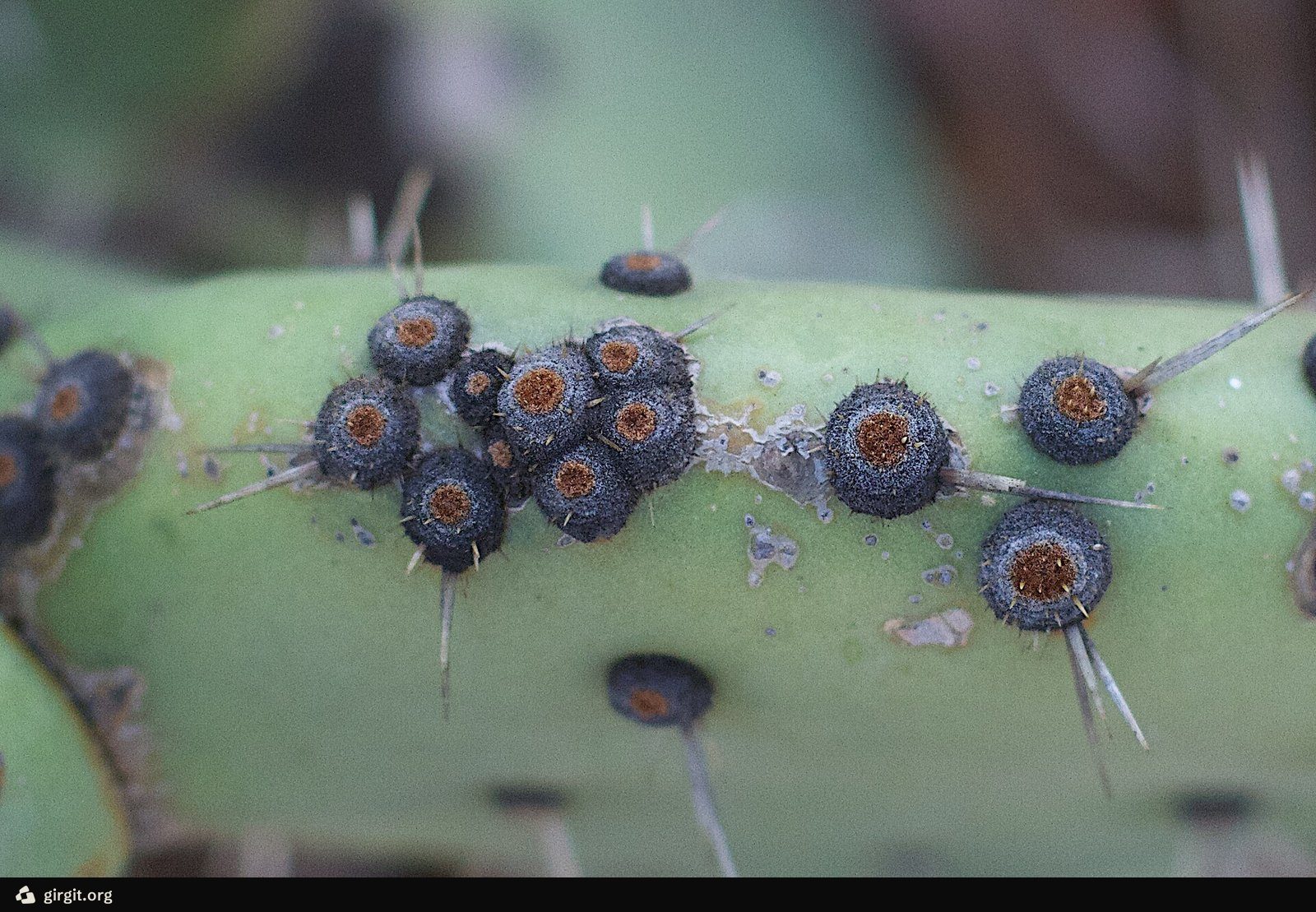 areole (cushion)spine: a changed leaf
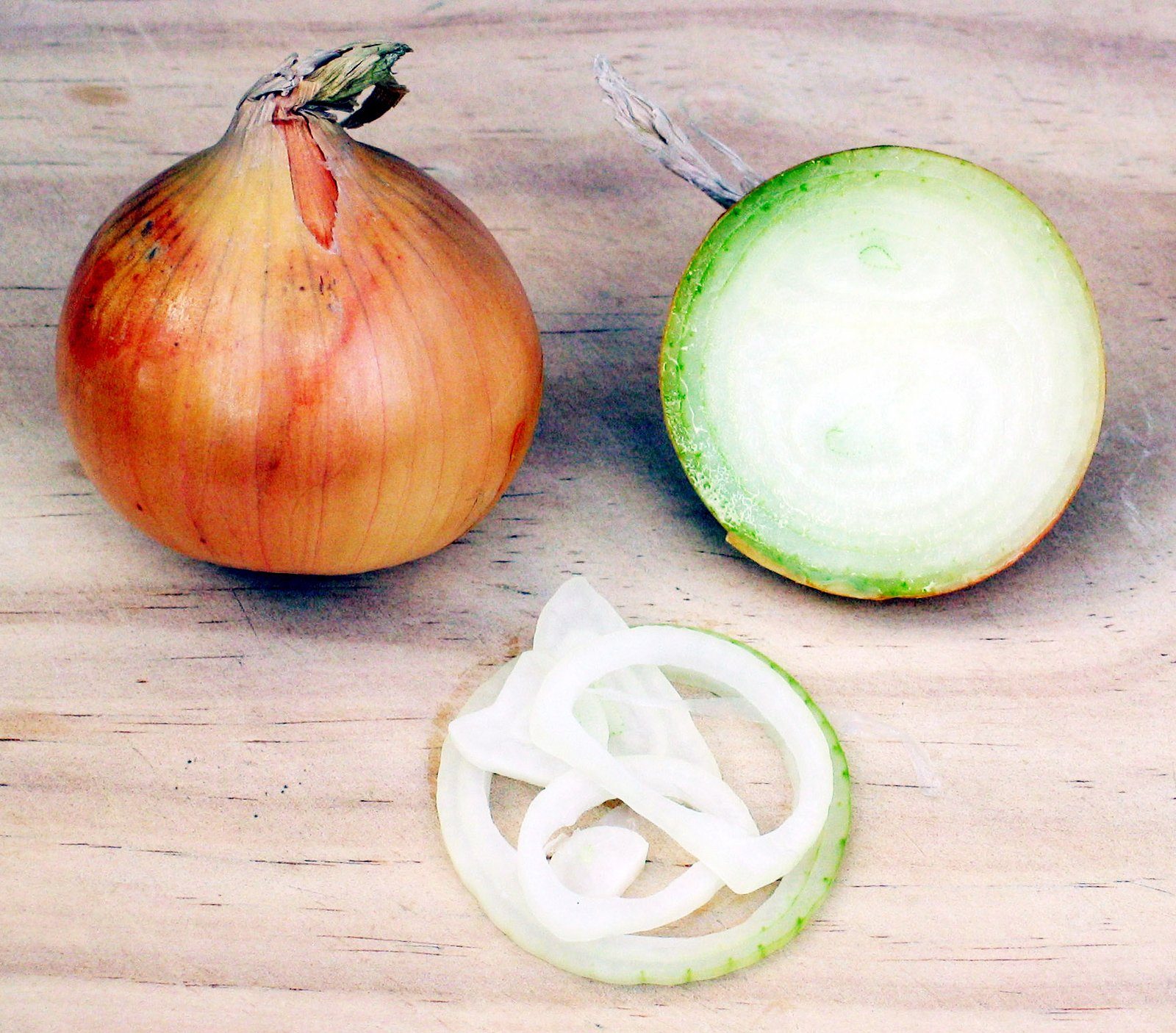 dry outer leavesfleshy leavesrings of leaves
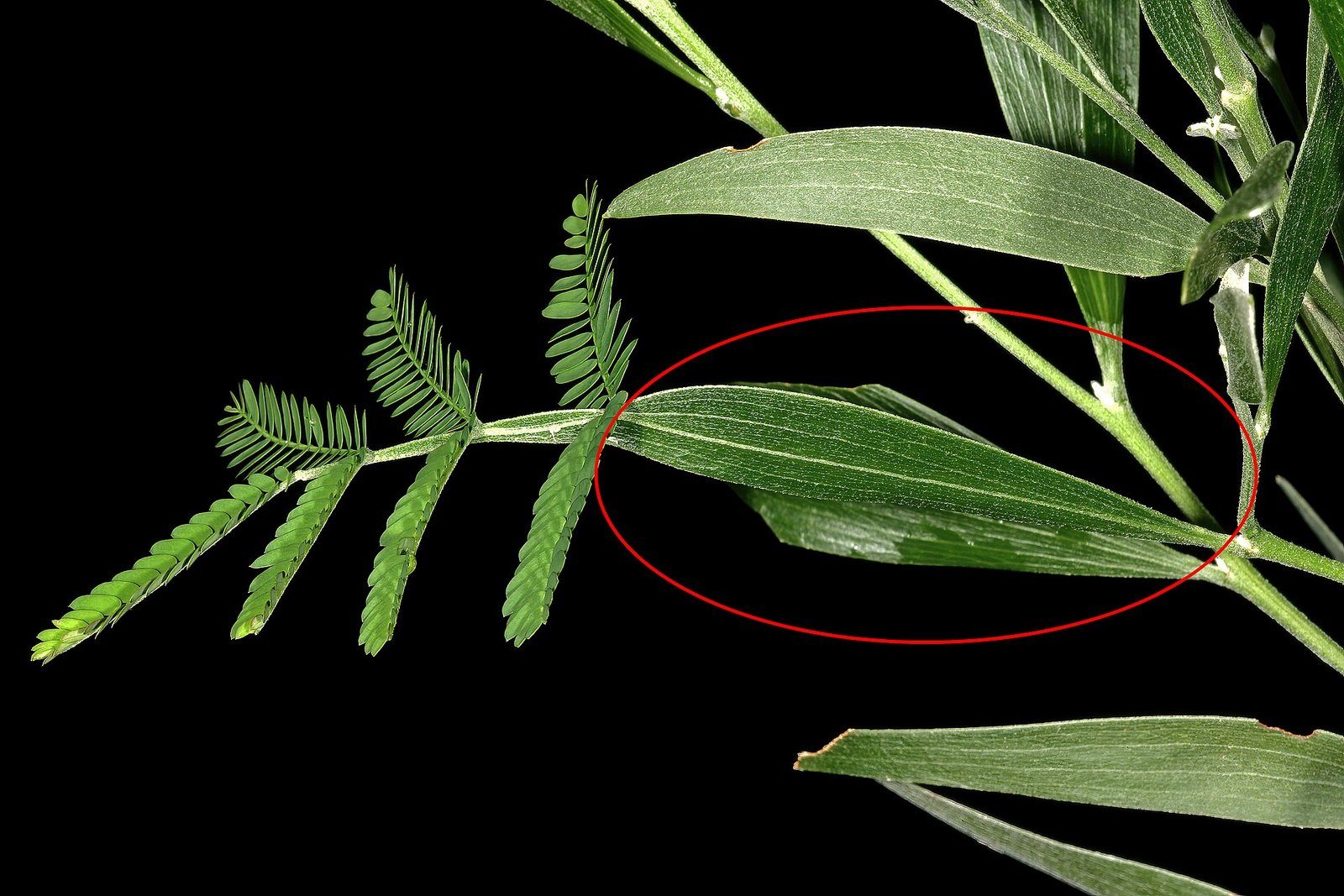 leafletsflattened petiolephyllodes only
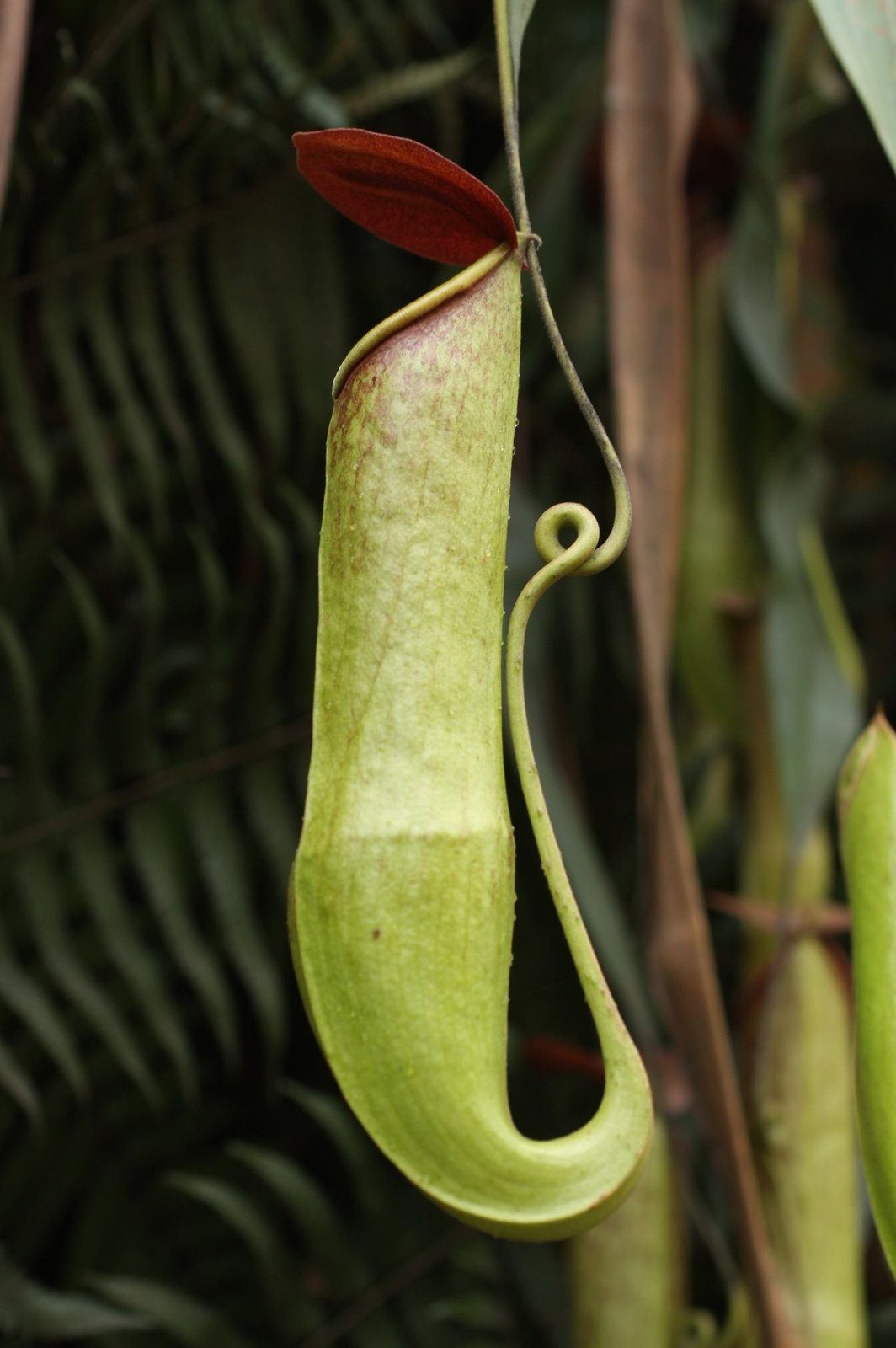 lidpitchertendril
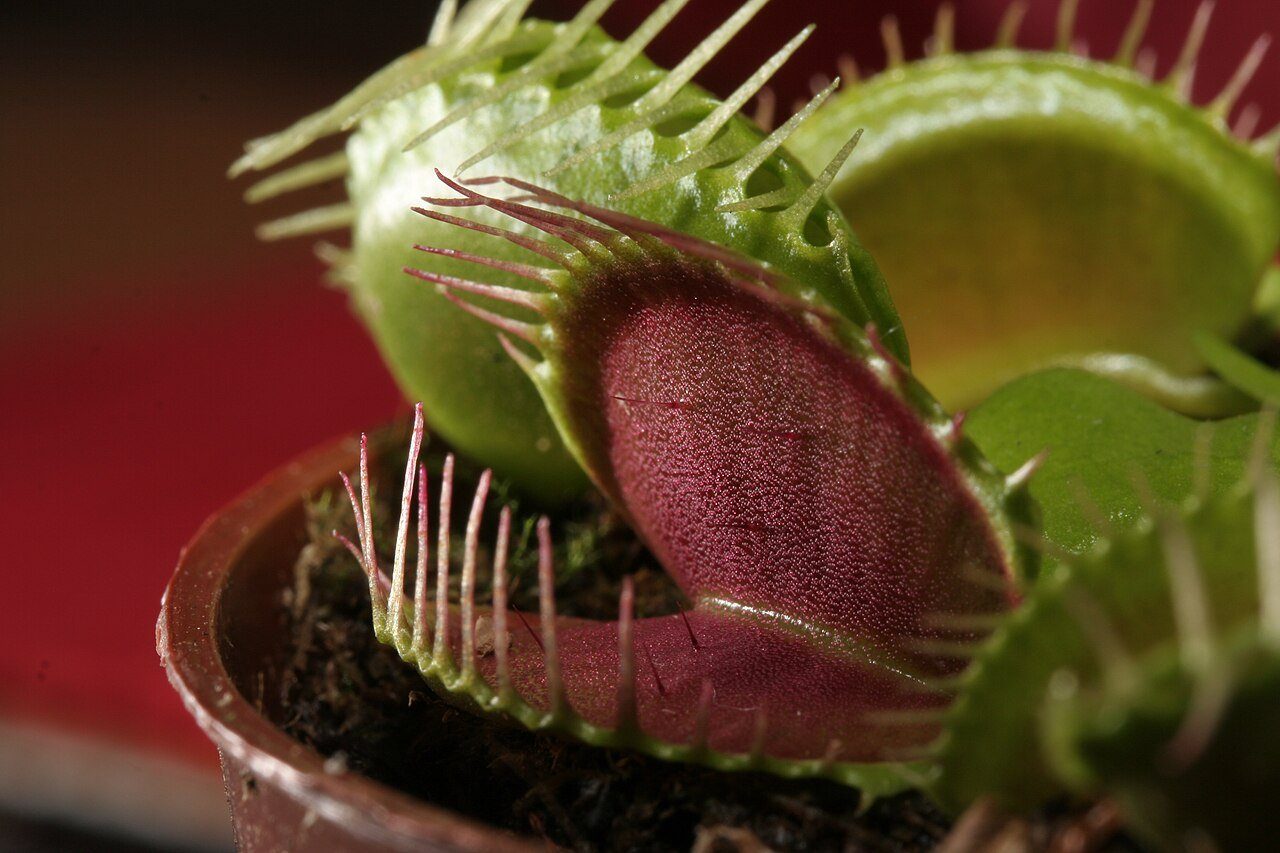 trap: one leaf, two halvesteeth
Don't mix these up
- Leaf vs leaflet: a bud sits in the axil of a leaf, never of a leaflet.
- Rachis is the axis of a pinnately compound leaf; palmate leaves have no rachis.
- Net venation: dicots. Parallel venation: monocots.
Just remember
No deeper reason for these: they are the textbook's examples. The hooks make them stick.
- Reticulate (net) venation: dicots, mango, peepal, china rose. Parallel venation: monocots, sugarcane, wheat, banana, grass
- "Dicot Draws a net, Monocot Marches in lines." A dicot leaf is a fishing net; a monocot leaf is a ruled notebook page.
- Pinnately compound: neem. Palmately compound: silk cotton (semal)
- A neem leaf is a kanghi (comb): teeth on both sides of one long spine, the rachis. A semal leaf is a hand: five or more fingers spreading from one palm at the tip of the stalk. "Neem-kanghi, semal-haath."
- Pulvinus: in some members of the pea family (Mimosa, the touch-me-not, chhui-mui)
- Pulvinus is Latin for a little cushion: the plump cushion at the leaf's foot that lets chhui-mui "faint" when touched.
- Sheathing leaf base: monocots (sugarcane, maize, banana)
- Peel a corn cob's stalk or a banana trunk: layer after layer of sleeves. A banana "trunk" is not a stem at all, it is rolled-up leaf bases.
- Leaves in disguise: pea (tendrils), cactus (spines), onion and garlic (fleshy food store), Australian Acacia (phyllode), pitcher plant and Venus flytrap (traps)
- A kitchen-garden story: the pea climbs with its leaf-tips, the cactus by the gate guards with leaf-needles, onion and garlic in the store room are piles of fat leaves, and the pitcher plant and flytrap eat the flies. Acacia from Australia: the leaf stalk turned into the leaf.
- Stipules
- Two small leaf-like flaps at the leaf base.
- Pulvinus
- A swollen leaf base, found in some members of the pea family.
- Petiole
- The leaf stalk.
- Lamina
- The flat green blade of the leaf.
- Venation
- The arrangement of veins and veinlets in the lamina.
- Leaflet
- One piece of a compound leaf; it has no bud in its axil.
- Rachis
- The central axis of a pinnately compound leaf.
Words to know
You find a green structure with a bud in its axil and seven small blades on one stalk. What is it?
- A branch with seven simple leaves
- One compound leaf with seven leaflets
- One simple leaf
A leaf has long straight veins running side by side. The plant is most likely
- mango
- sugarcane
- neem
Why do long, thin, flexible petioles help a leaf?
- They let the blade flutter, cooling it and bringing fresh air
- They do most of the photosynthesis
- They store food for winter
Deep dive · optional
Why is a leaf flat and thin?
Why leaves are sheets, why big leaves grow only where water is plenty, why net veins have loops, and the Indian physicist who wired up the touch-me-not. The exam won't ask, but it makes the page stick.
The roots: a solar panel that must also breathe
- Why is a leaf a flat, thin sheet?Because its job is to catch sunlight and take in carbon dioxide, and both come in through its surface. A sheet gives the most surface for the least material, and turns that surface to face the light.
- Why must it be thin, not just flat?Because of carbon dioxide. It is only about 0.04% of the air, and it has to drift in through the pores and into every green cell by diffusion. Diffusion is quick over the width of a hair and hopelessly slow over centimetres: go twice as far and it takes four times as long. So every working cell has to sit very close to an air space, and the whole leaf stays thin enough to see light through.
- Then why not make the sheet as big as possible?Because it pays twice for every bit of area. Every pore that lets carbon dioxide in also lets water vapour out, and far more water leaves than carbon comes in: crops lose about 200 to 1,000 kg of water for every kilogram of dry plant they build. And a big sheet in strong sun gets hot, because it carries a thicker blanket of still air that slows its cooling (try it below).
- So which plants can afford big leaves?Plants with plenty of water, which can keep their pores open and cool themselves by losing water, like banana and Colocasia in a wet Kerala garden. In 2017 a team measured leaves of 7,670 species from 682 sites. Leaf size varied more than 100,000-fold, and the pattern was clear: big leaves in hot, wet, sunny places; small leaves in hot dry places and in cold high places. Leaf temperature, by day and by night, explained much of it.
- What is the bedrock?Two pieces of physics, diffusion and heat flow, and natural selection. The leaf shape that survives in a place is the one that wins the most food for the water and heat it costs there.
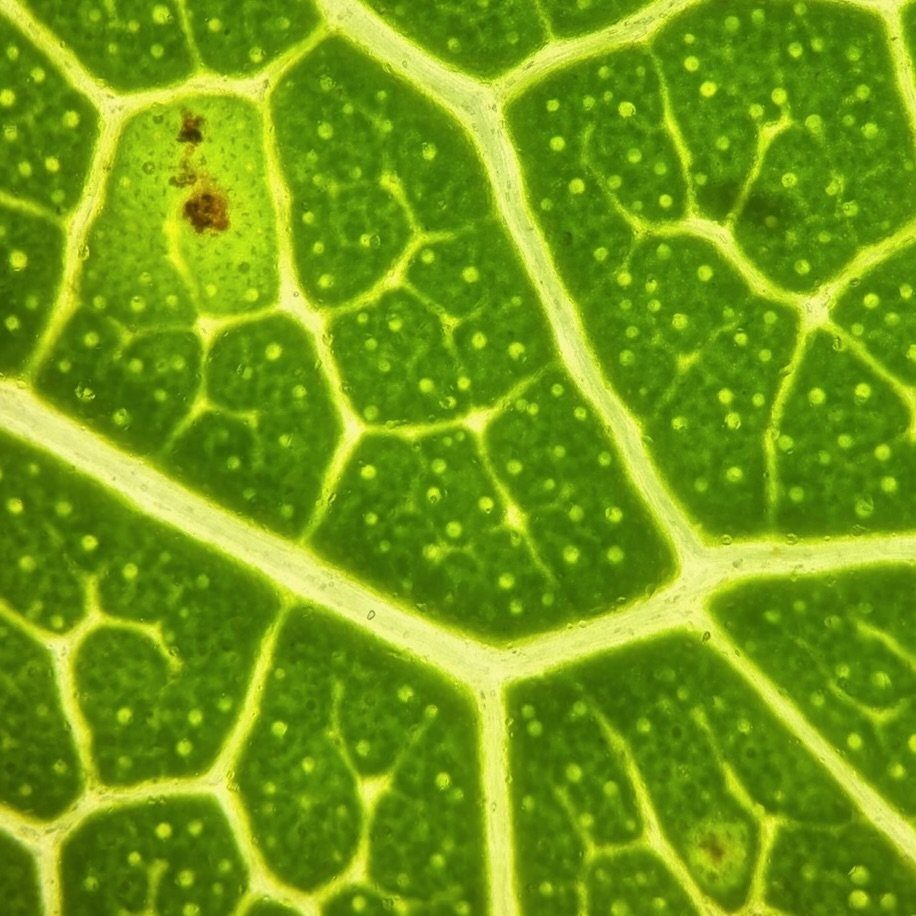
The veins follow the same logic. A leaf is a sheet of plumbing: water must reach every cell, and sugar must leave. A tree-like system of pipes with no loops would use the least pipe, but one bite from a caterpillar would cut off everything beyond it. Net venation is full of loops. In 2010, physicists cut a small ring through the midrib of a lemon leaf and fed a glowing green dye in at the stalk: the dye flowed round the cut through the loops and lit up the leaf beyond. Their calculations showed that once damage and changing demand are taken into account, a network with loops is the best design. Parallel veins in grasses are linked by tiny cross-veins for the same reason.
The stories
See it
Two leaves in the same sun, with their pores shut so they cannot sweat. Change the size, the wind and the day's heat, and watch the blanket of still air and the thermometer. Then open the chart and sweep through every leaf size at once.
Now compare where big and small leaves really grow.
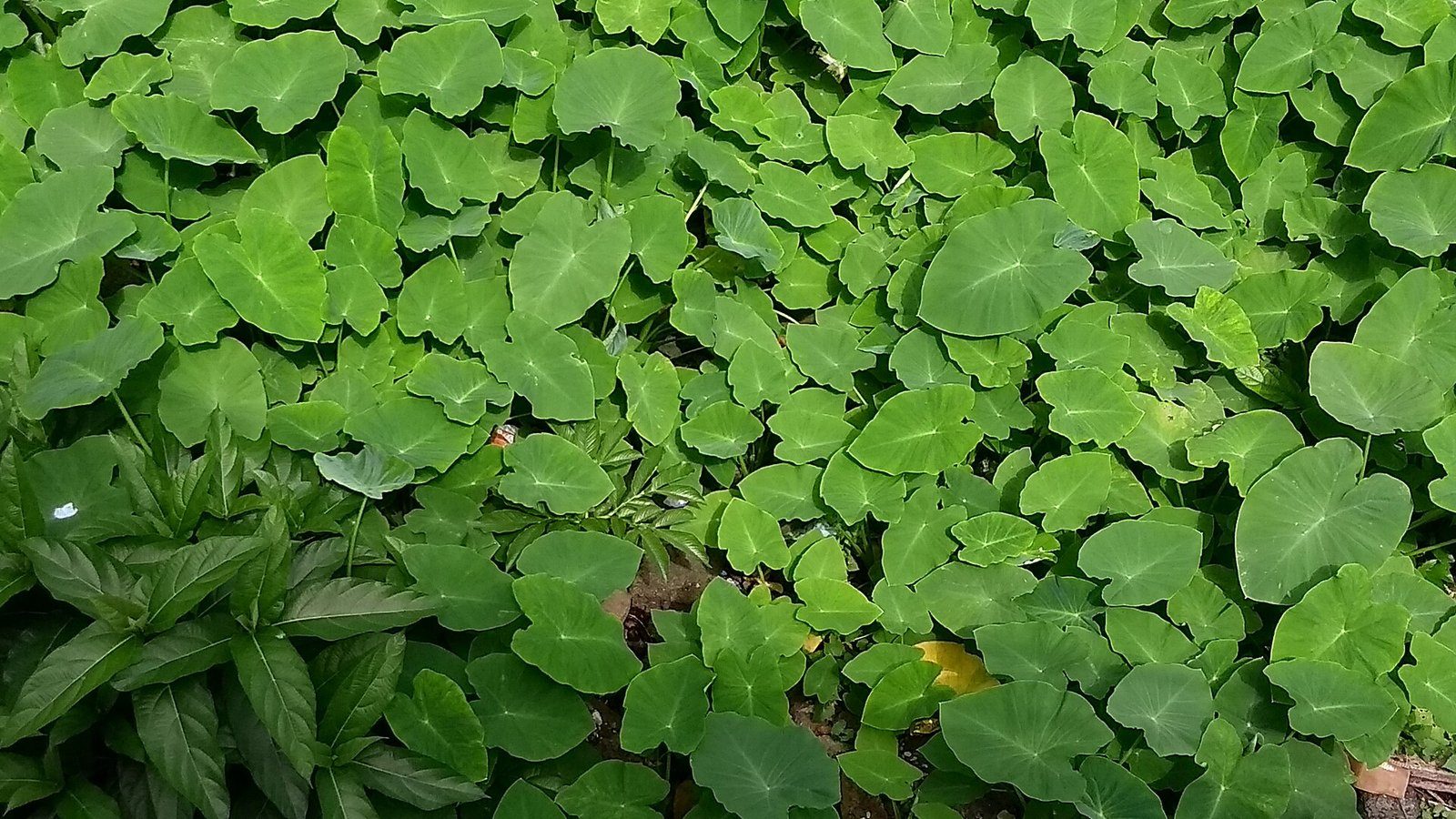 one broad leaf
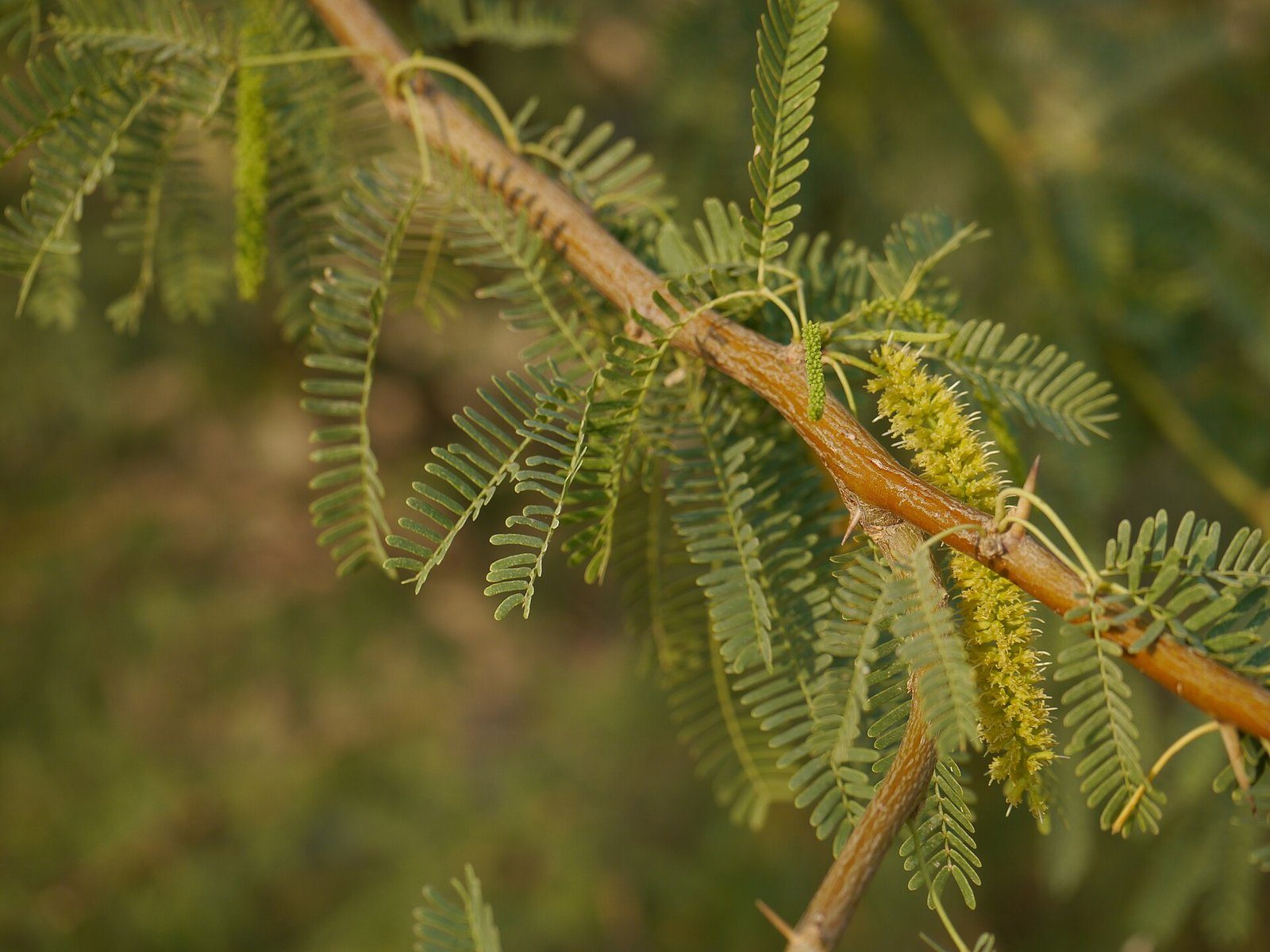 tiny leaflets
 a closed loopbig vein
Solve it
Solve it
Use the widget. On a 44 °C afternoon in Rajasthan, with a light breeze of 0.5 m/s, a plant with its pores shut has leaves either 2 cm wide (like the leaflets of khejri) or 30 cm wide (like a banana leaf). Which leaf passes the danger line, and by roughly how much is it hotter than the other?
Hint
Answer
Solve it
A wheat crop loses about 500 kg of water for every 1 kg of dry plant it builds. A roti uses about 30 g of flour. Assume the whole wheat plant, straw and all, weighs about twice its grain. Roughly how much water did the wheat plants breathe out through their leaves to make your one roti?
Answer
Touch a chhui-mui leaf and it folds in seconds. What does the folding?
- Muscles in the leaf stalk
- Cells in the pulvinus losing water and going limp
- The leaf dying from the touch
Connect it
Connect it
- Inside a leaf, Ch 6. Under the microscope the thin sheet turns out to be a sandwich of green cells and air spaces: see dorsiventral and isobilateral leaves and the pores in epidermis and stomata.
- Photosynthesis, Ch 11. The carbon dioxide that forces leaves to be thin is a limiting factor of photosynthesis; the light they catch is used inside the chloroplasts.
- Heat, Physics Class 11 Ch 10. The leaf in the widget loses heat by convection and radiation, exactly the physics of a cooling cup of chai.
- Phyllotaxy, the next concept. Once a leaf is a flat panel, the next question is how to place many panels on one stem without shading each other: how leaves are arranged.
- Banana leaf plates. A banana leaf is big enough to serve a whole South Indian meal on: a leaf that only a wet, warm place can afford.
Still confused?
Is the "trunk" of a banana plant a stem?
No. It is a pseudostem, a false stem made of the leaf bases (sheaths) wrapped tightly round each other. Cut one across and you see rings of leaf, not wood. The plant grows from an underground stem, a corm. This is the sheathing leaf base of monocots, taken to an extreme.
Does chhui-mui feel the touch the way we do?
It senses it, but it has no nerves or brain. A touch sets off an electrical signal; the signal reaches the pulvinus; cells there lose water and the leaf droops. It is a fast, automatic response, more like the way your knee jerks than like feeling pain. The reason it pays: a drooping, folded plant looks less tasty and loses less water, though the folding costs it food-making time, which is why it stops folding when the touch turns out harmless.
Are cactus spines really leaves? They look nothing like leaves.
Yes. They grow from small cushions on the stem, each cushion a short side shoot, exactly where leaves would grow, and they appear in the same order as leaves. In a dry place a broad leaf would lose water and overheat (see the widget), so the cactus does its food-making in its green stem and keeps its leaves only as defence.
Sources
- Leaf (broad, flat and thin for light and carbon dioxide; phyllodes of Acacia)
- Transpiration (transpiration ratio of crops, 200 to 1,000)
- Wright et al. (2017), Global climatic drivers of leaf size, Science 357: 917
- Physical Processes in Ecosystems: the leaf energy budget (convection and boundary-layer formulas used in the widget)
- O'Sullivan et al. (2017), Thermal limits of leaf metabolism across biomes, Global Change Biology (leaves damaged from about 41.5 to 50.8 °C)
- Katifori, Szöllősi and Magnasco (2010), Damage and fluctuations induce loops in optimal transport networks, Physical Review Letters 104: 048704 (the cut lemon leaf)
- Jagadish Chandra Bose and Crescograph (Bose and Das, Proc. Royal Society B, 1919)
- ScienceDaily (2018): Toyota et al., glutamate triggers long-distance calcium signalling in plants, Science 361: 1112
- Mimosa pudica (pulvinus and turgor) and University of Western Australia (2014): Clever plants learn behaviour (Gagliano et al., Oecologia 175: 63)
- NOAA Global Monitoring Laboratory: carbon dioxide in the air
- Banana (the pseudostem of leaf sheaths)
Picture and video credits
Show 16 picture and video credits
- peepal-leaf-kolkata.jpg: Biswarup Ganguly, CC BY 3.0
- hawthorn-stipules.jpg: Didier Descouens, CC BY-SA 4.0
- grass-leaf-sheath.jpg: Matt Lavin from Bozeman, Montana, USA, CC BY-SA 2.0
- mimosa-touch-folding.mp4: Brandizzi, CC BY 2.5
- peepal-leaf-skeleton.jpg: Biswarup Ganguly, CC BY 3.0
- banana-leaf-parallel-veins.jpg: Vít Baisa, CC BY-SA 4.0
- neem-leaves-thrissur.jpg: Satheesan.vn, CC BY-SA 3.0
- semal-palmate-leaves-kolkata.jpg: J.M.Garg, CC BY-SA 3.0
- pea-tendrils-leaflets.jpg: Jessie Hirsch, CC BY 2.0
- onion-bulb-cut.jpg: Donovan Govan., CC BY-SA 3.0
- acacia-phyllode-transition.jpg: SAplants, CC BY-SA 4.0
- nepenthes-khasiana-garo-hills.jpg: Rohit Naniwadekar, CC BY-SA 4.0
- venus-flytrap-trap.jpg: che, CC BY-SA 2.5
- colocasia-leaves-kerala.jpg: Mujeebcpy, CC BY-SA 3.0
- khejri-leaflets-jaisalmer.jpg: Dinesh Valke from Thane, India, CC BY-SA 2.0
- peepal-vein-loops-micro.jpg: ConformationXII, CC BY 4.0


