Morphology of Flowering Plants
- 1. Roots: what holds a plant in the ground?
- 2. The stem: how is it different from a root?
- 3. The leaf: base, stalk and blade
- 4. How are leaves and flowers arranged?
- 5. What is a flower?
- 6. Sepals, petals and aestivation
- 7. Stamens, carpels and placentation
- 8. The fruit: what does an ovary become?
- 9. Inside a seed: gram and maize
- 10. How to read a floral formula
- 11. Three families: Solanaceae, Fabaceae, Liliaceae
- Review
5 of 11·NCERT §5.5·pp. 62–63·7 min
What is a flower?
The big ideaA flower is four rings of parts on a swollen stalk tip, and botanists describe it by its symmetry, its number of parts and where the ovary sits.
In simple words
A flower is the part of a plant that makes seeds. It has four rings of parts, one inside the other. The two outer rings protect the bud and call insects. The two inner rings make the male and female cells. Some flowers can be cut into two matching halves in many ways, like a round cake. Others match only when cut one way, like your face. The seed-making box at the centre can sit above the other parts, level with them, or below them.
The flower is the reproductive unit of an angiosperm: it exists for sexual reproduction. A flower sits on a stalk called the pedicel. The swollen top of the pedicel is the thalamus or receptacle, and on it four kinds of whorls (rings of parts) are arranged one after another.
| Whorl (outside to inside) | Made of | Kind of organ |
|---|---|---|
| Calyx | Sepals | Accessory (helpers) |
| Corolla | Petals | |
| Androecium | Stamens (male) | Reproductive |
| Gynoecium | Carpels (female) |
A china rose shows all four whorls clearly. Turn one over and look at it from below, then look into its centre.
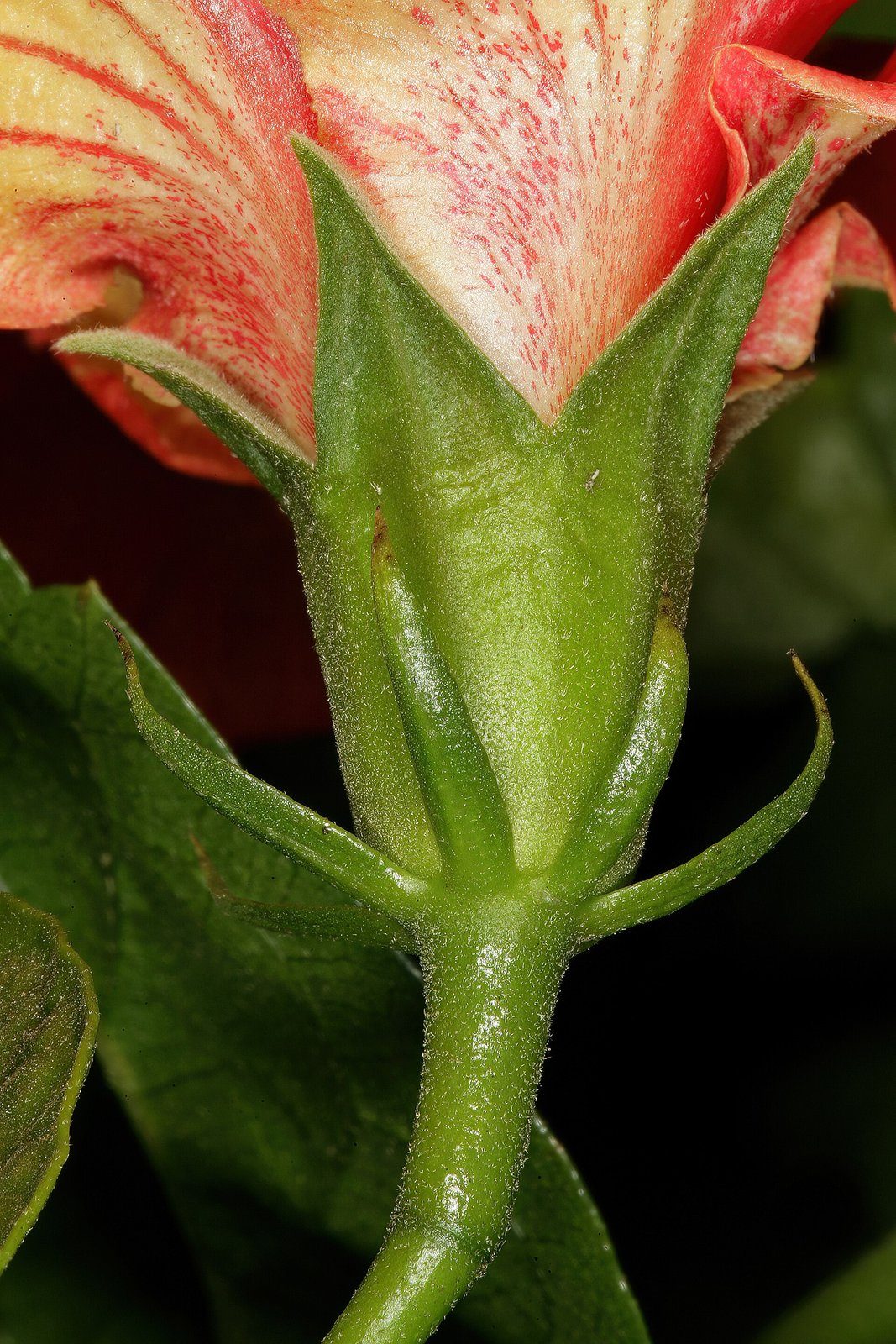 petals: corollacalyx: sepals joined in a cupepicalyx: extra bractspedicel
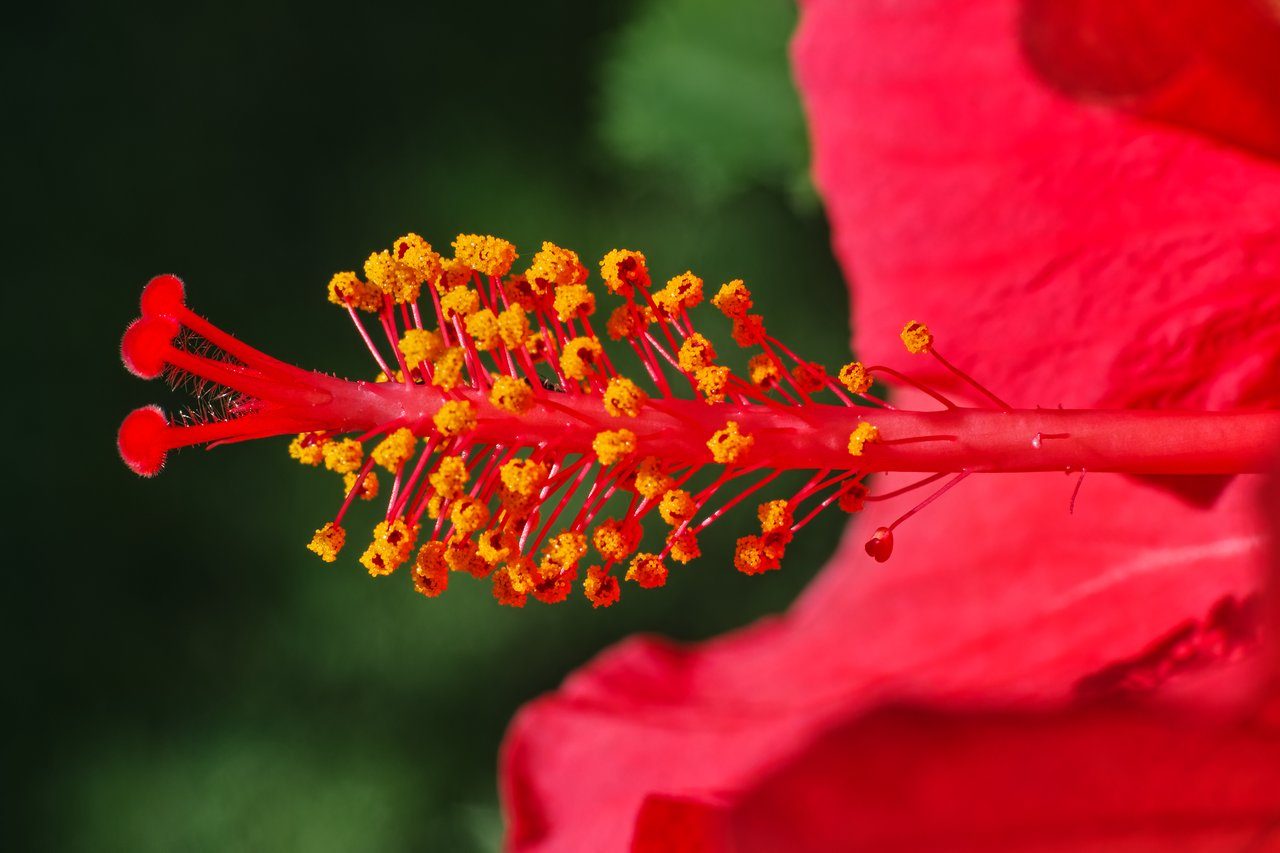 stigmasstamens on a column: androeciumpetal: corolla
In some flowers, such as lily, the calyx and corolla look alike and cannot be told apart. Together they are then called the perianth.
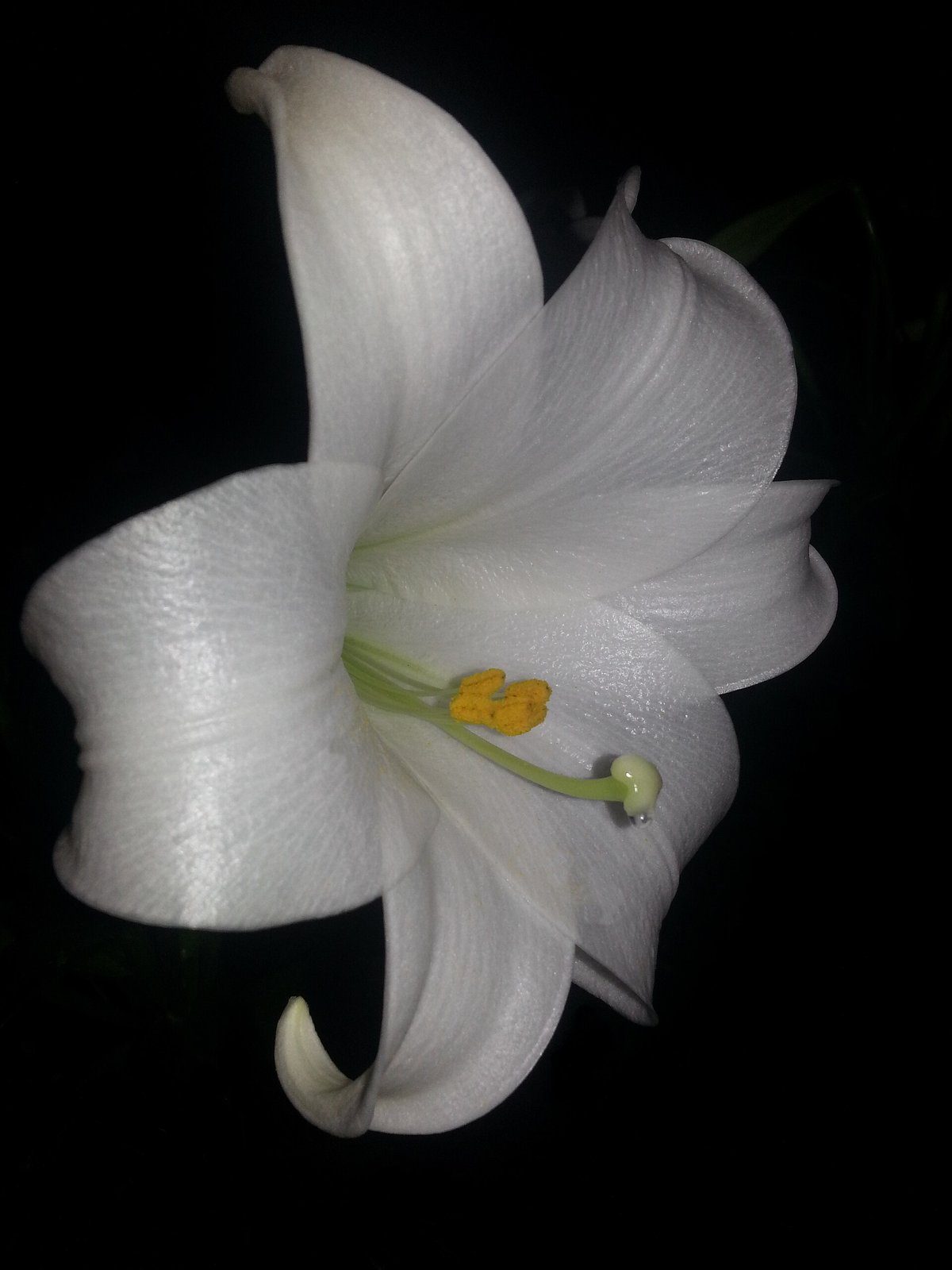 six tepals, all alike: perianthstamensstigma
A flower with both androecium and gynoecium is bisexual (china rose, mustard). A flower with only stamens or only carpels is unisexual; a cucumber vine, for example, carries separate male and female flowers. You can tell them apart without looking inside: only the female flower has a tiny cucumber behind it.
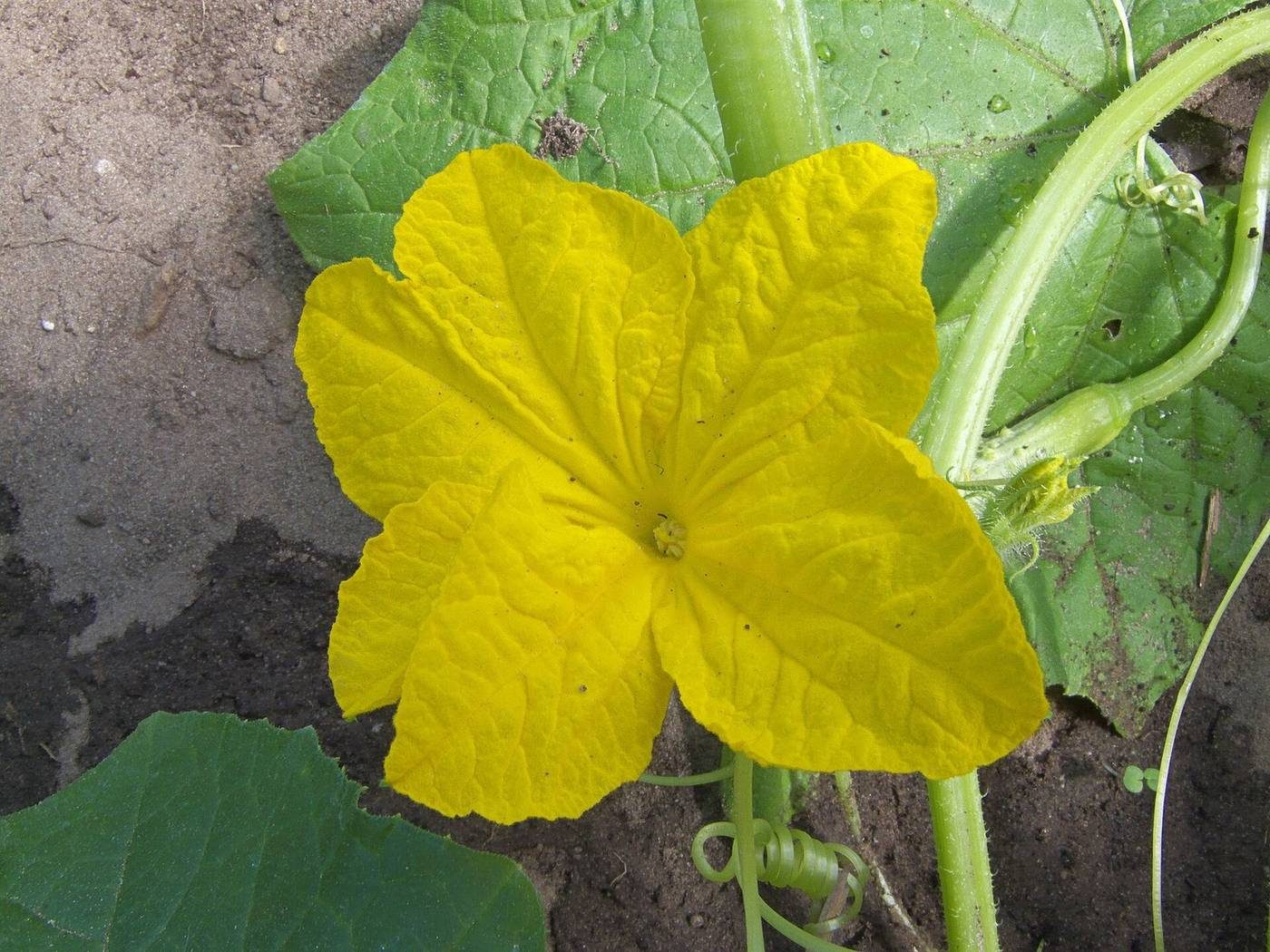 stamens only, no ovary
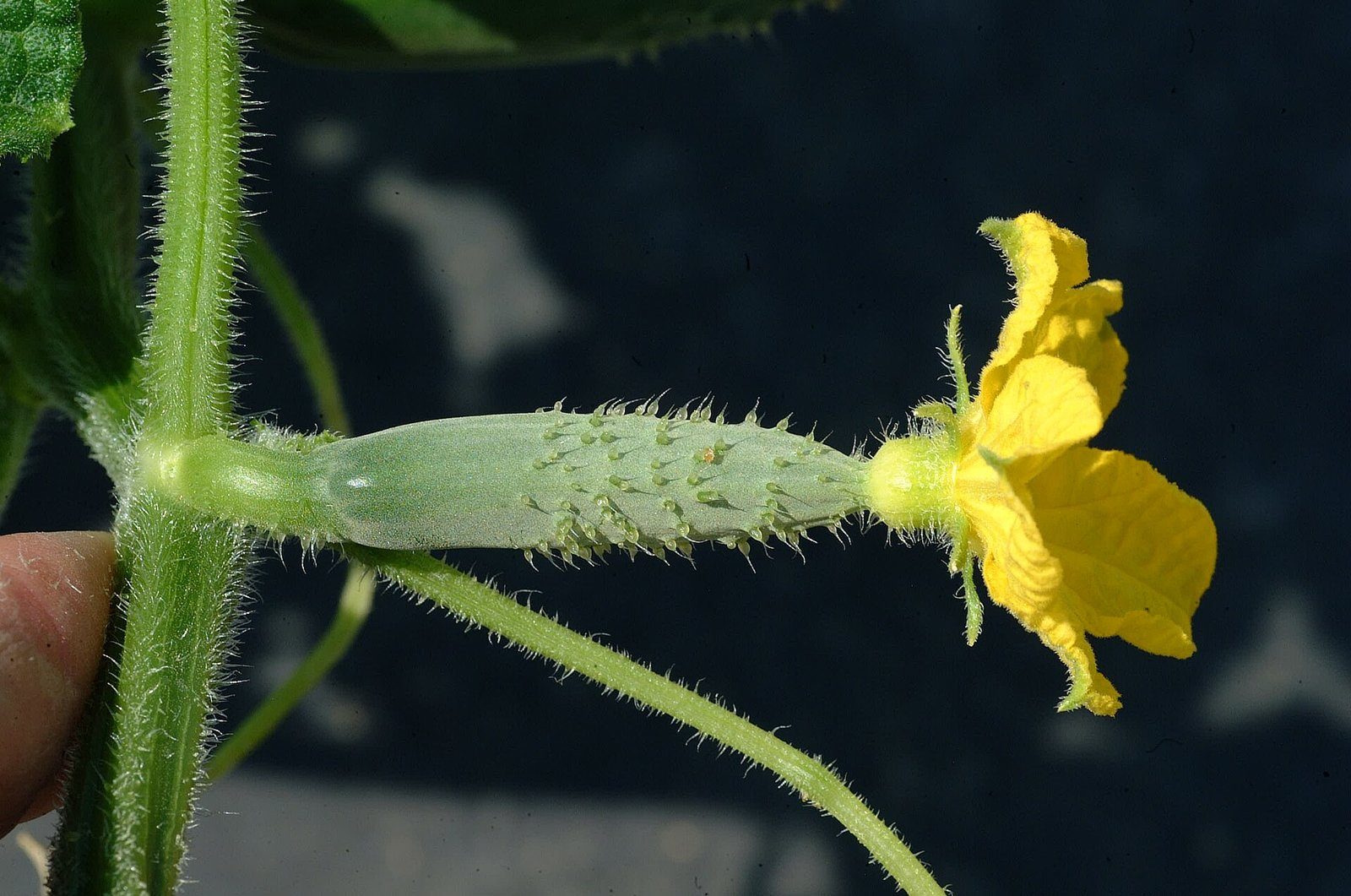 tiny cucumber: the ovarypetals sit on top of it
Symmetry
- Actinomorphic (radial symmetry): any cut through the centre, in any direction, gives two equal halves. Mustard, datura, chilli.
- Zygomorphic (bilateral symmetry): only one vertical cut gives two similar halves. Pea, gulmohur, bean, Cassia.
- Asymmetric (irregular): no vertical cut through the centre gives similar halves. Canna.
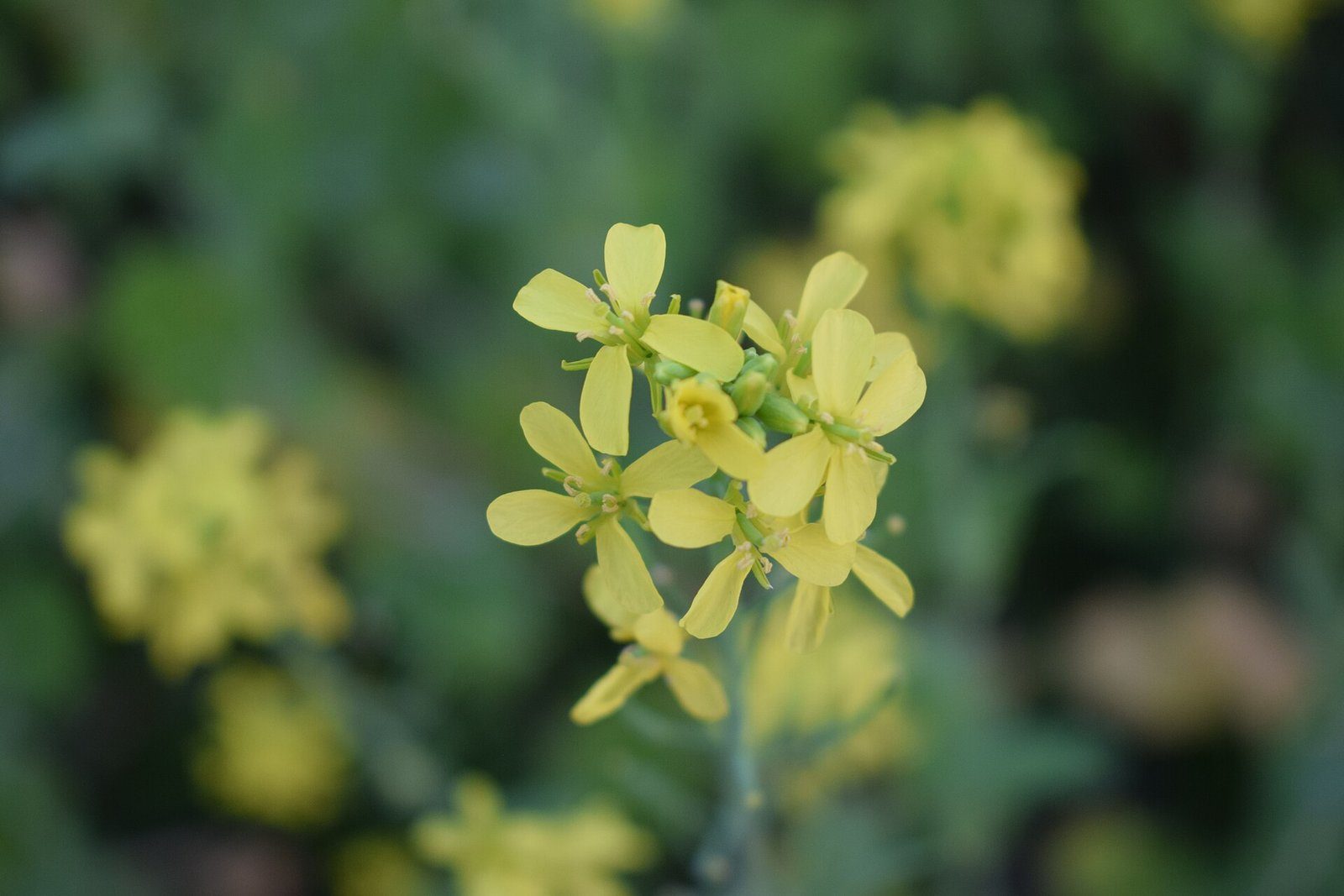 four petals in a cross
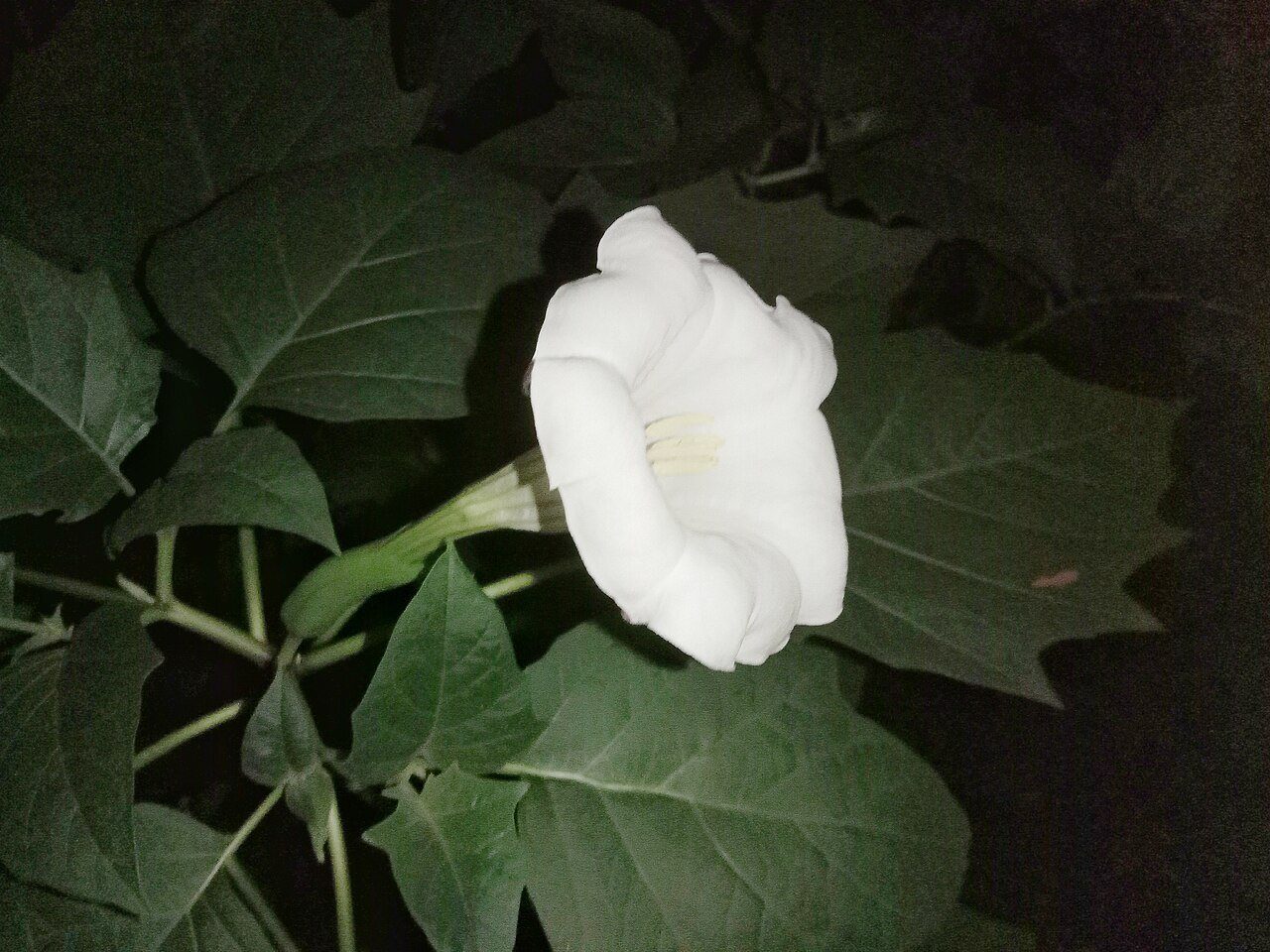 petals joined into a round trumpet
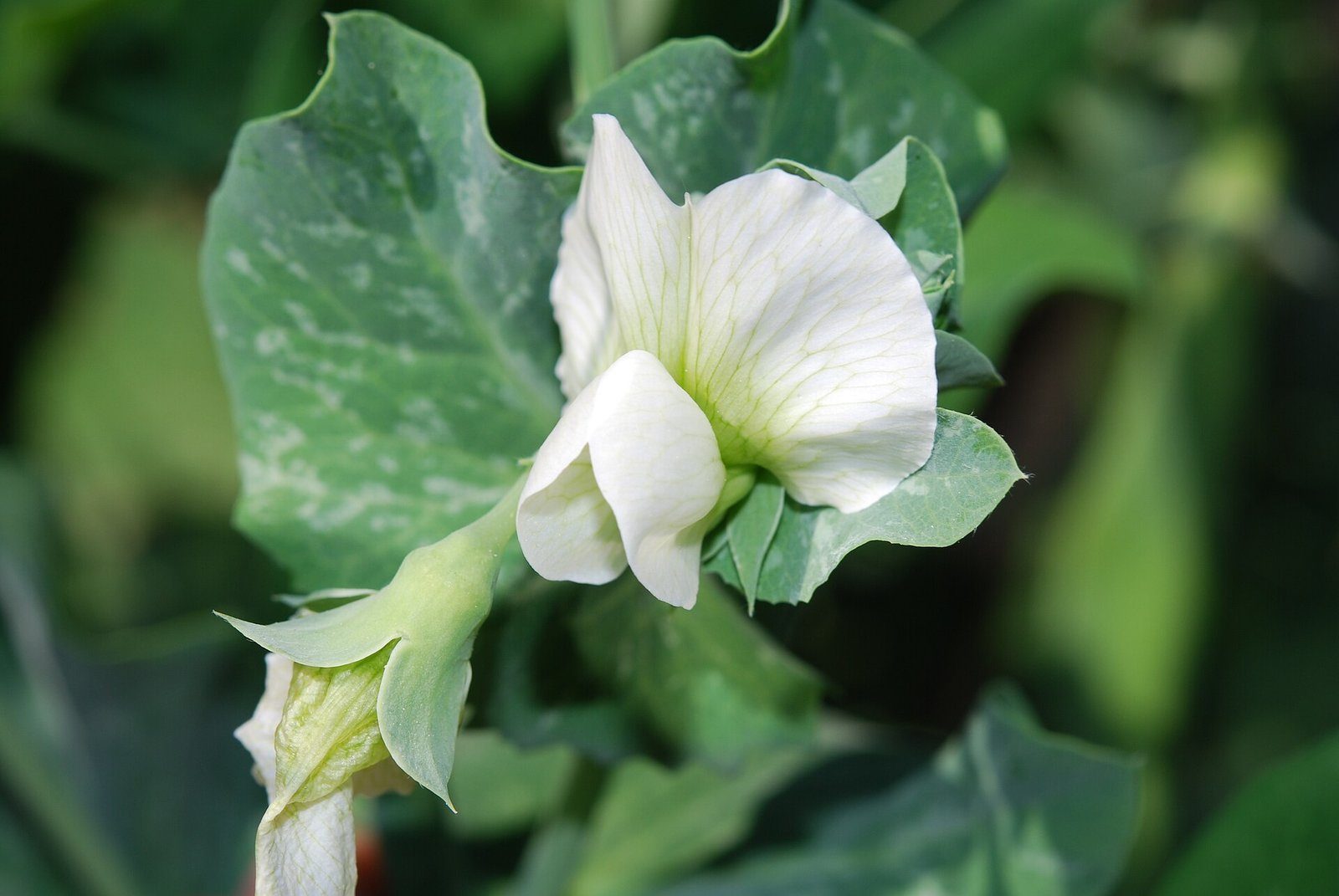 standard: big back petalwings and keel in front
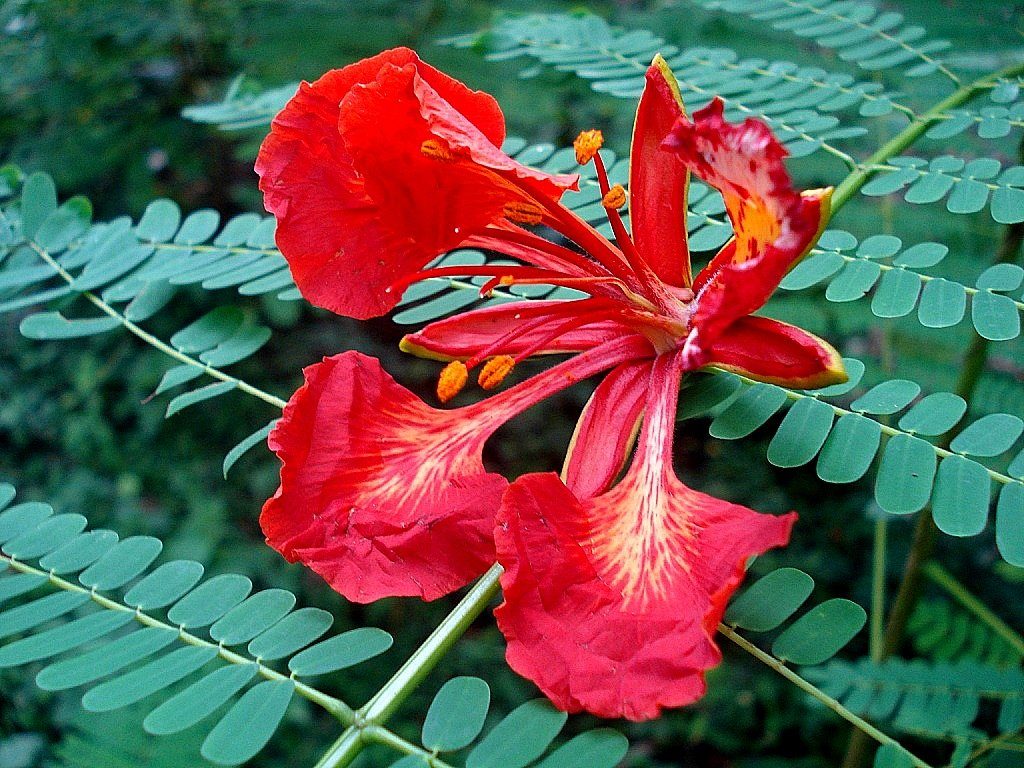 one odd, streaked petal
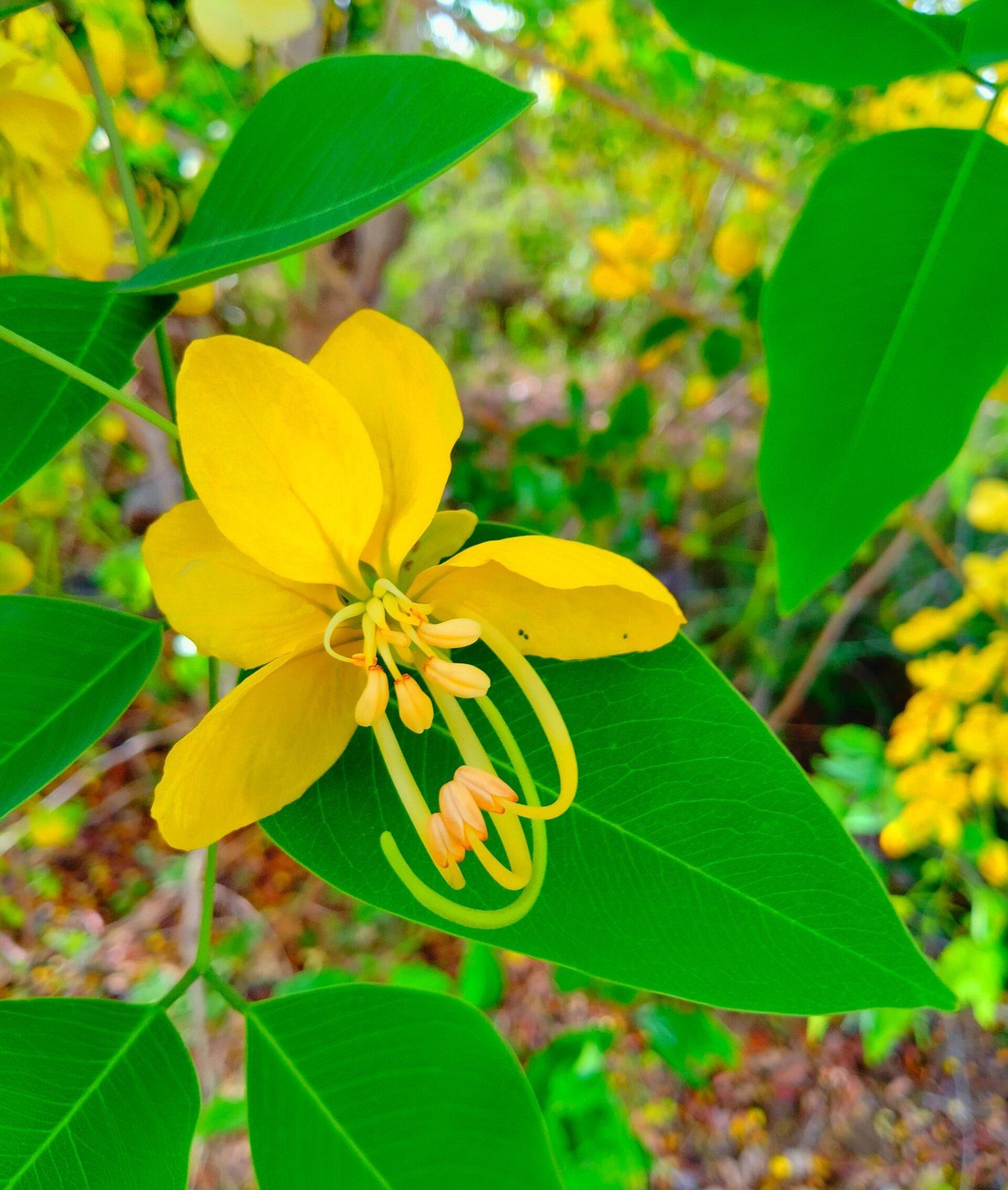 stamens curve to one side
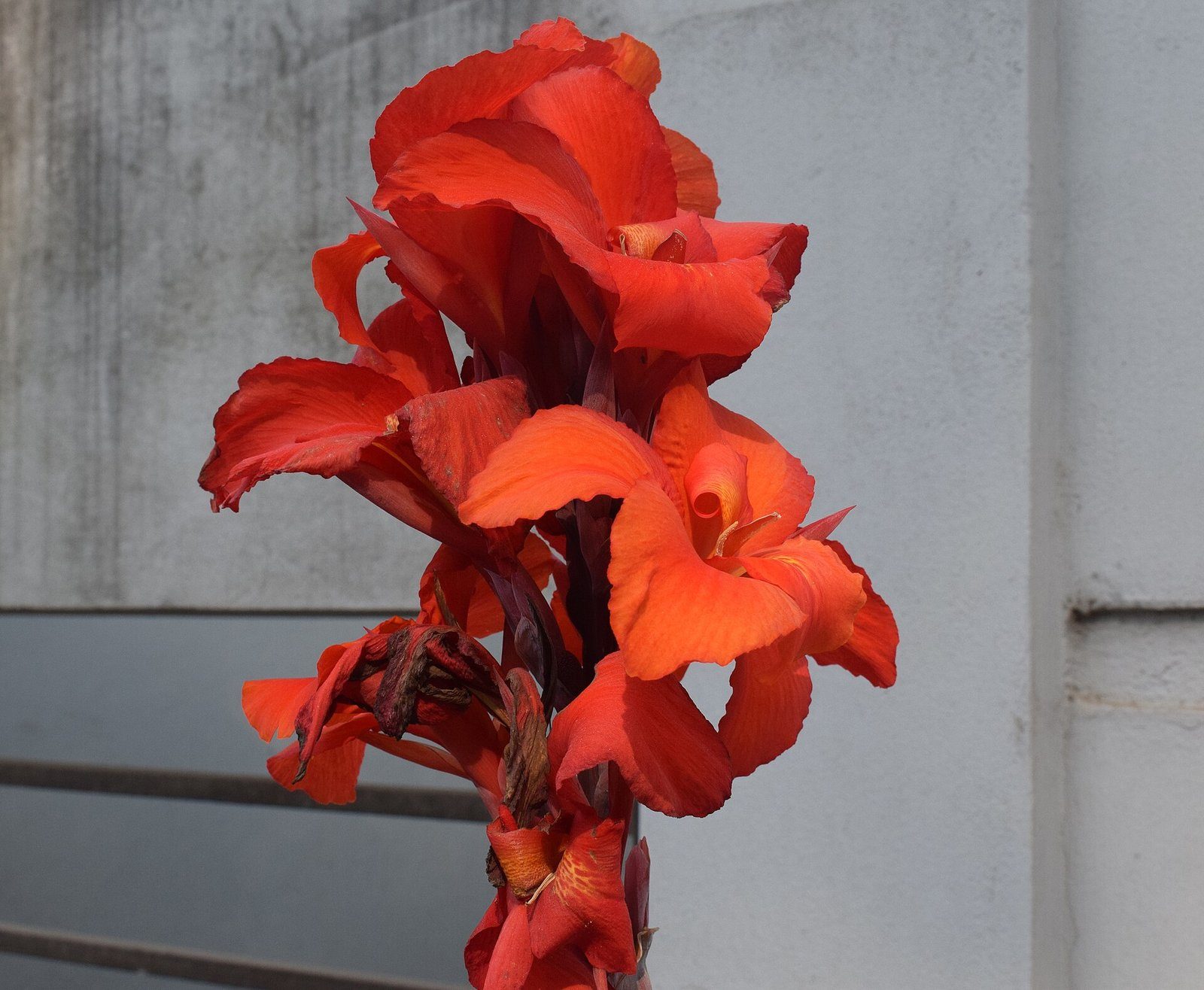 no two parts alike
Try it: cut four real flowers through the centre at every angle and count the cuts that give mirror halves.
A one-sided flower usually has a top and a bottom, and the bottom is a landing step. Watch a honey bee land on the lower lip of a snapdragon and push its way in: it can only enter one way up.
Flowers can also be counted. If the parts in each whorl come in threes (or multiples of three), the flower is trimerous; in fours, tetramerous; in fives, pentamerous. Mustard, with four petals, is tetramerous; china rose, with five, is pentamerous.
A bract is a small, reduced leaf at the base of the pedicel. Flowers with bracts are bracteate; without them, ebracteate.
Where does the ovary sit?
Look at where the calyx, corolla and androecium join the thalamus, compared with the ovary (the swollen base of the gynoecium).
| Flower type | What you see | Ovary is called | Examples |
|---|---|---|---|
| Hypogynous | Gynoecium at the highest point; other parts attached below it | Superior | Mustard, china rose, brinjal |
| Perigynous | Gynoecium in the centre; other parts on the rim of a cup-shaped thalamus, at about the same level | Half-inferior | Plum, rose, peach |
| Epigynous | Rim of the thalamus grows up, wraps the ovary completely and fuses with it; other parts arise above the ovary | Inferior | Guava, cucumber, ray florets of sunflower |
Try it: one handle, three flowers. Raise the rim of the thalamus and watch the name change.
Real flowers cut in half show the same three plans. In the brinjal you cannot see the ovary, but it sits on top, hidden inside the cone of anthers.
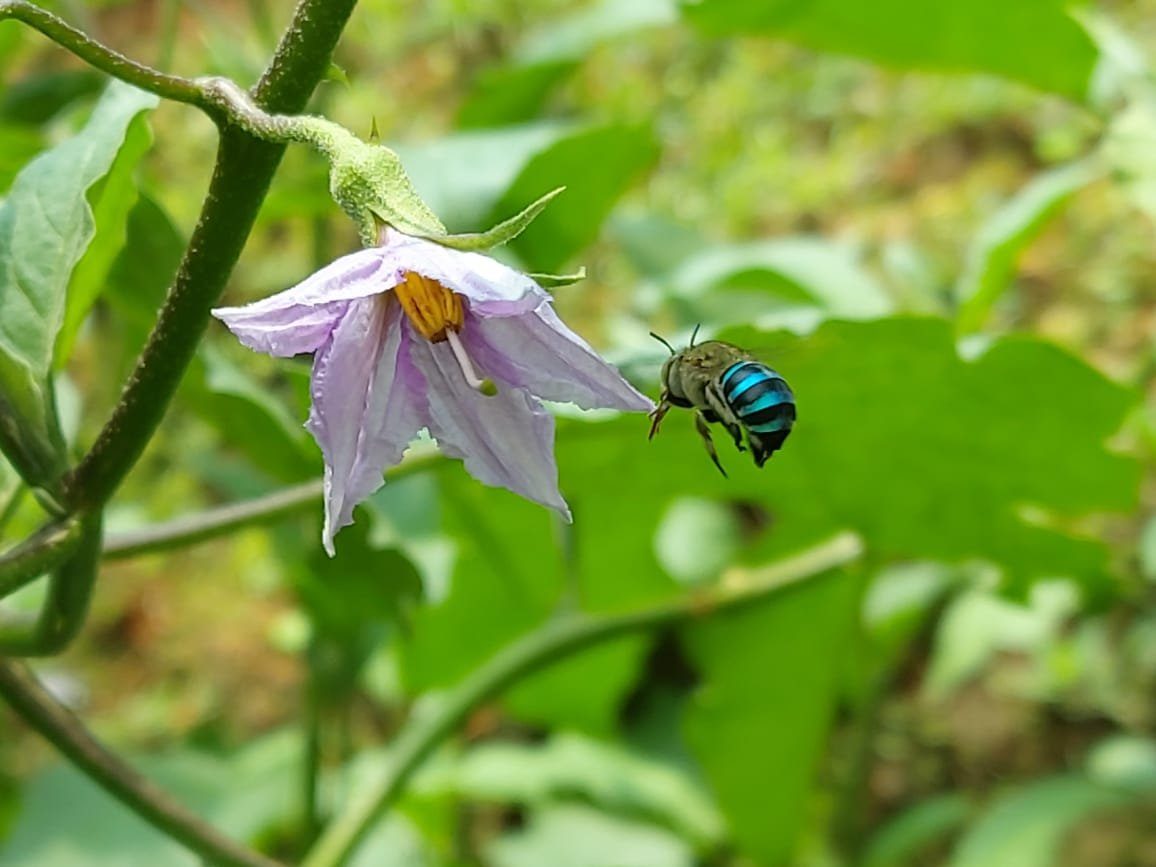 anthers in a conebee
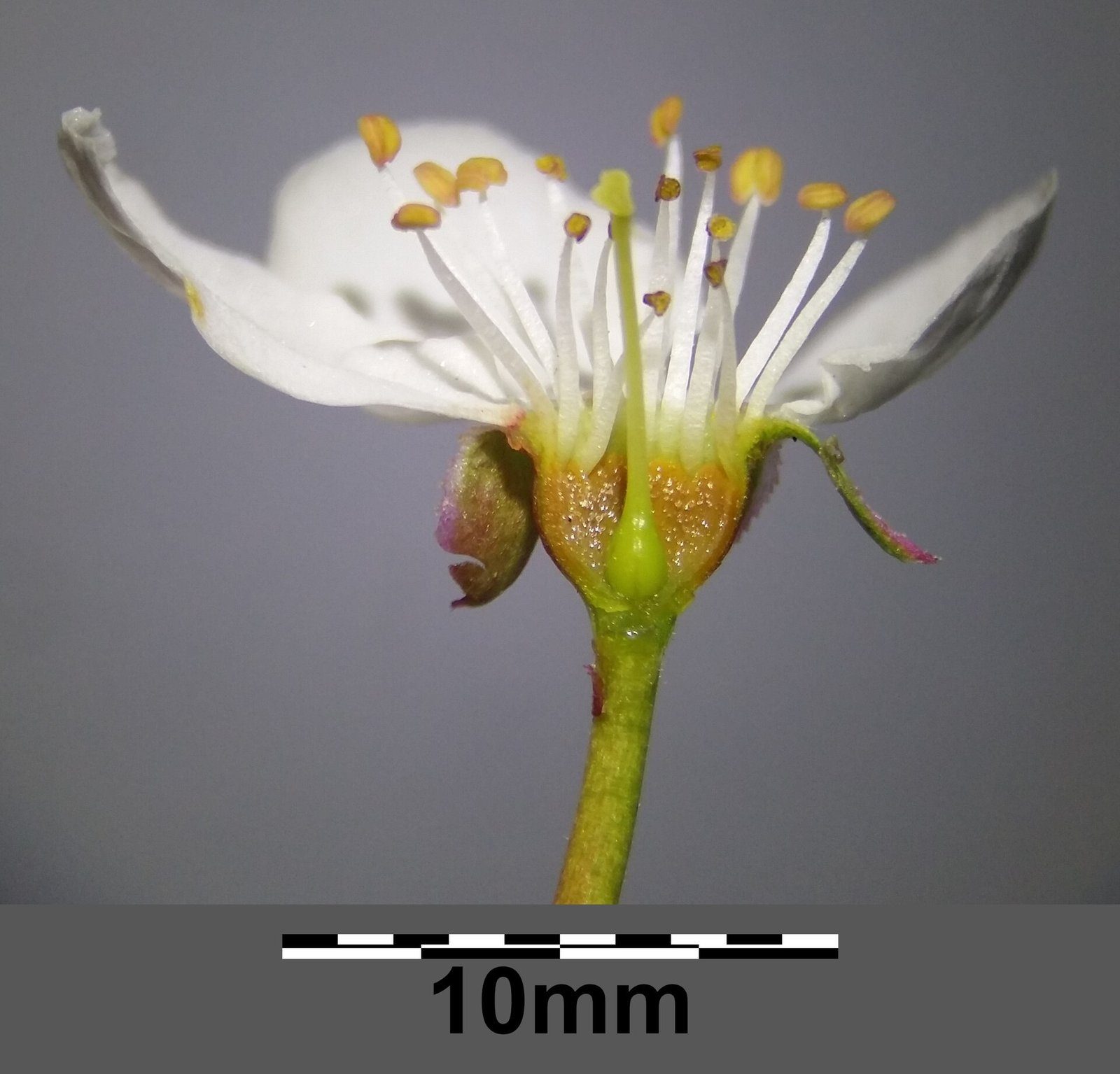 cup-shaped thalamusovary in the cupstamens on the rim
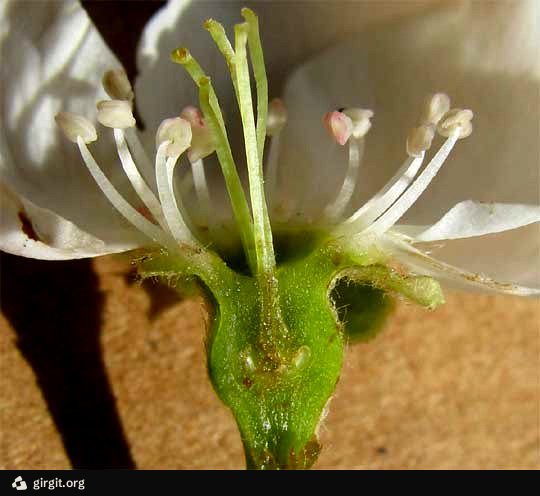 ovary sunk belowstamens arise above it
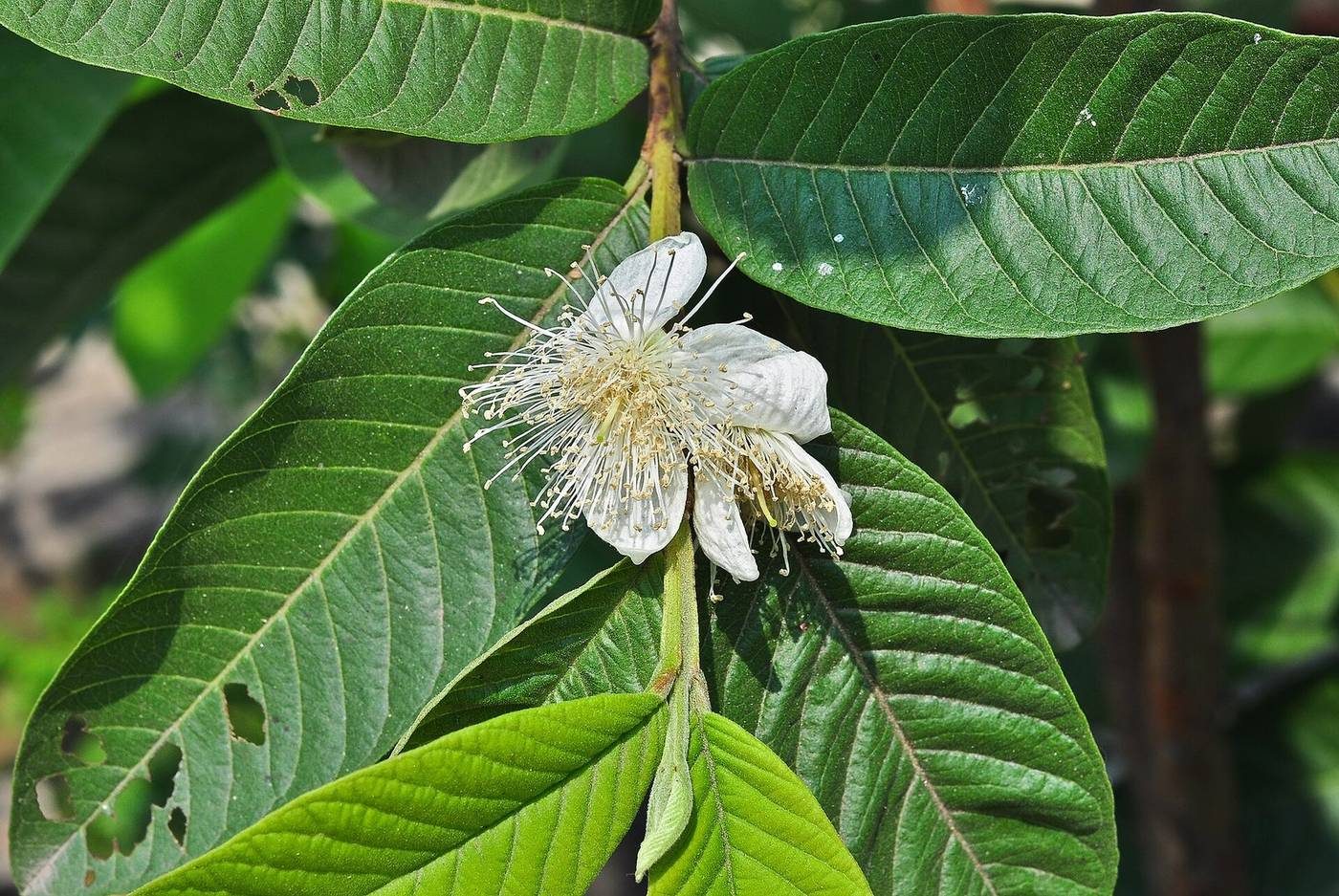 ovary below the flowermany stamens
You can see this in your fruit bowl. A guava has a little dry crown at the end opposite its stalk: the remains of the sepals. They are above the fruit because the ovary was below them, so guava has an inferior ovary.
Don't mix these up
- "Hypo-gynous" describes the other parts (they are below the gynoecium). "Superior" describes the ovary (it is above). Same flower, two names.
- Perigynous flowers (rose, plum, peach) have a half-inferior ovary, not an inferior one.
- Zygomorphic: pea, gulmohur, Cassia, bean. Actinomorphic: mustard (Brassica), datura, chilli.
Just remember
No deeper reason for which plant is which: these are the textbook's examples. Some hooks carry a little reason with them.
- Actinomorphic: mustard, datura, chilli
- Actis is Greek for ray, like the rays of the sun. Picture a chilli plant in a mustard field with a datura weed at the edge: three star-shaped flowers you could cut any way.
- Zygomorphic: pea, gulmohur, bean, Cassia
- Zygon is a yoke: one bar joining a left and a right, one line of symmetry. All four are cousins in the bean family (Fabaceae), so remember the family and you have all four.
- Asymmetric: canna
- Canna can't be cut into matching halves at all.
- Hypogynous (superior ovary): mustard, china rose, brinjal
- "Superior sits on top": the ovary is the top floor. Mustard, brinjal and china rose: a sabzi, a tadka and a garden flower.
- Perigynous (half-inferior): plum, rose, peach
- All three are in the rose family, all grown in the hill orchards of Himachal: picture one orchard where every flower is a little cup.
- Epigynous (inferior ovary): guava, cucumber, ray florets of sunflower
- Look for the crown on the far end: the dry sepals on a guava, the shrivelled flower on the tip of a cucumber. If the old flower is on top of the fruit, the ovary was below it.
- Trimerous, tetramerous, pentamerous
- The number words: tri 3, tetra 4 (a tetrahedron has four faces), penta 5 (pentagon).
- Thalamus
- The swollen tip of the flower stalk that carries the whorls.
- Perianth
- Calyx and corolla when they look alike (lily).
- Actinomorphic
- Radially symmetrical; equal halves along any cut.
- Zygomorphic
- Bilaterally symmetrical; equal halves along one cut only.
- Bract
- A reduced leaf at the base of the pedicel.
- Superior ovary
- Ovary above the other parts (hypogynous flower).
- Inferior ovary
- Ovary sunk in and fused with the thalamus (epigynous flower).
Words to know
A pea flower can be cut into two matching halves only along one vertical line. It is
- actinomorphic
- zygomorphic
- asymmetric
In a rose, sepals, petals and stamens grow from the rim of a cup, roughly level with the ovary. The ovary is
- superior
- half-inferior
- inferior
Calyx and corolla are called accessory organs because
- they help the flower but make no gametes themselves
- they lie in the centre of the flower
- they make pollen
Deep dive · optional
Why is a flower four rings of changed leaves?
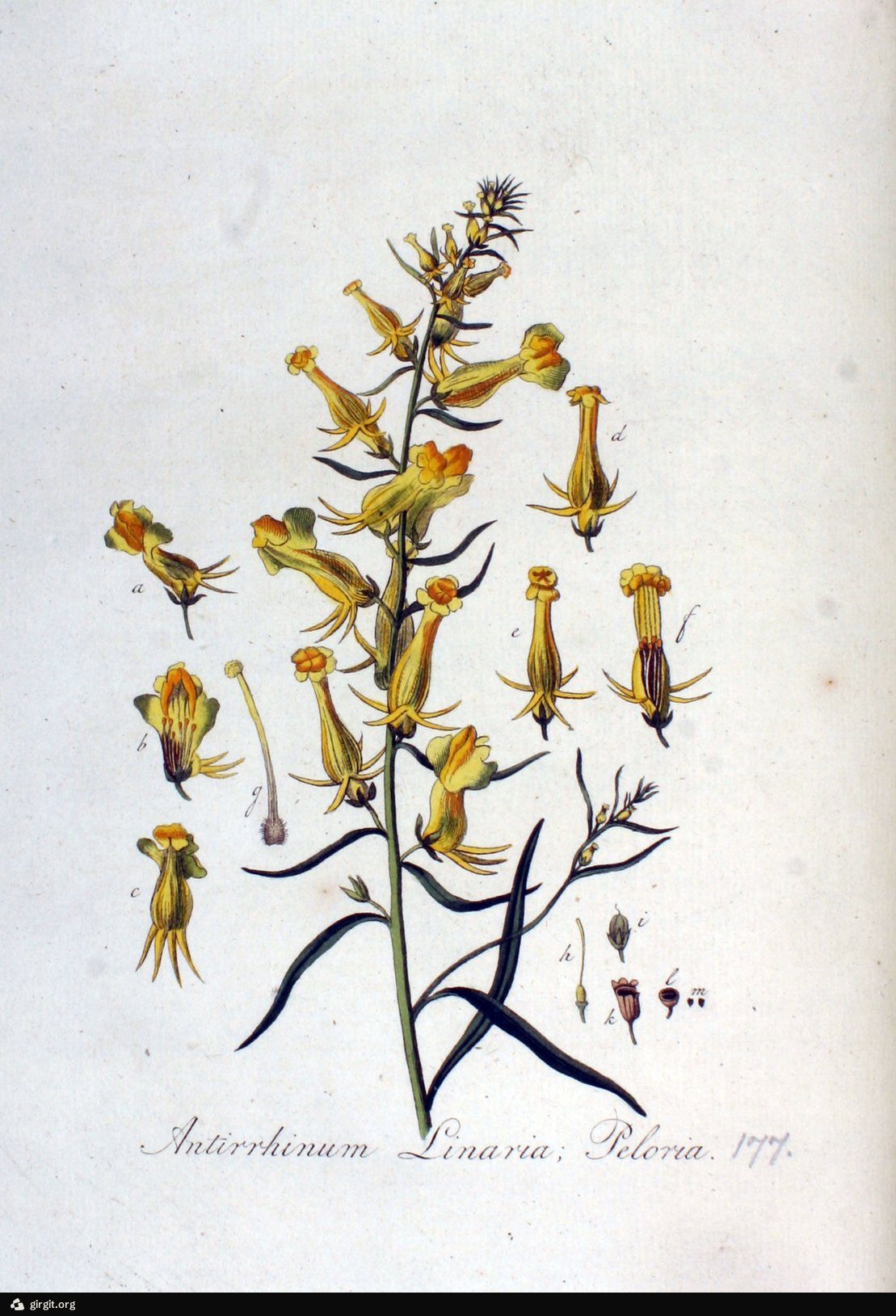
Where the four whorls come from, why they always come in the same order, why so many flowers are lopsided on purpose, and the "monster" flower that puzzled Linnaeus for the rest of his life. The exam won't ask, but it explains every word on this page.
The roots: a shoot that never stretched
- Why are the parts of a flower arranged in rings?Because a flower is a shoot whose internodes never grew. On a normal shoot the nodes are spaced out and each carries a leaf. In a flower the nodes are crushed together on the thalamus, so the parts they carry end up side by side, in rings.
- Why should sepals, petals, stamens and carpels count as "leaves"?They start the same way, as small bumps on a growing tip, just as leaf buds do. Sepals are often green and leafy. In a water lily you can find every in-between form, from sepal to petal to stamen. And when something goes wrong, flower parts turn back into leaves: the green rose below has leafy green parts where its petals should be.
- Then what tells a ring to become a petal and not a leaf?Genes. Three groups of genes, called A, B and C, are each switched on in two neighbouring rings: A in rings 1 and 2, B in rings 2 and 3, C in rings 3 and 4. A alone makes sepals; A with B makes petals; B with C makes stamens; C alone makes carpels.
- So why always sepal, petal, stamen, carpel, from outside in?Because the three overlapping bands can only combine in that order: A, A+B, B+C, C. Switch off a group in a real plant and the rings change exactly as the rule predicts. Switch off all three, and every ring grows as a leaf-like organ.
- And why would evolution build a flower from leaves?Because evolution can only reshape what already exists. A shoot that made leaves was already there; giving its tip a few new "ring labels" turned it into a flower. It is the same trick that made jaws from gill bars: a new job for an old part.
The final proof came from the other direction. In 2001, Takashi Honma and Koji Goto in Japan switched on the two B genes together with one partner gene in the ordinary leaves of Arabidopsis. The leaves grew as petals. Add the C gene too, and they became stamen-like. A leaf, given the right labels, becomes a flower part.
Try it: switch off the gene groups one at a time, as in the real mutant plants.
Why lopsided flowers? A radially symmetric flower like mustard can be visited from any side, so pollen lands anywhere on a visiting insect. A zygomorphic flower has a top and a bottom: a landing step, one way in, and the stamens and stigma placed in one spot. Every bee then picks up pollen on the same part of its body and brings it to the same spot on the next flower's stigma. In a pea flower the step is the pair of wing petals and the boat-shaped keel; when a bee presses on them, the stamens and style inside are pushed out against its underside (in different members of the family they snap out, pump pollen out like a piston, or brush it on). In 2004 the biologist Risa Sargent compared pairs of related plant groups and found that the groups with bilateral flowers usually had more species than their radial sister groups. Sending pollen precisely may make it easier for new species to split off.
The stories
See it
A flower going back to being leaves, and a flower that forgot its top and bottom.
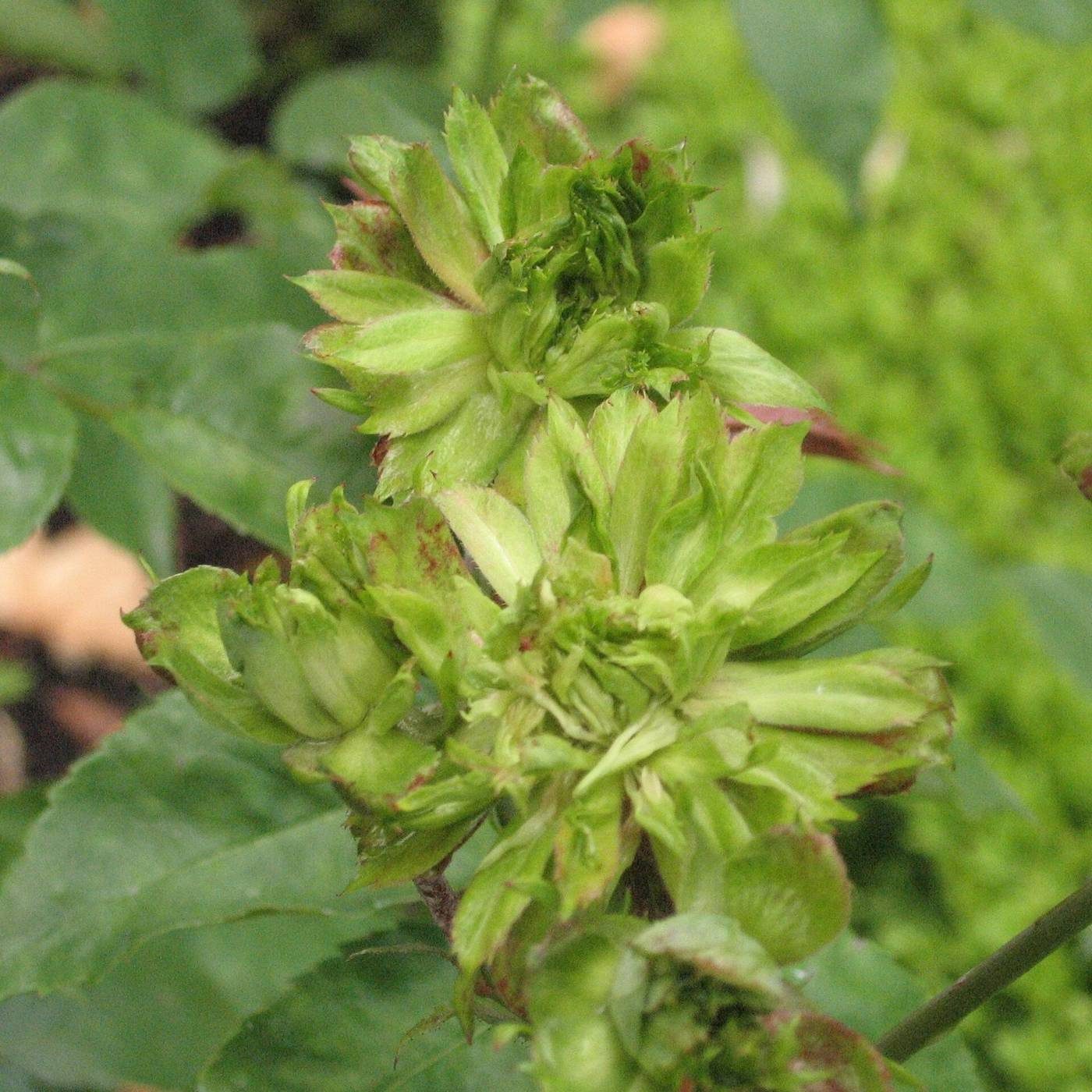 green, leafy parts where petals should be
The pea flower as botanists taught it in the nineteenth century: a big teaching model, opened to show the stamens and pistil hidden in the keel, with the green sepals below.
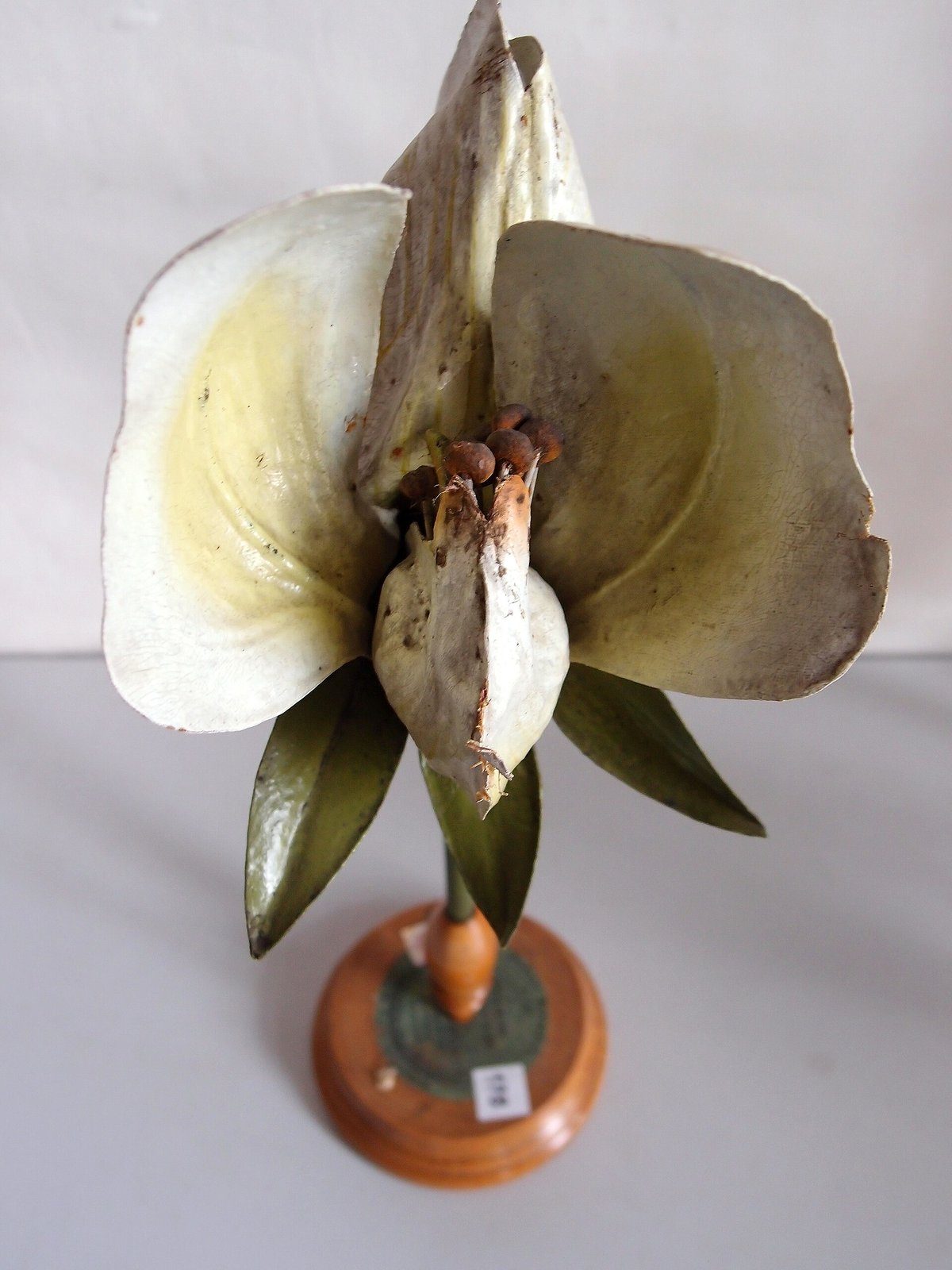 stamens and pistilsepals
Solve it
A mutant flower has, from outside in: carpel, stamen, stamen, carpel. Which group of genes is missing?
- A
- B
- C
- None
Solve it
Gardeners love "double" roses and hibiscus with many extra rows of petals. Using the ABC rule, which part of a normal flower do you expect the extra petals to come from, and which gene group must be weak in those rings? Would such a flower set seed well?
Hint
Answer
Solve it
In a guava or a cucumber the ovary is sunk inside the thalamus. Think like an insect that chews flowers. What might the plant gain from this, and what does the fruit show you later?
Answer
Connect it
Connect it
- A flower is a changed shoot, concept 4. The floral meristem is a shoot tip whose internodes never stretch; this page is where its "leaves" end up.
- Pea flowers, concept 6. The standard, wings and keel overlap in a fixed way in the bud: vexillary aestivation.
- Pollination, Class 12 Ch 1. Landing steps, nectar and one-way entry are pollination at work: see agents of pollination.
- Genes and mutations, Class 12 Ch 4. Homeotic mutants are mutations with very visible effects; peloria shows a change can be inherited without a change in DNA spelling. See mutation.
- Old parts, new jobs. Jaws from gill bars in fishes, petals from leaves here: the same rule of evolution.
Still confused?
If a flower is a shoot, why doesn't it keep growing?
Because the floral meristem is used up. Once it has made the four rings, the last cells go into the carpels in the centre and the tip stops. That is why a shoot whose tip becomes a flower cannot grow any longer, and why a cymose axis ends in a flower. (In the "no C" mutant the tip is not used up, and it keeps making rings: a flower inside a flower.)
Is a mustard flower perfectly radial?
Close, but not quite. Its four petals make a cross, so a cut along either arm of the cross or between them gives matching halves, and the textbook calls it actinomorphic. Inside, two of its six stamens are shorter, which reduces the number of exact mirror cuts. For the exam, mustard is actinomorphic.
Hypogynous and superior describe the same flower. Why two words?
They describe different parts. Hypogynous describes where the other parts sit (below the gynoecium); superior describes where the ovary sits (above them). It is like saying "the ground floor is under the flat" or "the flat is above the ground floor".
Sources
- Bowman, Smyth and Meyerowitz (1991), Genetic interactions among floral homeotic genes of Arabidopsis, Development 112: 1–20
- Honma and Goto (2001), Complexes of MADS-box proteins are sufficient to convert leaves into floral organs, Nature 409: 525–529
- ABC model of flower development and Schneitz (2023) on Coen and Meyerowitz's 1991 "war of the whorls"
- Goethe, Metamorphosis of Plants (1790) and Zemplén: Goethe's morphology and the Urpflanze (Palermo, 1787)
- Pelorism (Linnaeus's Peloria, 1742 find, 1744 description) and Gustafsson (1979), Linnaeus' Peloria: the history of a monster
- Cubas, Vincent and Coen (1999), An epigenetic mutation responsible for natural variation in floral symmetry, Nature 401: 157–161
- Sargent (2004), Floral symmetry affects speciation rates in angiosperms, Proceedings of the Royal Society B 271: 603–608
- Papilionaceous flower (standard, wings, keel and how pollen is released)
- Double-flowered (stamens replaced by petals; Theophrastus)
Picture and video credits
Show 17 picture and video credits
- china-rose-calyx-epicalyx.jpg: SAplants, CC BY-SA 4.0
- china-rose-stamens-stigmas.jpg: Robert F. Tobler, CC BY-SA 4.0
- lily-perianth.jpg: Gabriel Sozzi, CC BY-SA 4.0
- cucumber-male-flower.jpg: Rasbak, CC BY-SA 3.0
- cucumber-female-flower-ovary.jpg: Schlaghecken Josef, CC BY-SA 4.0
- mustard-flower-bangladesh.jpg: Md. Mahian, CC BY-SA 4.0
- datura-metel-flower.jpg: Billjones94, CC BY-SA 4.0
- pea-flower.jpg: Dyorkey, CC BY-SA 3.0
- gulmohar-flower.jpg: Aruna at Malayalam Wikipedia, CC BY-SA 3.0
- cassia-fistula-flower.jpg: Lokeswaran Kaliyappan, CC BY 4.0
- canna-indica-flower.jpg: Dolon Prova, CC BY-SA 4.0
- honeybee-snapdragon.mp4: Tlee6552, CC BY 4.0
- brinjal-flower-bee-kottayam.jpg: Deoxyribose12, CC BY-SA 4.0
- prunus-flower-section.jpg: Stefan.lefnaer, CC BY-SA 4.0
- guava-flower-burdwan.jpg: Joydeep, CC BY-SA 3.0
- green-rose-viridiflora.jpg: A. Barra, CC BY-SA 3.0
- pea-flower-model-brendel.jpg: David Ludwig, CC BY-SA 3.0


