Morphology of Flowering Plants
- 1. Roots: what holds a plant in the ground?
- 2. The stem: how is it different from a root?
- 3. The leaf: base, stalk and blade
- 4. How are leaves and flowers arranged?
- 5. What is a flower?
- 6. Sepals, petals and aestivation
- 7. Stamens, carpels and placentation
- 8. The fruit: what does an ovary become?
- 9. Inside a seed: gram and maize
- 10. How to read a floral formula
- 11. Three families: Solanaceae, Fabaceae, Liliaceae
- Review
1 of 11·NCERT §5.1 · §5.1.1·pp. 57–59·7 min
Roots: what holds a plant in the ground?
The big ideaEvery flowering plant has a shoot above the ground and roots below it, and roots come in three basic kinds: tap, fibrous and adventitious.
In simple words
Pull a small plant out of the ground. The part that was hidden in the soil holds the plant down, drinks water and sometimes keeps food for later. The part in the air makes food from sunlight and carries the flowers. Some plants have one thick main root going straight down. Others have a bunch of thin roots that all look the same. A few grow roots from odd places, such as from their branches.
A banyan tree and a blade of wheat look nothing alike. Yet every flowering plant (an angiosperm) is built from the same few parts: roots, stems, leaves, flowers and fruits. The study of the outer shape and form of these parts is called morphology.
To compare plants, and to sort them into groups, botanists need one fixed set of names for every part. This chapter gives you those names. It also shows how the same part can change its shape to suit where the plant lives, to protect it, to help it climb or to store food.
Pull out any weed from a garden and you will see two halves. The part under the soil is the root system. The part above the soil, the stem with its leaves, flowers and fruits, is the shoot system.
A pea seedling grown against glass shows both halves at once, and the first branching of its root.
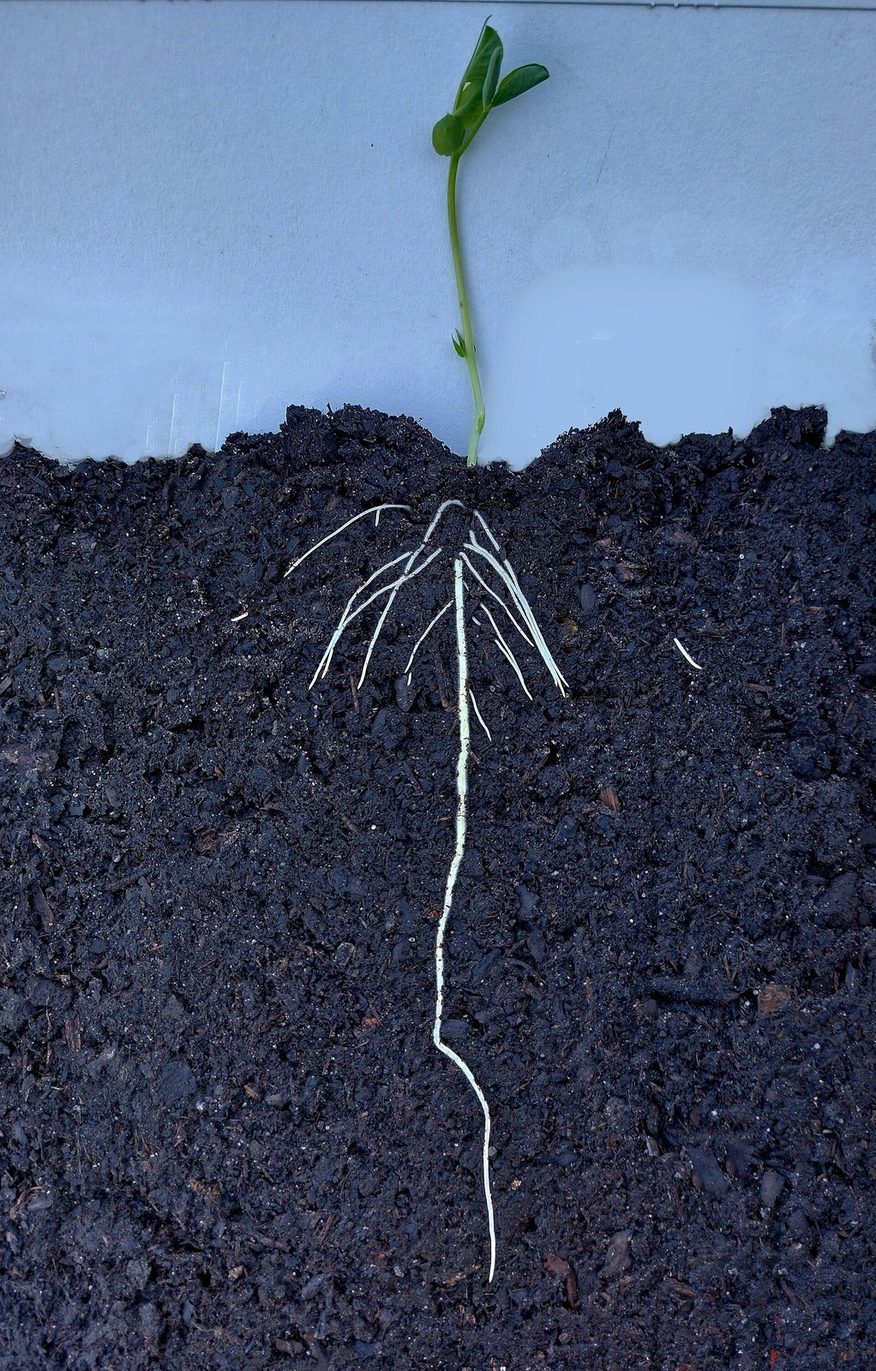 shoot systemsoil levelsecondary rootsprimary root
Three kinds of root system
When a seed sprouts, the first thing to come out is a tiny root called the radicle. What happens next decides the root system.
- In most dicots (plants with two seed leaves) the radicle keeps growing straight down into the primary root. Side roots grow from it, called secondary roots, then tertiary roots from those, and so on. The main root with all its branches is a tap root system. Mustard, mango and neem have tap roots.
- In most monocots (plants with one seed leaf) the primary root lives only a short time. Many thin roots of about equal size grow from the base of the stem instead. This is a fibrous root system, as in wheat, rice and the tuft of roots under an onion.
- Some roots grow from any part of the plant other than the radicle, such as a stem or a branch. These are adventitious roots. Grass, Monstera (a climbing house plant) and the hanging roots of a banyan tree are examples.
| Root system | Where the roots come from | Usually in | Example |
|---|---|---|---|
| Tap root | Radicle grows into one main root with branches | Dicots | Mustard, mango |
| Fibrous root | Many roots from the base of the stem; primary root dies early | Monocots | Wheat, rice |
| Adventitious root | Any part other than the radicle | Both | Grass, Monstera, banyan |
Pull up a coriander (dhania) plant and a bundle of rice seedlings and you hold the two plans side by side: one long main root each, against a tuft of equal threads.
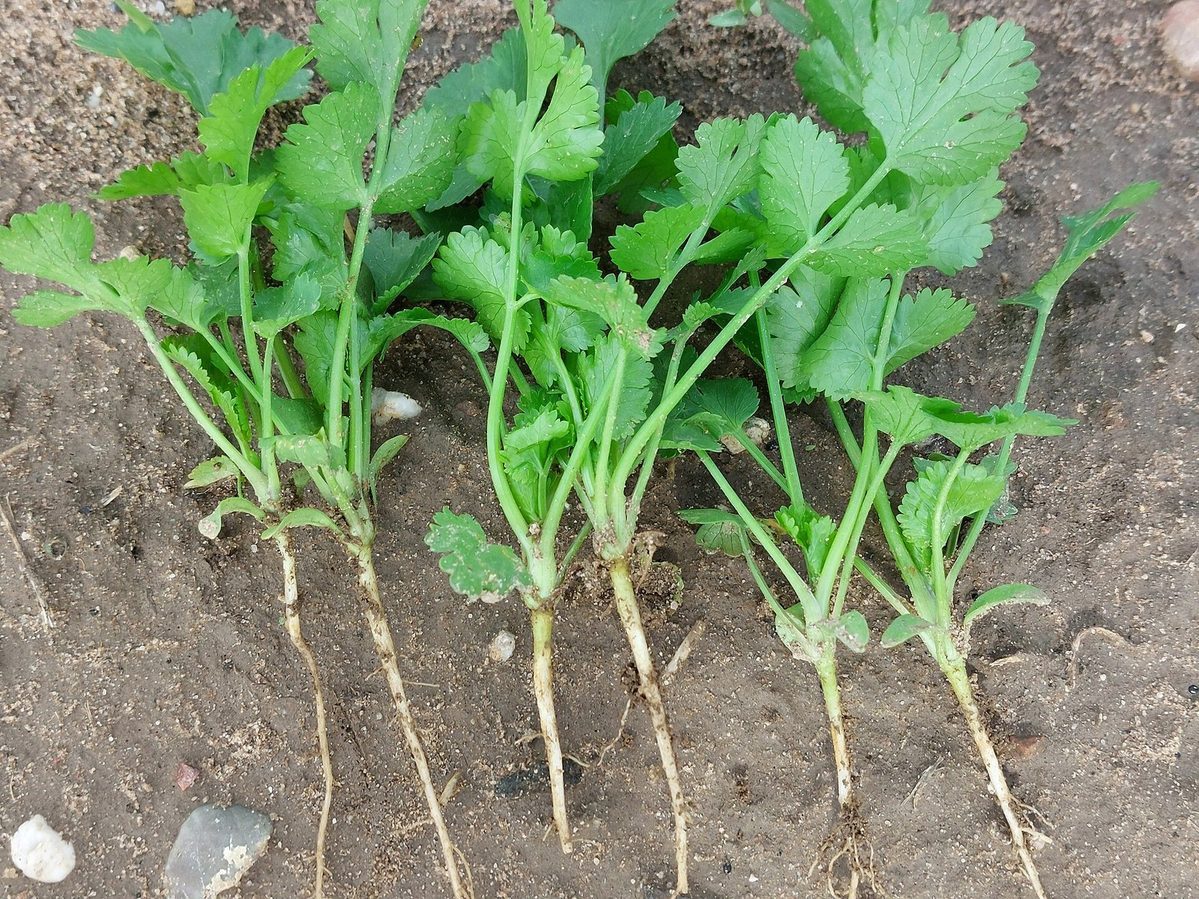 one main tap root
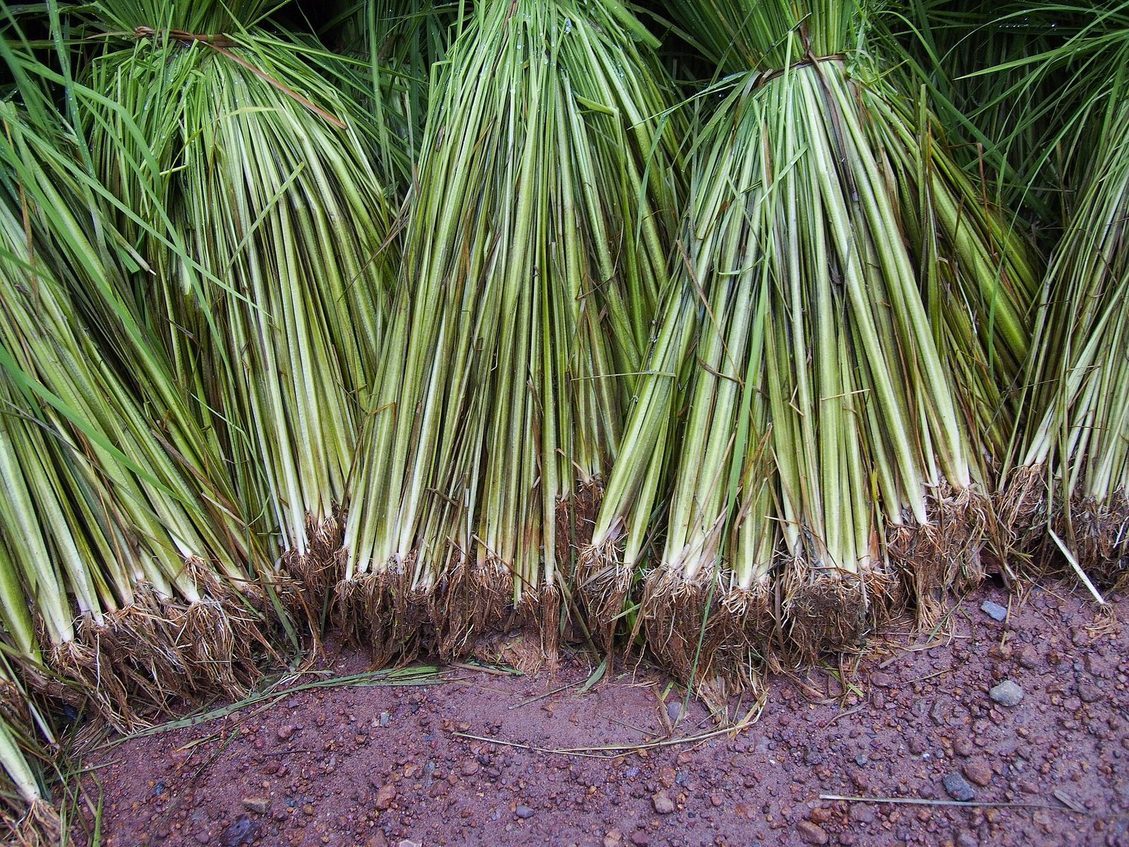 tuft of equal, thin roots
Watch wheat grains sprout. Each grain sends out several roots at once, and none of them becomes a main root: the start of a fibrous system.
Adventitious roots can be thick and many. A palm has no tap root at all: every root you see at the foot of its trunk grew out of the stem.
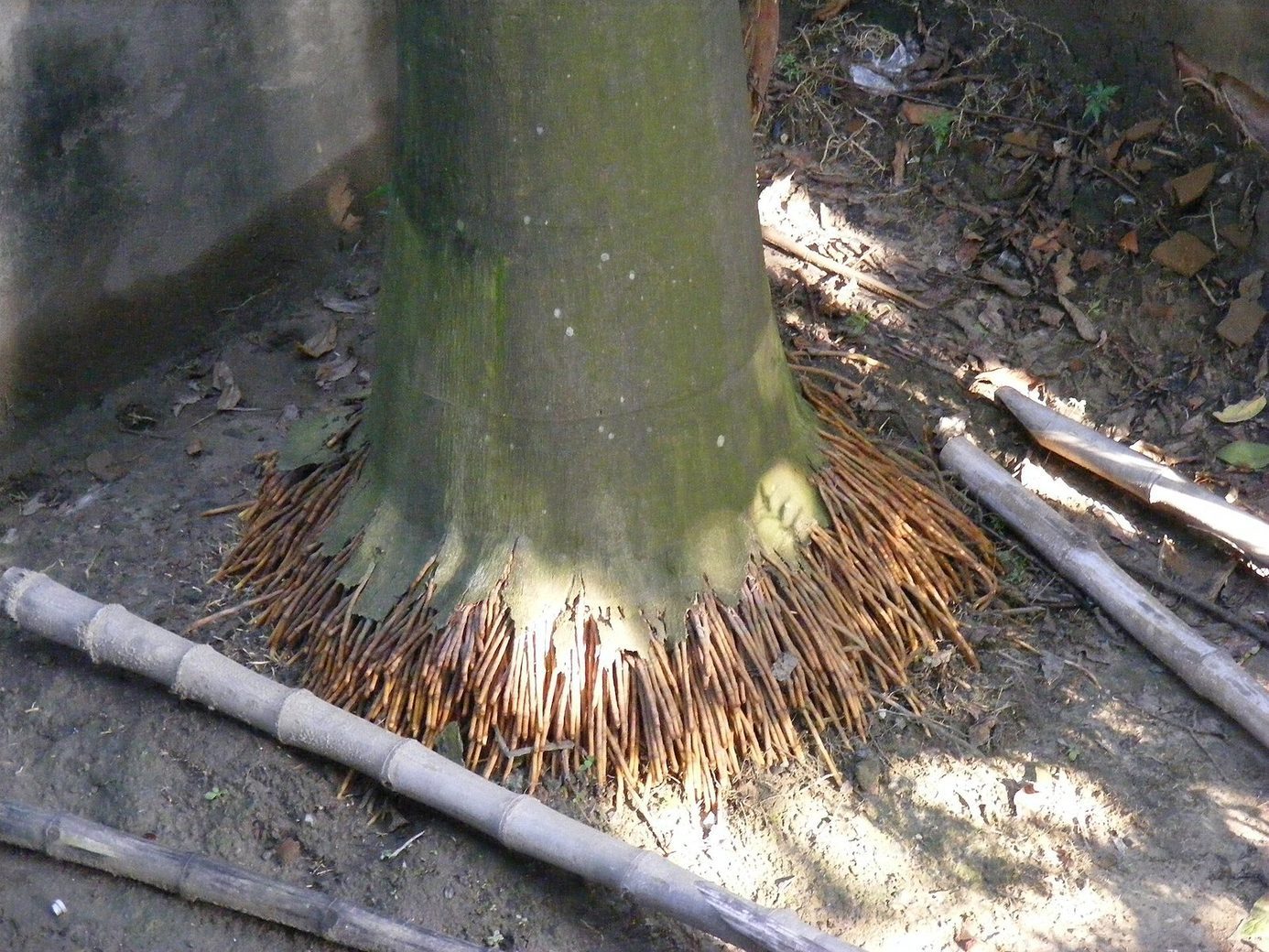 stem (trunk)roots from the stem base
Sort these roots by where they came from.
Roots do four main jobs: they absorb water and minerals from the soil, anchor the plant firmly, store reserve food, and make plant growth regulators (chemicals that control growth).
The four regions of a root tip
Look closely at the last centimetre of a young root and you can find four zones, from the very tip upward.
- Root cap: a thimble-shaped cover over the tip. It shields the soft tip as the root pushes through the soil.
- Region of meristematic activity: a few millimetres above the cap. Its cells are very small, thin-walled and packed with dense protoplasm, and they divide again and again.
- Region of elongation: the cells just behind stretch and grow quickly. This zone makes the root grow longer.
- Region of maturation: here the stretched cells slowly differentiate, that is, take on their final jobs. Some cells of the outer skin grow into very fine threads called root hairs, which soak up water and minerals.
Here are the zones in a real onion root tip, cut lengthwise and laid on its side. The cells are tiny and packed near the tip, then grow longer and longer as you move back.
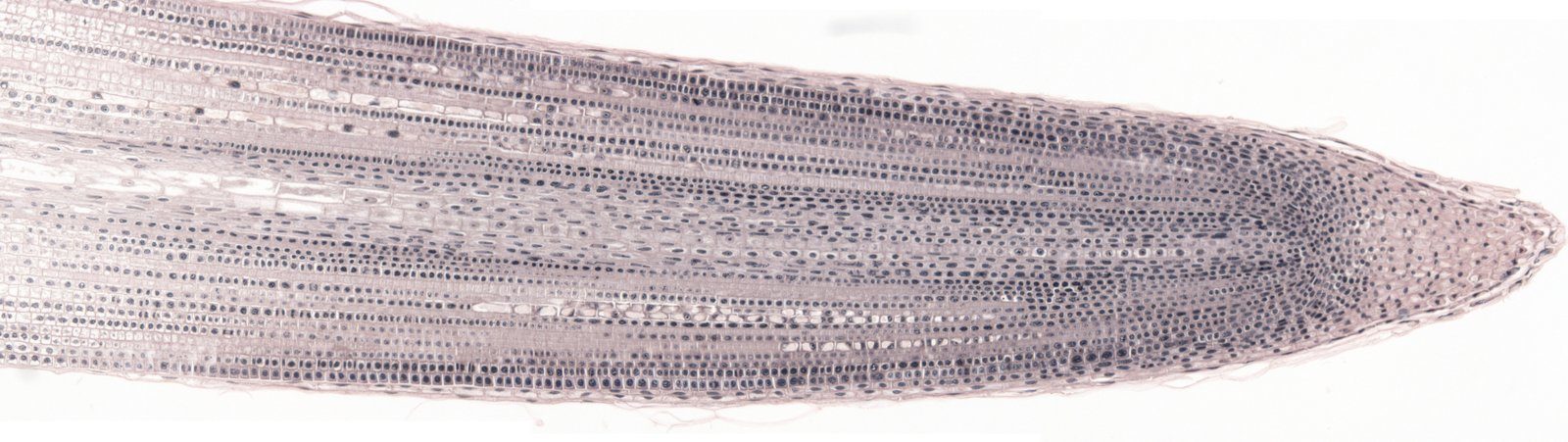 root capdividing cellscells stretching
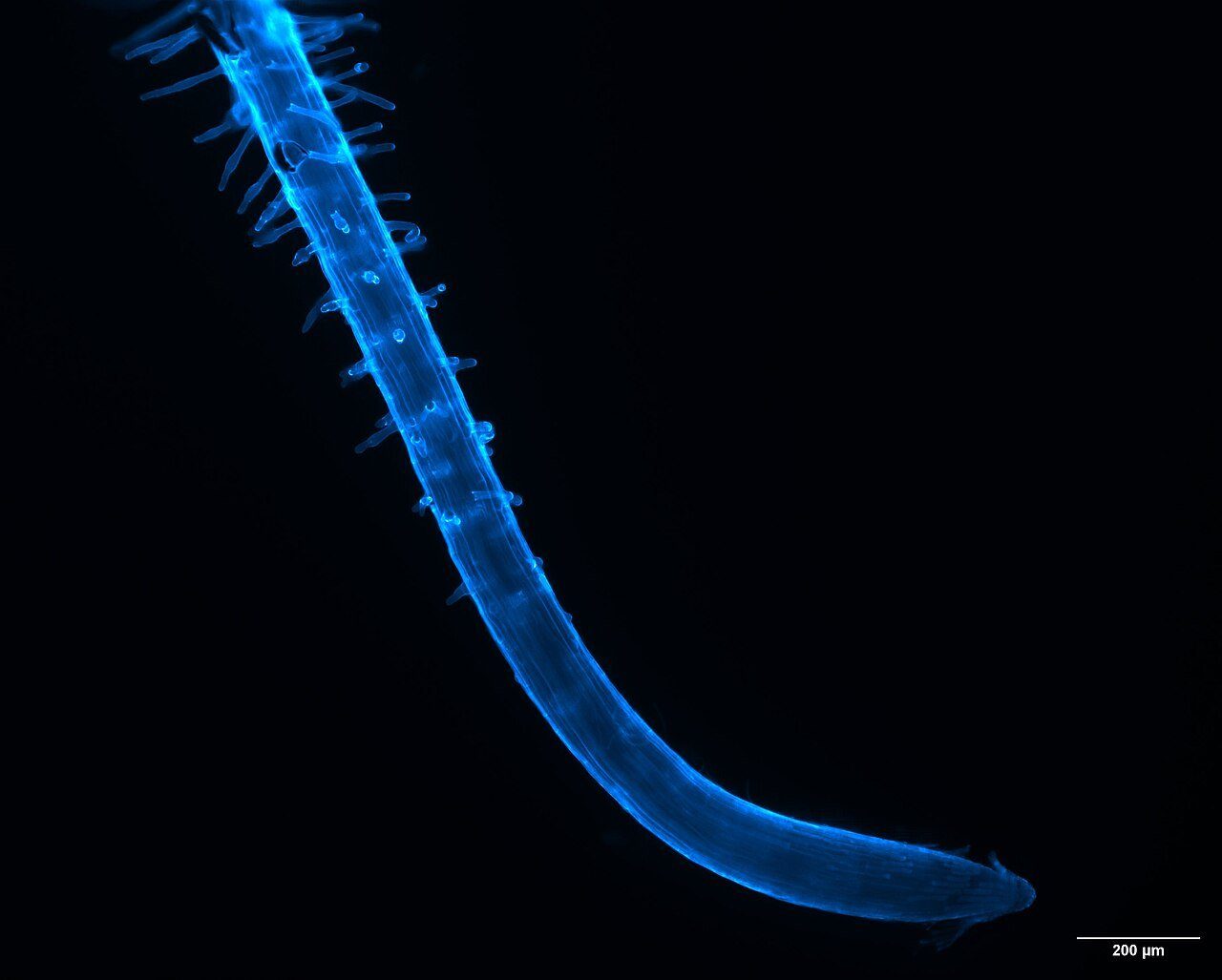 root hairs (maturation)smooth tip, no hairs yet
Try it: paint ink marks on a young root, let it grow, and see which part of it gets longer.
Roots that do extra jobs
Not in the current textbook, but NEET has asked it: in some plants roots change their shape to do extra work.
| Extra job | What the root looks like | Examples |
|---|---|---|
| Storing food | Swollen and fleshy | Carrot, radish, turnip (tap roots); sweet potato (adventitious roots) |
| Support: prop roots | Hang down from branches, reach the soil and become thick pillars | Banyan |
| Support: stilt roots | Grow out from the lowest nodes of the stem and slant into the soil | Maize, sugarcane |
| Breathing: pneumatophores | Grow straight up out of swampy, salty mud to take in air | Rhizophora and other mangroves (halophytes, plants of salty soil) |
Radish and carrot are swollen tap roots. Sweet potato (shakarkandi) is different: its swellings form on roots that grow from the stem of a creeping vine.
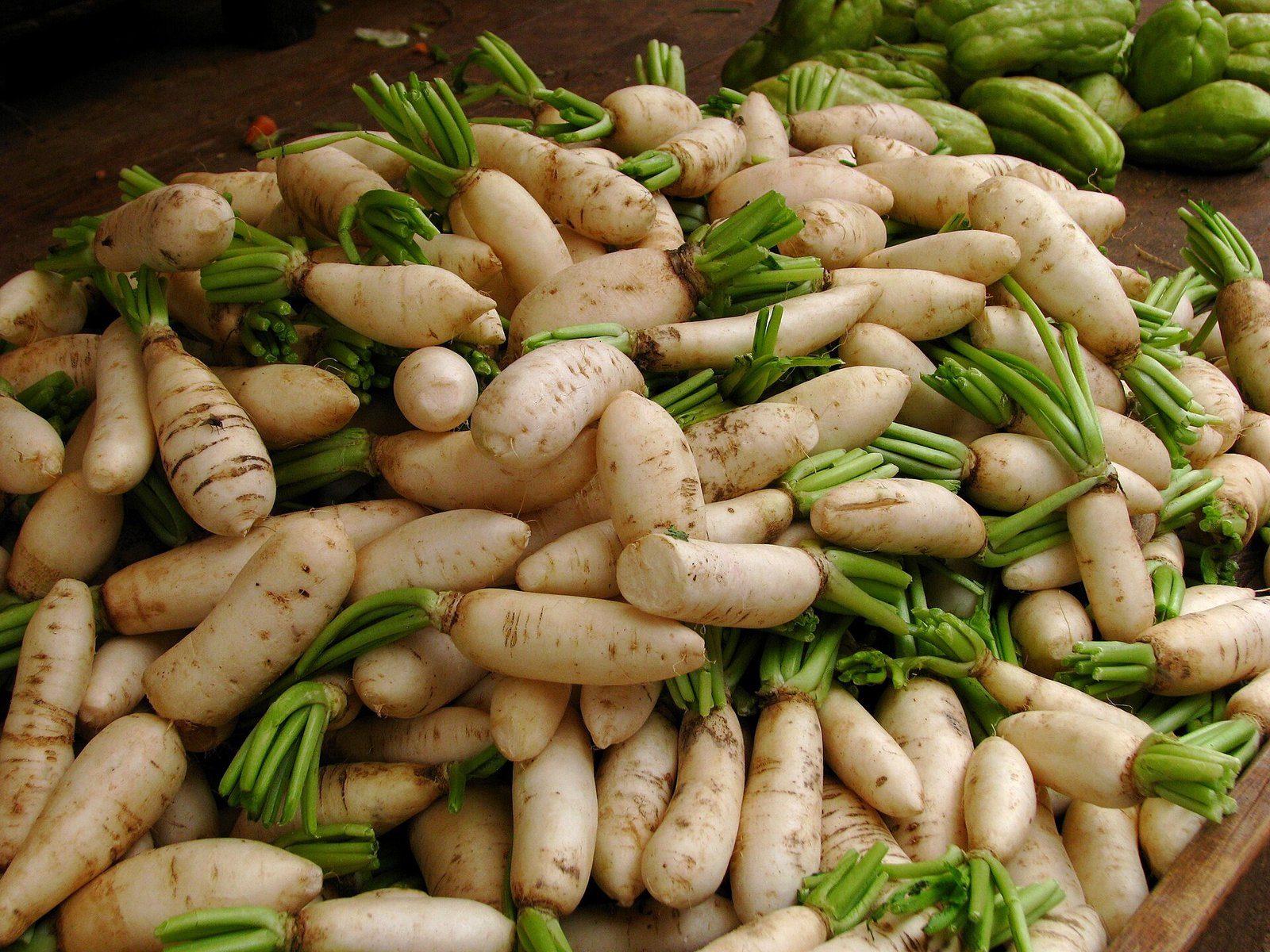 swollen tap rootleaf stalks
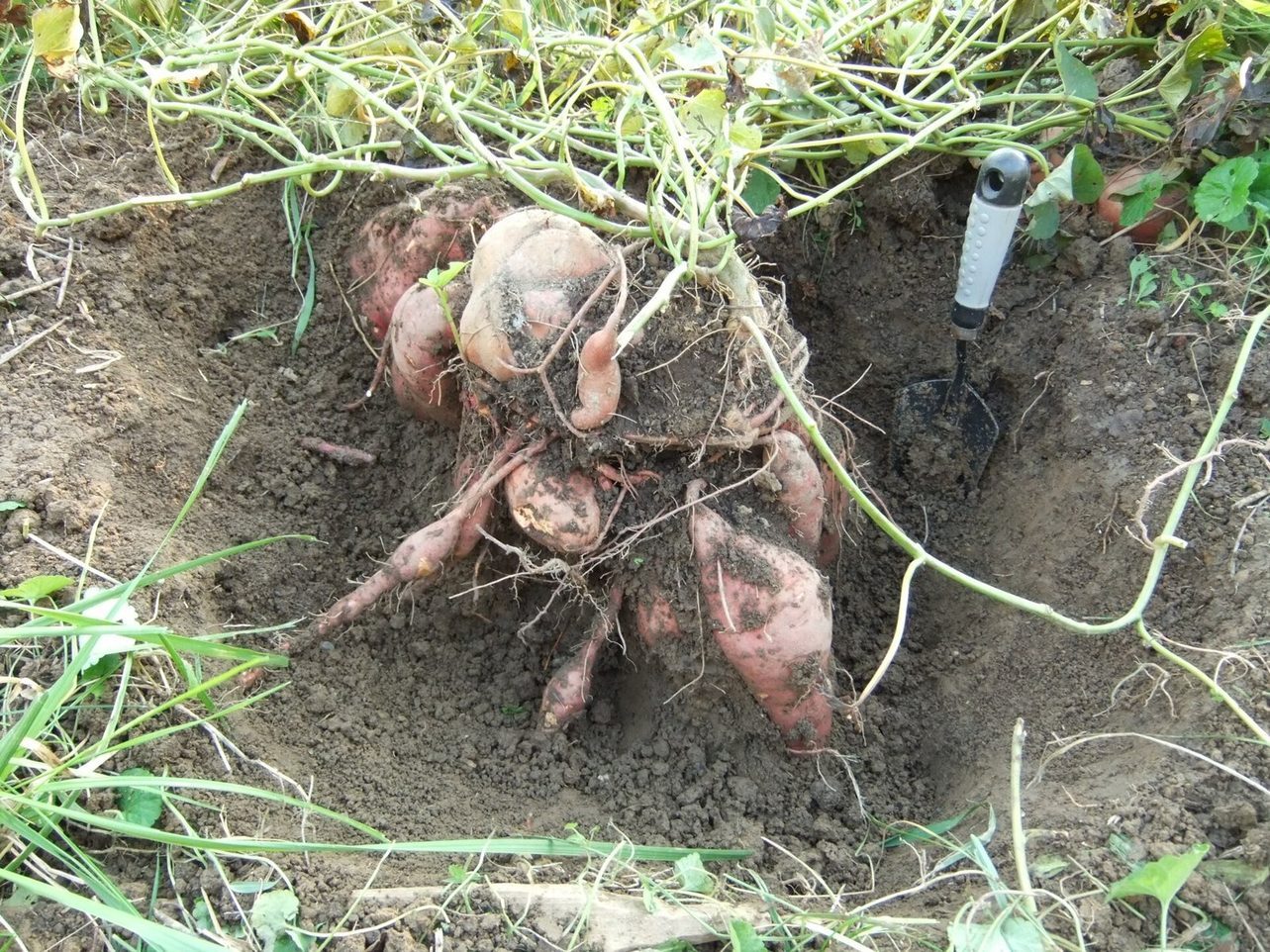 vine (the stem)swollen roots
The banyan drops roots from its branches like ropes; once they reach the soil they thicken into pillars. Maize does the same from the bottom of its stem.
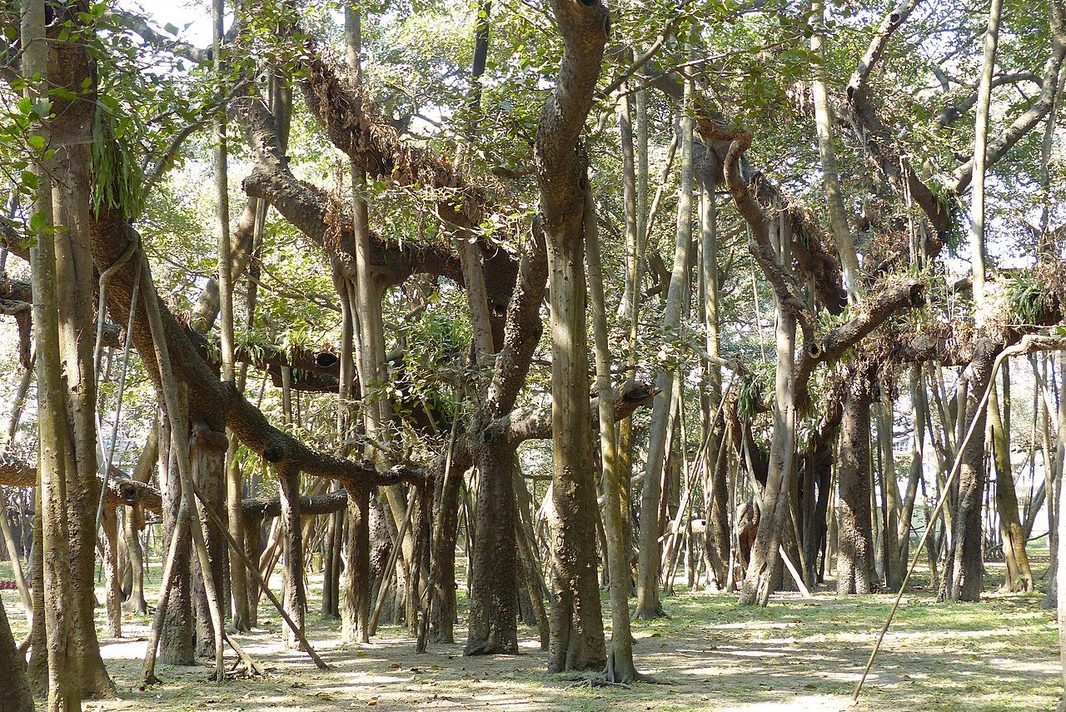 horizontal branchprop root
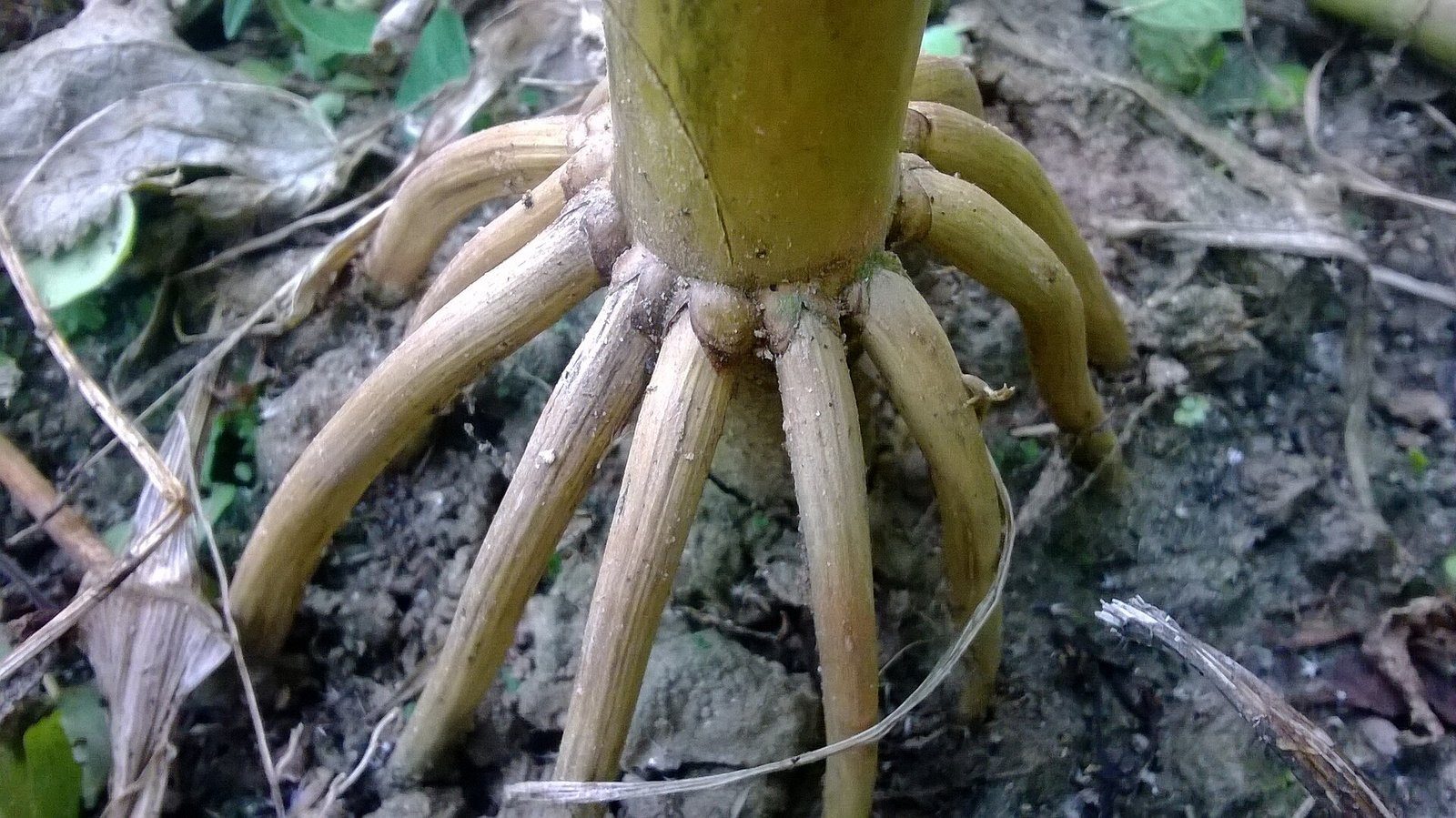 lowest node of the stemstilt roots
Mangrove mud is soaked with salt water and has almost no air. At low tide, thousands of breathing roots stand up out of it like pencils. These are from the Sundarbans in the Ganga delta, the largest mangrove forest on Earth, and from Thane Creek near Mumbai.
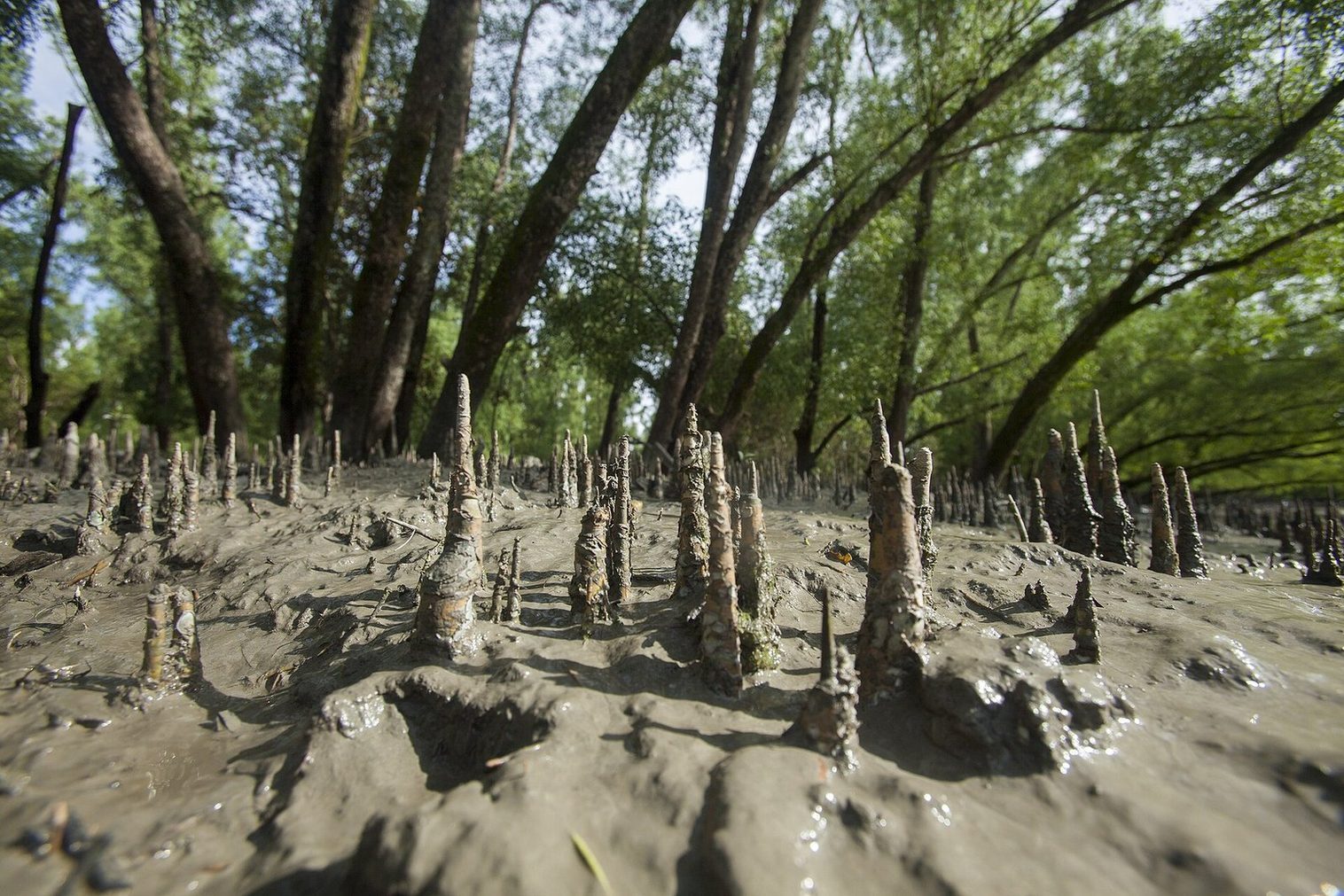 pneumatophoremud at low tide
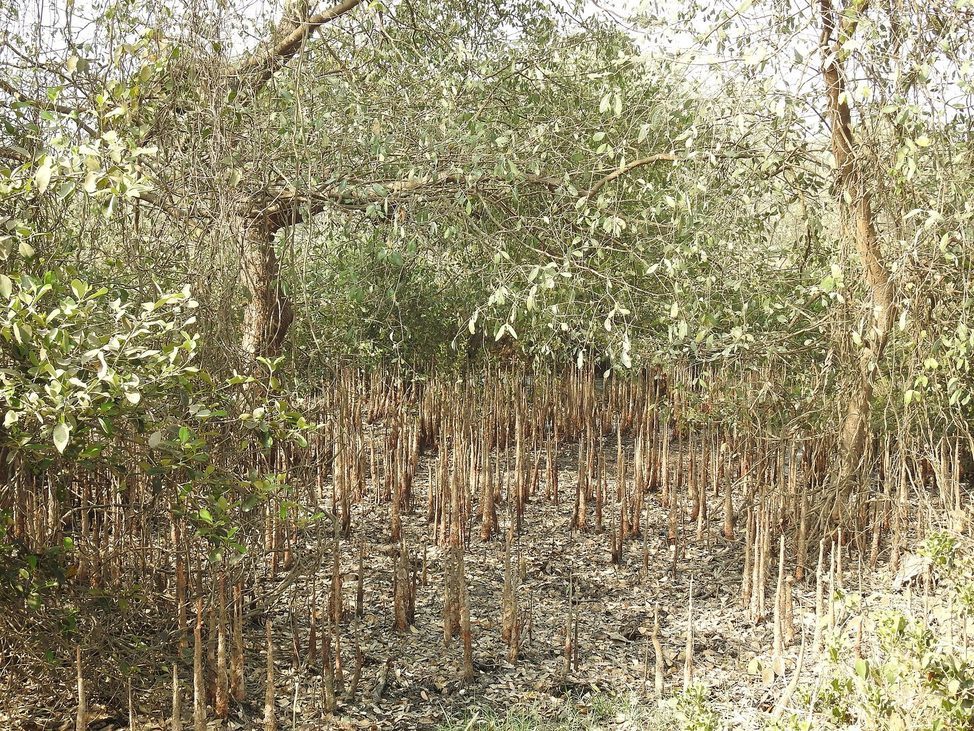 grey mangrove (Avicennia)pneumatophores
Don't mix these up
- Sweet potato is a root (adventitious). Potato is a stem.
- Prop roots (banyan) come down from branches. Stilt roots (maize, sugarcane) come out of the lowest nodes of the stem.
- Root hairs grow in the region of maturation, not in the region of elongation.
Just remember
No deeper reason for these: they are the textbook's example plants and two pairs of names that sound alike. Use the hooks.
- Tap root: mustard (also mango, neem, carrot)
- One root going down like a tap's pipe. Dicots go deep: sarson, aam and neem are all dicots with one main root.
- Fibrous root: wheat (also rice, onion)
- A monocot grows a moustache: a tuft of equal threads under the stem, like the roots on a gehun or dhaan seedling.
- Adventitious root: grass, Monstera, banyan
- Adventure roots: they set off from odd places (a grass stem, a climbing stem, a banyan branch) instead of from the radicle.
- Prop roots (banyan) vs stilt roots (maize, sugarcane)
- Prop roots come down from branches to prop them up, like pillars under a pandal roof. Stilt roots come out of the plant's feet, the lowest nodes, so it stands on stilts.
- Storage roots: carrot, radish, turnip (tap) and sweet potato (adventitious)
- Gajar, mooli and shalgam are the "proper" swollen tap roots. Shakarkandi is the odd one out: an adventitious root. Aloo is not a root at all (it is a stem: next page).
- Pneumatophores: Rhizophora (mangroves)
- Pneuma is Greek for air or breath, as in pneumonia and pneumatic tyres: air roots. Rhizo-phora means root-bearer: a tree that seems to be all roots.
- Morphology
- The study of the outer form of plant parts.
- Radicle
- The baby root inside a seed; it grows into the primary root.
- Tap root system
- One main root with side branches (mustard, mango).
- Fibrous root system
- A bunch of similar thin roots from the stem base (wheat).
- Adventitious root
- A root that grows from anywhere except the radicle (banyan).
- Root cap
- The protective thimble over the root tip.
- Root hairs
- Fine threads in the maturation zone that absorb water.
Words to know
A wheat seedling's first root dies early, and many roots grow from the base of its stem. What kind of root system is this?
- Tap root system
- Fibrous root system
- Prop roots
In which region of the root do cells stretch quickly and make the root longer?
- Root cap
- Region of meristematic activity
- Region of elongation
- Region of maturation
Which of these is an adventitious root?
- Carrot
- A root hanging from a banyan branch
- The main root of mustard
Deep dive · optional
How does a root always find down?
How a root tip feels gravity with sinking grains of starch, the farmer who fooled roots with a spinning wheel, Darwin cutting off root tips, and the banyan in Howrah that turned into a forest. The exam won't ask, but it makes the page stick.
The roots: grains of starch that sink
- Why does a root grow down, even in a dark cupboard?Because it is not following light or water first: it is following gravity. Lay a sprouting chana on its side in the dark and within a day the root tip has curved to point down again.
- How can a soft root feel gravity?In the middle of the root cap sits a block of cells called the columella. Each holds a few heavy grains packed with starch (amyloplasts, here called statoliths, "balance stones"). They are denser than the watery cell around them, so they sink and come to rest on whichever wall is lowest, like sand in a bottle you turn over.
- How does a sinking grain turn into a bend?The cap cells sense which wall the grains are lying on, and the root sends more of the growth hormone auxin along its lower side.
- Why would more auxin on one side bend the root down?In roots, a high level of auxin slows the stretching of cells. The lower side now stretches less than the upper side, so the root curves towards the slow side, downwards, like a line of marching students that swings left when the left file takes shorter steps. When the tip points straight down, the grains lie evenly on the bottom wall, the auxin evens out, and the root grows straight again.
- Why follow gravity at all?Because it is the one cue that is the same everywhere, day and night, in rain or drought: down is where the soil is, with its water, minerals and grip. A seed that falls upside down still sends its root the right way.
Notice where things happen. The sensor is in the cap, at the very tip; the bend happens a few millimetres back, in the region of elongation, because that is where cells are still stretching (try the ink-marks widget above). So a signal must travel from the tip to the bending zone. The idea that a hormone carries it, with more on one side than the other, was put forward by Nikolai Cholodny in 1927 and Frits Went in 1928, working separately.
Honest note: the statolith idea is strongly supported but not the whole story. Thale cress plants whose grains carry little starch, and so sink poorly, still bend down, only more slowly. The grains are the main sensor; the cell may have weaker backups.
Gravity explains the banyan too. Its roots that hang from the branches are adventitious roots, and they also grow straight down, which is why they reach the soil and become pillars.
The stories
See it
The gravity sensor itself: the columella block in a real root cap. The cells that peel off the outside of the cap are the scrapes the cap takes for the tip.
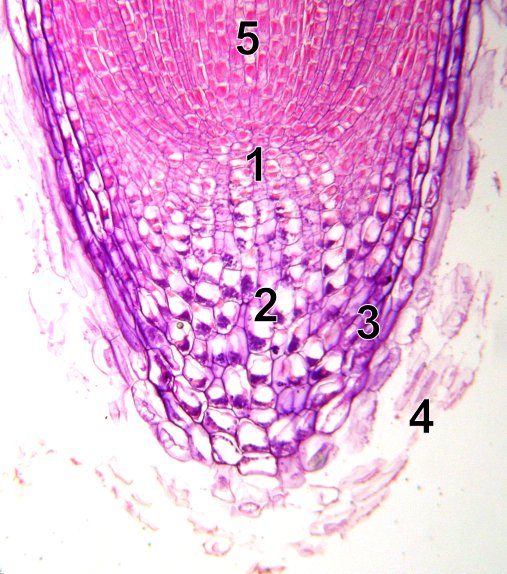 dividing cellscolumella: gravity sensorsold cap cells peel off
Now be Knight. Spin the wheel and watch the root follow the sum of the two pulls. Then cut off the cap, as Ciesielski and the Darwins did.
And the other mangrove answer to airless mud: on Indian and Southeast Asian coasts, Rhizophora stands on arching stilt roots whose bark is dotted with pores.
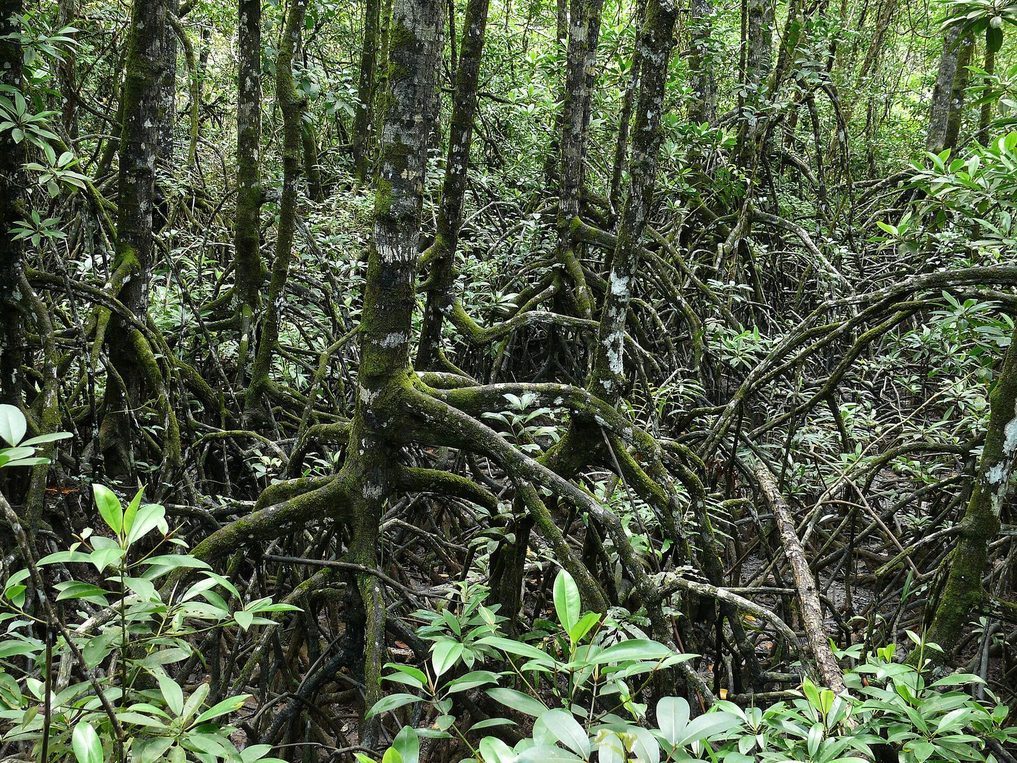 stilt roots arching into the mud
Solve it
Solve it
Check Knight with physics. His wheel was 28 cm across, so the seeds were 0.14 m from the axle. A thing going round in a circle needs an inward pull of \( \omega^2 r \), and the root feels it as an outward push of the same size. Work out the push at 80 and at 250 turns a minute, and the angle below the flat at which the root should point, \( \theta = \tan^{-1}(g / \omega^2 r) \) with \( g = 9.8 \text{ m/s}^2 \). How well do Knight's numbers fit?
Hint
Answer
Solve it
In 1937 Howard Dittmer counted the roots of a single rye plant grown in a box and estimated about 14 billion root hairs (14,335,568,288, to be exact). Suppose each hair is a thin cylinder about 0.2 mm long and 0.01 mm wide (we are assuming these sizes). Roughly how much surface do the hairs give the plant to drink through? Compare it with a badminton court (13.4 m by 6.1 m).
Answer
A seedling is laid on its side on a clinostat, a slow turntable that rolls it round its own long axis, so "down" keeps changing. What does its root do?
- It bends down within a day as usual
- It keeps growing sideways, the way it was pointing
- It turns and grows upwards
Connect it
Connect it
- Stem versus root, next page. The shoot does the opposite: it bends up and towards light. Drag the lamp in the stem or root? widget and watch the roots ignore it.
- Auxin, Class 11 Ch 13. The hormone that does the bending is the first plant growth regulator you will meet in auxins; the same chemical keeps side buds asleep.
- Inside a root, Class 11 Ch 6. Cut a root across and you find the cells behind its root hairs: inside a root.
- Circular motion, Physics Class 11. Knight's wheel is uniform circular motion: \( \omega^2 r \) is the same quantity that pins you to the wall of a spinning giant wheel ride at a mela.
- The Sundarbans. About 10,277 km² of mangrove, of which about 4,260 km² is in West Bengal; the Indian side became a World Heritage Site in 1987 and the Bangladesh side in 1997. Its most common tree is the sundari, Heritiera fomes. See in situ conservation.
Still confused?
The textbook says Rhizophora has pneumatophores. Is that right?
Partly. The pencil-like roots that poke straight up out of the mud, as in the pictures above, belong mainly to Avicennia, the grey mangrove, common on Indian coasts (the Thane Creek picture). Rhizophora breathes mostly through its arching stilt roots, whose bark is full of pores (lenticels) that let air into spongy tissue inside. Either way the reason is the same: oxygen moves about ten thousand times faster through air than through water, so a root in waterlogged mud must reach up into the air. For the exam, write Rhizophora, as NCERT does.
Prop roots and stilt roots both hold the plant up. Why two names?
Because they start from different places. Prop roots drop from branches high up (banyan); stilt roots grow from the lowest nodes of the stem, just above the soil (maize, sugarcane). Both are adventitious, because neither comes from the radicle.
How can I tell a swollen root from a swollen stem in the kitchen?
Look for eyes. A stem has nodes, and nodes carry buds: the "eyes" on a potato are buds that can sprout. A root has no nodes and no buds along it, so a carrot, radish or sweet potato is smooth apart from thin side roots. (Sweet potato can sprout shoots, but they come from its top end, not from eyes in rows.)
Sources
- Knight, T. A. (1806), On the direction of the radicle and germen during the vegetation of seeds, Philosophical Transactions 96 (full text)
- Darwin, C. and Darwin, F. (1880), The Power of Movement in Plants (Darwin Online)
- Gravitropism: statoliths, columella, auxin, Cholodny and Went
- The Great Banyan, Acharya Jagadish Chandra Bose Indian Botanic Garden
- Botany One: what are root hairs for? (Dittmer's rye count)
- Pneumatophores: lenticels, aerenchyma and diffusion of oxygen and Rhizophora
- The Sundarbans: area and World Heritage listing
Picture and video credits
Show 16 picture and video credits
- pea-seedling-root-system.jpg: Schlaghecken Josef, CC BY-SA 4.0
- coriander-tap-roots.jpg: Schlaghecken Josef, CC BY-SA 4.0
- rice-seedlings-fibrous-roots.jpg: Myrmux, CC BY-SA 4.0
- wheat-roots-growing.mp4: Szabolcs Turuczki, CC BY-SA 4.0
- royal-palm-adventitious-roots.jpg: Kumar83, CC BY-SA 3.0
- onion-root-tip-section.jpg: Thomas Geier, Forschungsanstalt Geisenheim, CC BY-SA 3.0
- arabidopsis-root-hairs.jpg: G Lens Microscopist, Megan Gerber, CC BY 4.0
- radishes-koyambedu-market.jpg: McKay Savage from London, UK, CC BY 2.0
- sweet-potato-roots-exposed.jpg: Vmenkov, CC BY-SA 3.0
- great-banyan-prop-roots.jpg: Paul Hamilton, CC BY-SA 2.0
- maize-prop-roots-nepal.jpg: Krish Dulal, CC BY-SA 3.0
- sundarbans-pneumatophores.jpg: AKM Emdadul Islam Bitu, CC BY-SA 4.0
- avicennia-pneumatophores-thane.jpg: Dr. Raju Kasambe, CC BY-SA 4.0
- great-banyan-howrah.jpg: McKay Savage from London, UK, CC BY 2.0
- root-tip-columella.jpg: SuperManu, CC BY-SA 2.5
- rhizophora-stilt-roots.jpg: Bernard DUPONT from FRANCE, CC BY-SA 2.0


