- 1. What is a cell?
- 2. Cell theory
- 3. What is inside a cell?
- 4. How big is a cell?
- 5. Bacteria: prokaryotic cells
- 6. Plant and animal cells
- 7. The cell membrane and cell wall
- 8. The endomembrane system
- 9. Mitochondria and plastids
- 10. Ribosomes, cytoskeleton, cilia and centrioles
- 11. The nucleus
- Review
1 of 11·NCERT §8.1·p. 87·4 min
What is a cell?
The big ideaA cell is the smallest thing that can stay alive on its own.
In simple words
Every living thing is built out of tiny boxes too small to see. Each box takes in food, makes its own power, throws out waste and makes more boxes like itself. Break the box open and it stops being alive. That tiny box is a cell.
A stone is not alive. A mango leaf is. Both are made of the same kinds of atoms. The difference is that the leaf is built of cells and the stone is not.
Some living things are just one cell doing everything alone, like an amoeba or a bacterium. They are unicellular: "uni" means one. Others, like you, a neem tree or a housefly, are made of many cells that share the work. They are multicellular: "multi" means many.
The unit of life
A one-celled living thing can do everything life needs: eat, make energy, get rid of waste, react and copy itself. Take away any key part, such as its skin, its genes or its protein machines, and it can't. Nothing smaller than a whole cell can live by itself.
That is why the textbook calls the cell the fundamental structural and functional unit of life. Structural means bodies are built from cells, like a wall from bricks. Functional means the work of life happens inside cells.
Seeing cells for the first time
Cells are too small for our eyes, so nobody saw one until the microscope was invented.
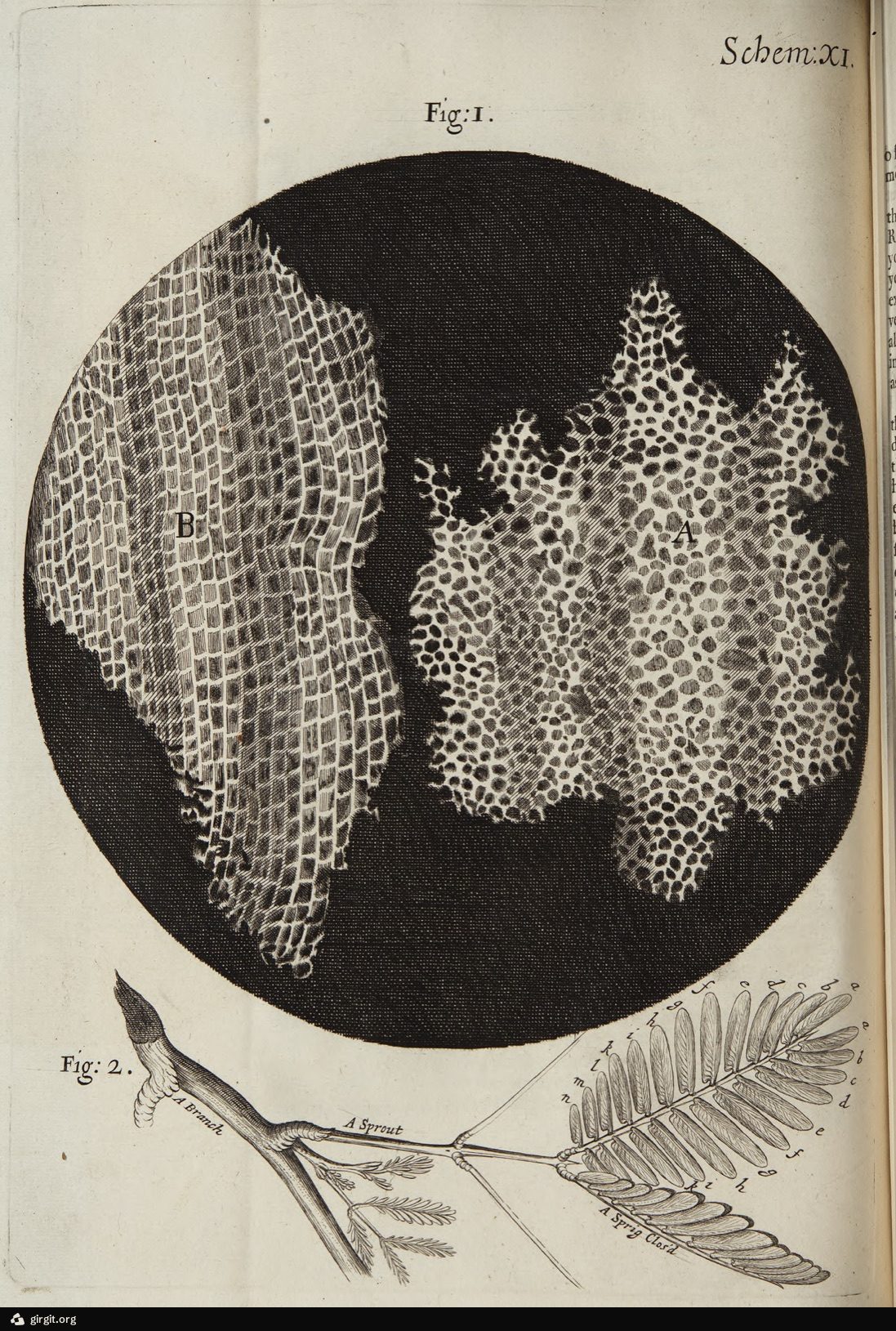 cellscell walls
In 1665 Robert Hooke looked at a thin slice of cork and saw rows of little empty boxes. He named them cells, after the small rooms monks lived in. They were only the dead walls; the living part was long gone.
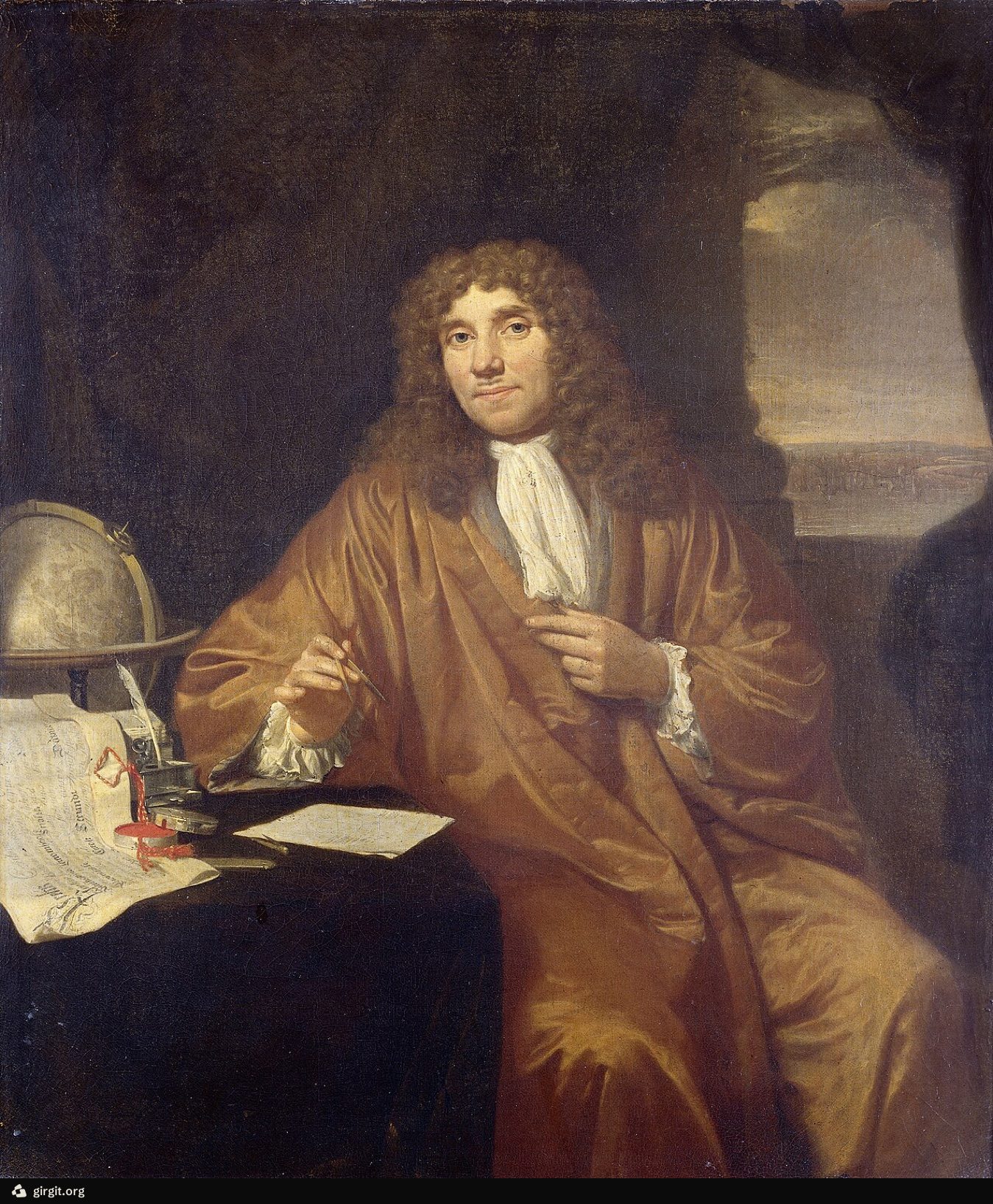
In the 1670s Antonie van Leeuwenhoek, a Dutch cloth seller who made his own tiny lenses, became the first person to see and describe living cells: tiny creatures swimming in pond water. In 1831 Robert Brown spotted a dark round body inside plant cells and named it the nucleus, meaning "kernel".
Textbook check · §8.1, 8.5.10Brown named the nucleus, but he was not the first to see one
- The textbook says
- Robert Brown discovered the nucleus (1831).
- What we know now
- Brown named it and showed it is a regular part of plant cells, but he was not the first to see one. Leeuwenhoek saw nuclei in the red blood cells of salmon over a century earlier, and the botanist Franz Bauer drew one clearly in 1802.Source: History of Biology: Cell Theory and Cell Structure
- In the exam
- Write Robert Brown (1831). That is the answer NEET expects.
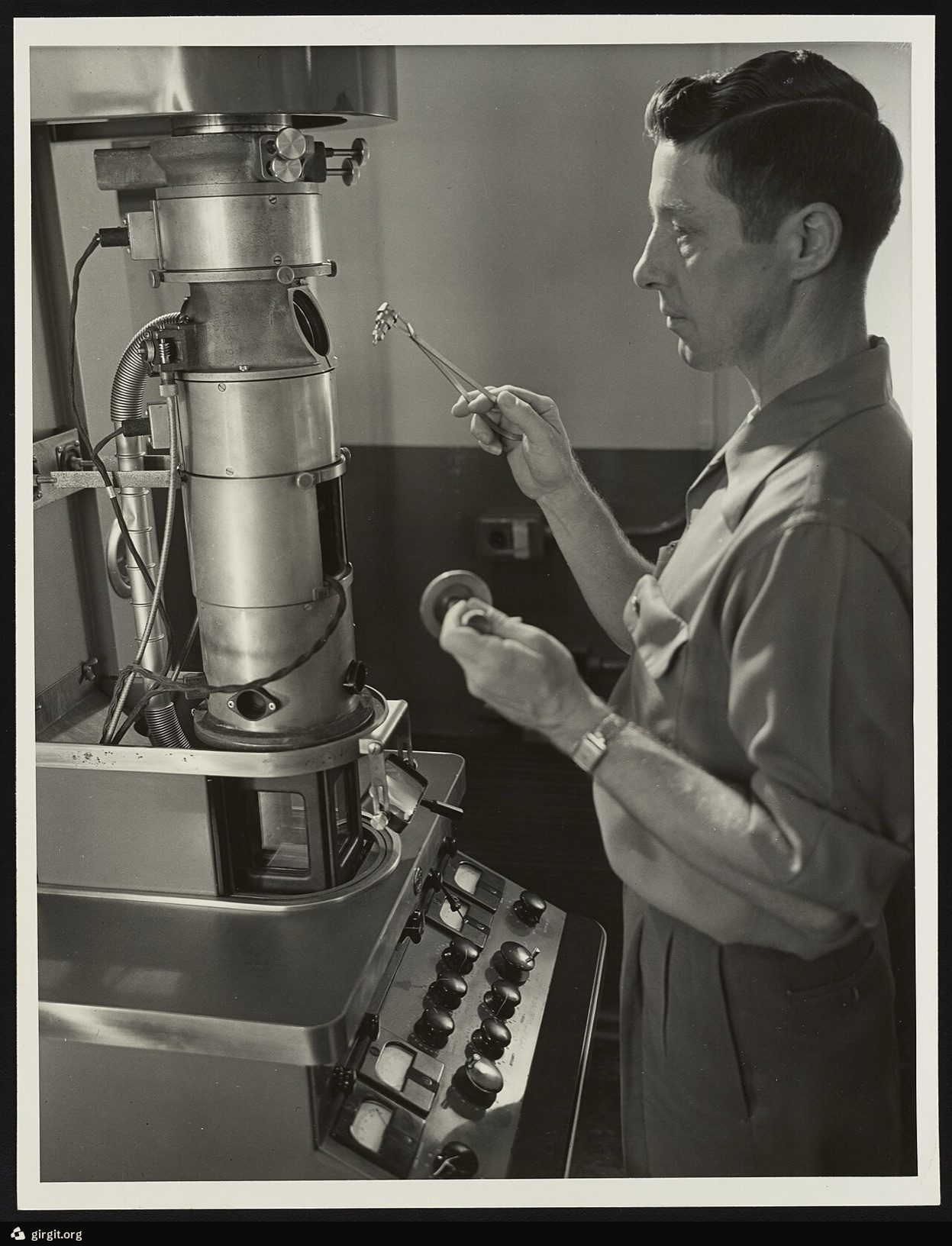
Later the electron microscope, which uses beams of electrons instead of light, let us see the tiny parts inside cells.
- Cell
- The smallest unit that can live on its own.
- Unicellular
- Made of one cell (amoeba, bacteria, yeast).
- Multicellular
- Made of many cells (you, plants, insects).
- Structural and functional unit
- Bodies are built from cells, and life's work happens inside them.
- Nucleus
- The dark round "kernel" inside a cell, named by Robert Brown in 1831.
Words to know
Why is the cell called the basic unit of life?
- It is the smallest thing that can live on its own
- It is the smallest thing in the body
- Only multicellular organisms are alive
Who first saw and described a living cell?
- Robert Hooke
- Antonie van Leeuwenhoek
- Robert Brown
Picture and video credits