- 1. What is a cell?
- 2. Cell theory
- 3. What is inside a cell?
- 4. How big is a cell?
- 5. Bacteria: prokaryotic cells
- 6. Plant and animal cells
- 7. The cell membrane and cell wall
- 8. The endomembrane system
- 9. Mitochondria and plastids
- 10. Ribosomes, cytoskeleton, cilia and centrioles
- 11. The nucleus
- Review
9 of 11·NCERT §8.5.4 · §8.5.5·pp. 96–98·5 min
Mitochondria and plastids
The big ideaMitochondria release energy from food; chloroplasts capture energy from light. Both have two membranes and their own DNA.
In simple words
Every cell needs power. Small sausage-shaped parts called mitochondria burn food slowly and turn it into a form of energy the cell can spend. Plants also have green parts that catch sunlight and use it to make food. Strangely, both carry a little loop of their own DNA, as if they were once tiny living things of their own.
Mitochondria: the power stations
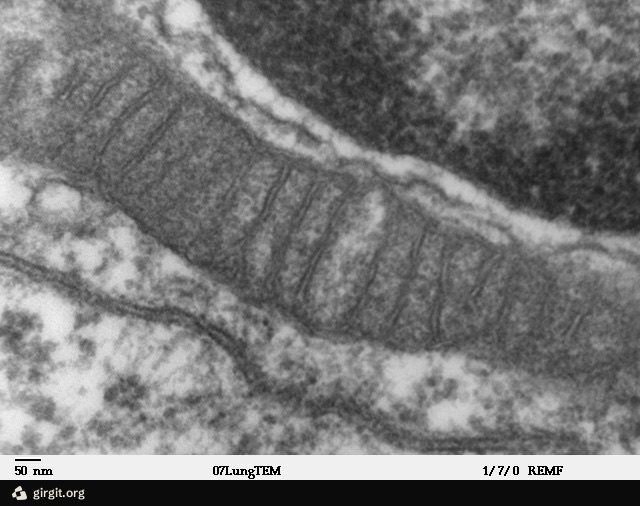
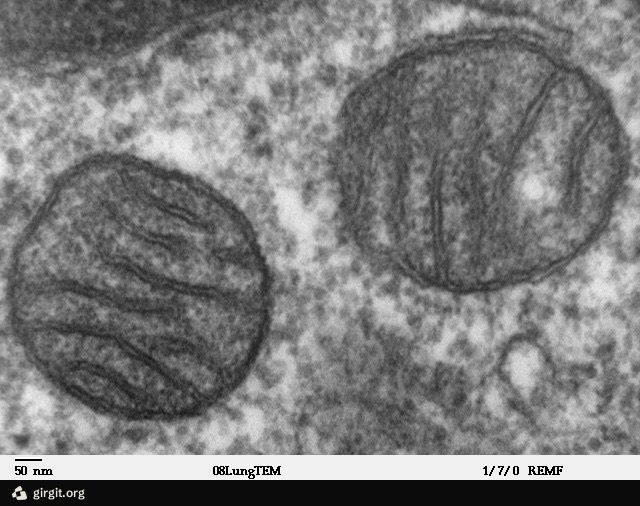
Mitochondria (one: mitochondrion) are hard to see unless stained. Busy cells have many. A typical one is sausage-shaped, 0.2 to 1.0 µm wide (about 0.5 µm) and 1.0 to 4.1 µm long.
 cristaematrixouter membrane
 cristaematrixouter membrane
- Two membranes: a smooth outer membrane and an inner membrane folded into cristae, which add surface area.
- The space inside the inner membrane is filled with the dense matrix.
- They are the site of aerobic respiration and make ATP, the cell's energy money: the "powerhouses of the cell".
- The matrix has circular DNA, RNA, 70S ribosomes and what's needed to make proteins. Mitochondria divide by fission.
Textbook check · §8.5.4A mitochondrion holds several copies of its DNA
- The textbook says
- The mitochondrial matrix possesses a single circular DNA molecule.
- What we know now
- A mitochondrion usually holds several copies of its circular DNA, packed into small clumps called nucleoids, and a human cell has hundreds to thousands of copies in all. Each copy is the same small circle.Source: Kukat et al., Scientific Reports 2023
- In the exam
- Write "circular DNA" (the textbook's point is that it is circular, like a bacterium's).
Beyond the syllabusMitochondria were once bacteria
The bacterial look is no coincidence. In 1967 the American biologist Lynn Margulis argued that mitochondria and chloroplasts began as free-living bacteria that were swallowed by an ancestral cell, and stayed. This endosymbiotic theory was mocked at first; DNA sequencing later showed that mitochondrial genes are indeed closest to those of a group of bacteria. You carry the descendants of those bacteria in almost every cell.
Plastids: colours and stores
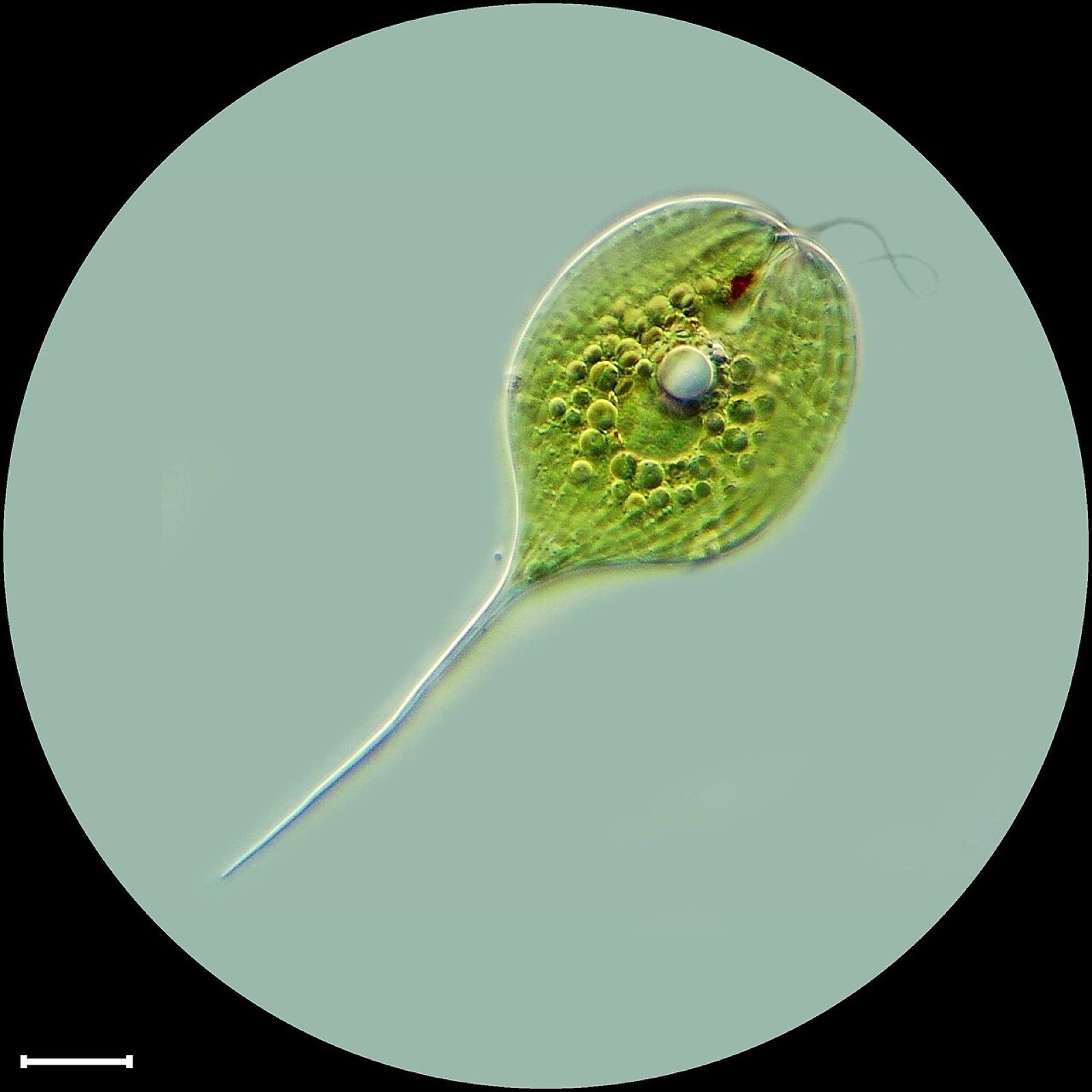
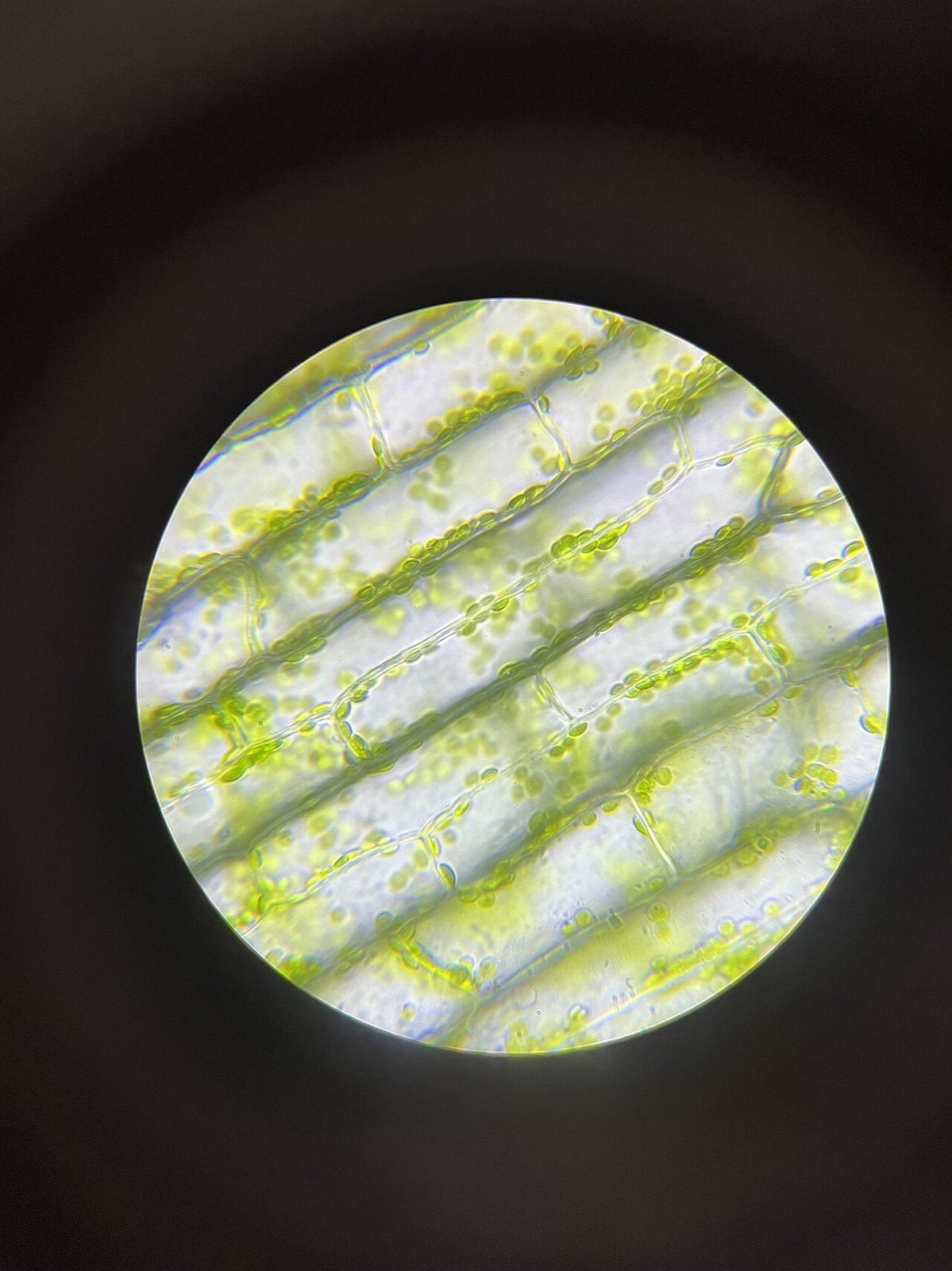
Plastids are found in all plant cells and in euglenoids. They carry pigments. Three kinds:
- Chloroplasts: chlorophyll and carotenoids; trap light for photosynthesis.
- Chromoplasts: carotenoids (carotene, xanthophylls); yellow, orange, red colours.
- Leucoplasts: colourless stores. Amyloplasts store starch (potato), elaioplasts oils and fats, aleuroplasts proteins.
 flagellumeyespotchloroplasts
 chloroplastcell wallvacuole
Most chloroplasts are in leaf mesophyll cells: lens-shaped, 5 to 10 µm long, 2 to 4 µm wide; one per cell in Chlamydomonas, 20 to 40 in a mesophyll cell.
- Two membranes; the inner one is less permeable. Inside is the stroma.
- Flat sacs, thylakoids, are stacked like coins into grana (one: granum), linked by stroma lamellae. Inside a thylakoid is the lumen.
- Chlorophyll is in the thylakoids. The stroma has enzymes for making carbohydrates and proteins, plus circular DNA and 70S ribosomes.
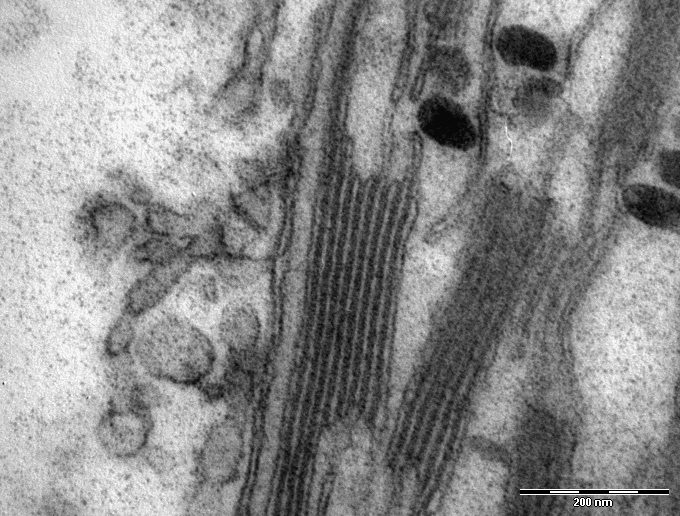 granumstroma lamellae
- Cristae
- Folds of the mitochondrion's inner membrane.
- Matrix
- The dense fluid inside a mitochondrion.
- Thylakoid, granum
- Flat sacs in a chloroplast; a stack of them.
- Stroma
- The fluid inside a chloroplast's inner membrane.
- Amyloplast, elaioplast, aleuroplast
- Leucoplasts storing starch, oils, proteins.
Words to know
Picture and video credits
Show 3 picture and video credits
- phacus.jpg: Sándor Bancsó, CC BY 4.0
- elodea-cells.jpg: ~delta, CC BY-SA 4.0
- chloroplast-grana-tem.jpg: and3k and caper437, CC BY-SA 3.0


