- 1. What is a cell?
- 2. Cell theory
- 3. What is inside a cell?
- 4. How big is a cell?
- 5. Bacteria: prokaryotic cells
- 6. Plant and animal cells
- 7. The cell membrane and cell wall
- 8. The endomembrane system
- 9. Mitochondria and plastids
- 10. Ribosomes, cytoskeleton, cilia and centrioles
- 11. The nucleus
- Review
5 of 11·NCERT §8.4 · §8.4.1 · §8.4.2·pp. 89–91·6 min
Bacteria: prokaryotic cells
The big ideaBacteria are simple cells with no nucleus and no organelles, wrapped in a tough coat.
In simple words
Bacteria are the smallest and oldest kind of cell. They have no room for their instructions: their one long loop of DNA just floats inside. They wear a strong coat to keep from bursting, some swim with little tails, and they can split in two in about twenty minutes.
Prokaryotes are bacteria, blue-green algae (cyanobacteria), mycoplasma and PPLO (pleuro-pneumonia-like organisms). They are usually smaller than eukaryotic cells and multiply much faster.
How fast? Watch one or two E. coli cells on a slab of food jelly. Each grows a little longer, pinches in two, and does it again: three hours squeezed into ten seconds.
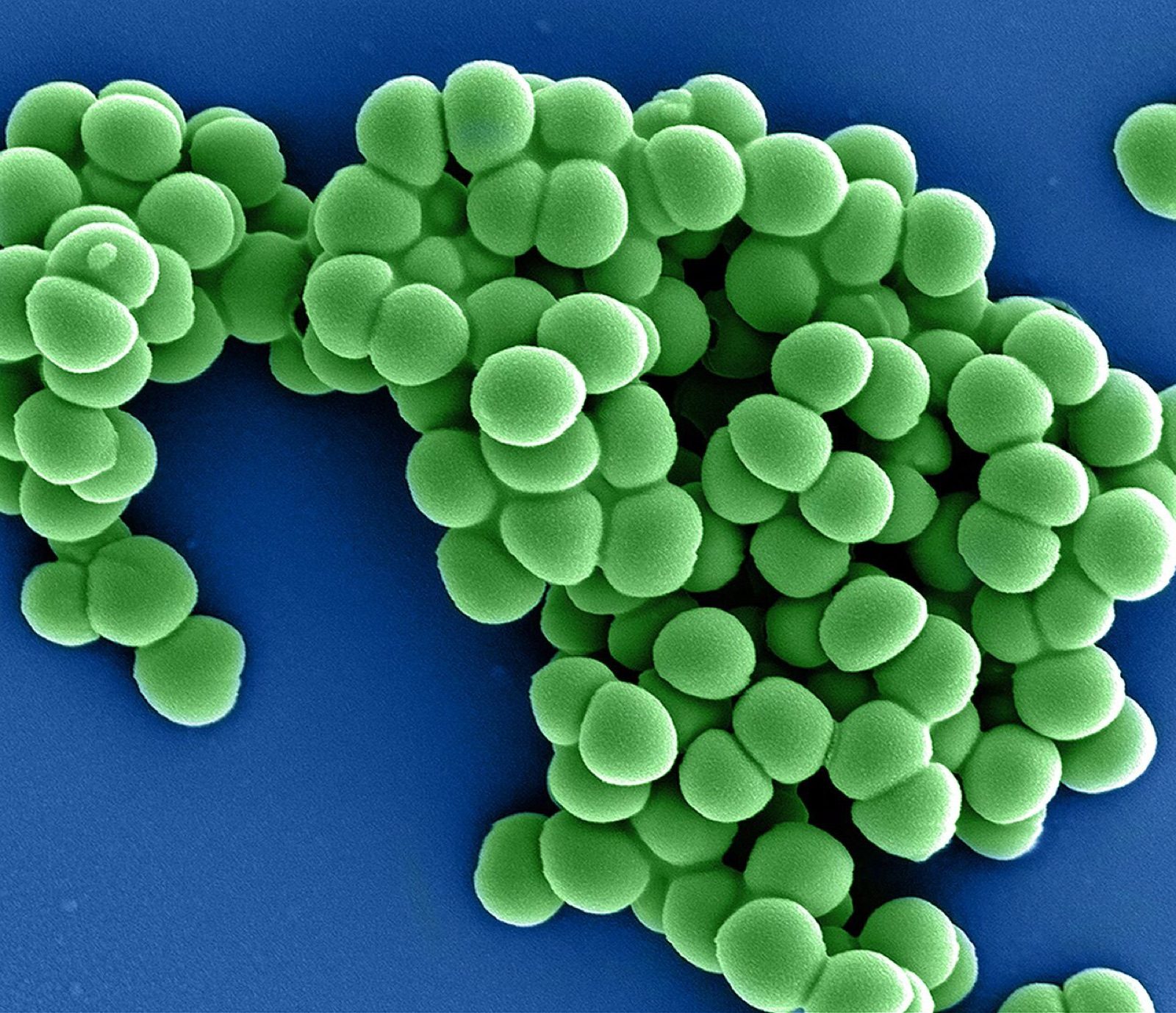 coccuscluster of cocci
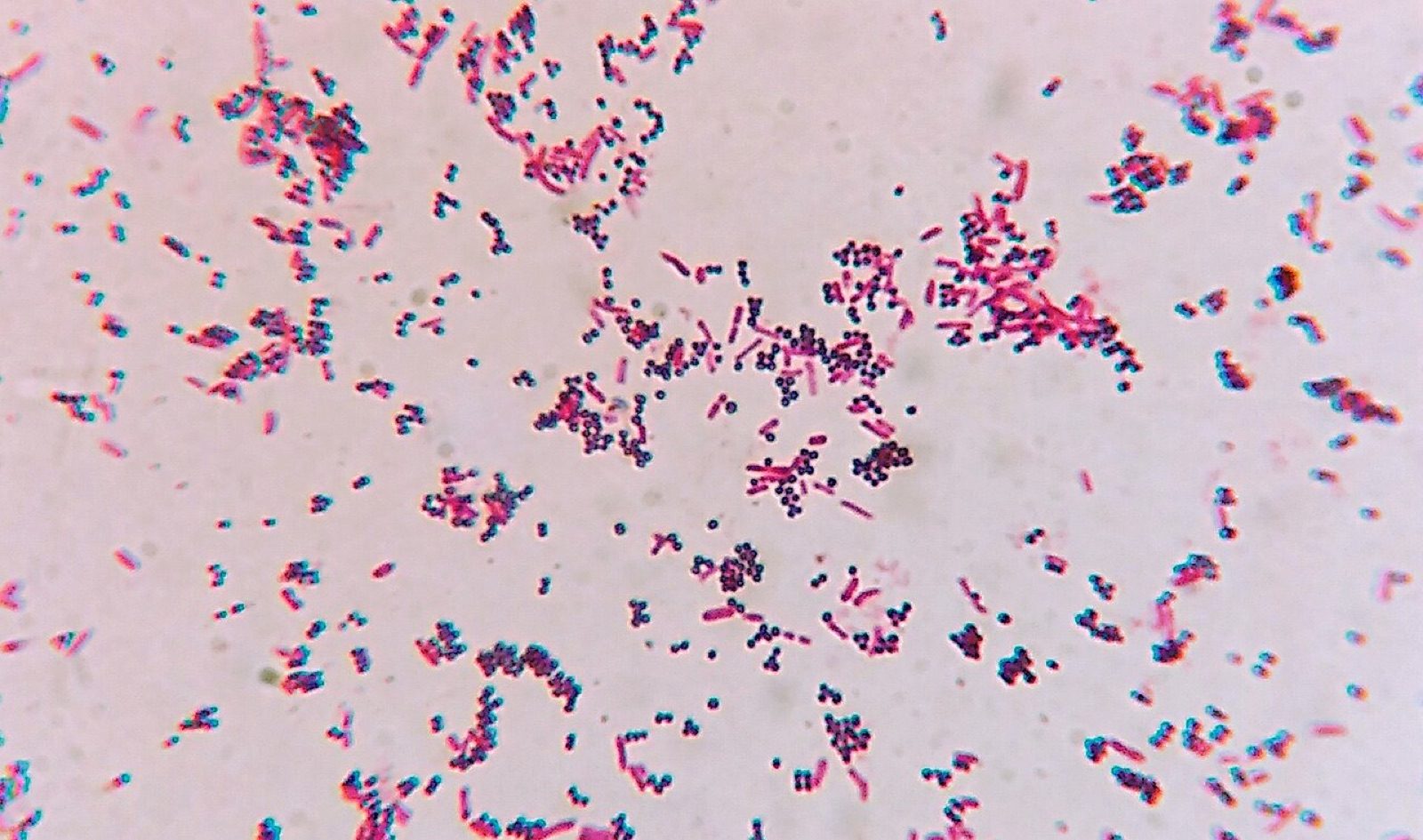 bacilli (rods)cocci
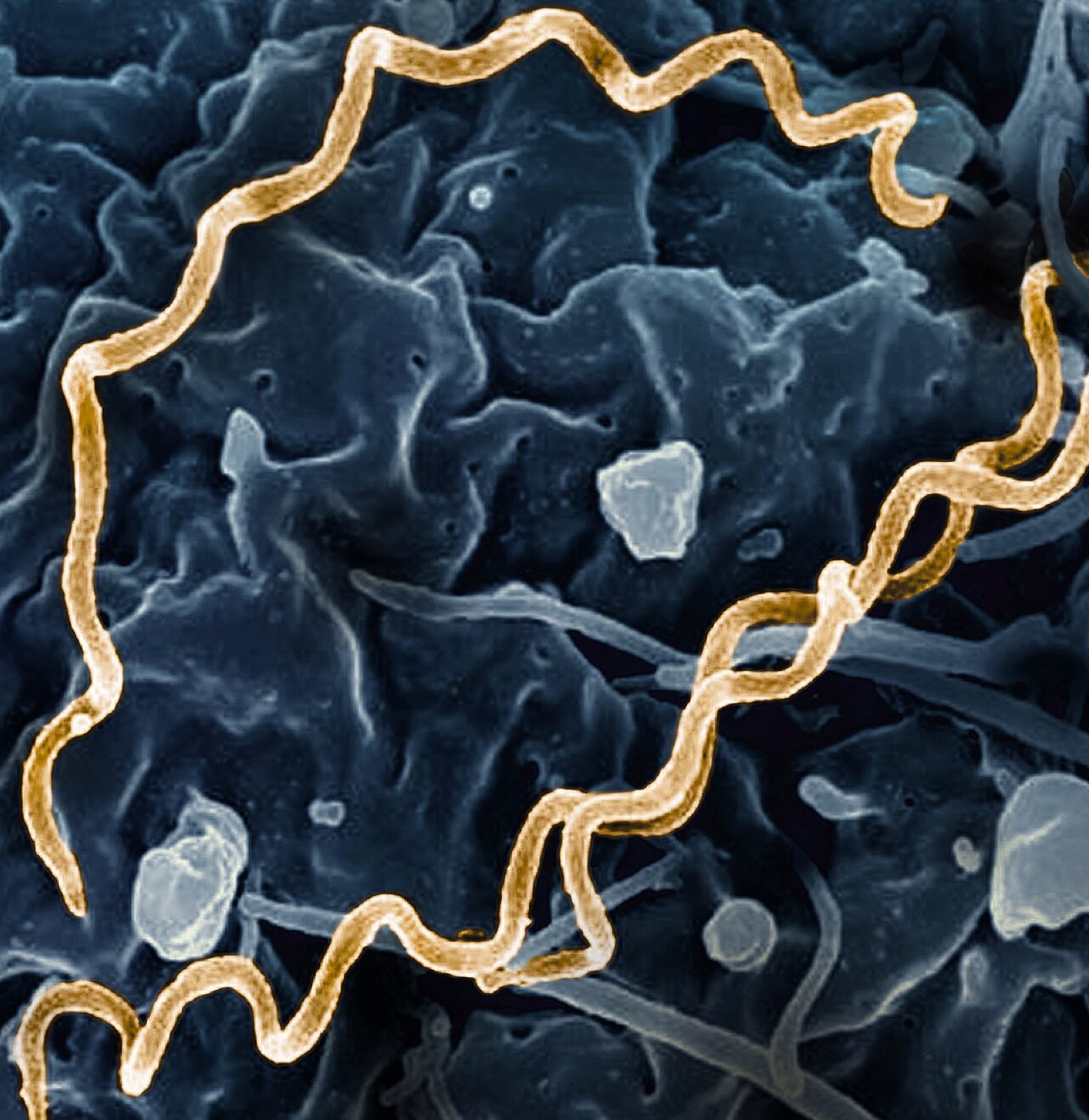 spiral bacteriumhost cell surface
Bacteria come in four basic shapes:
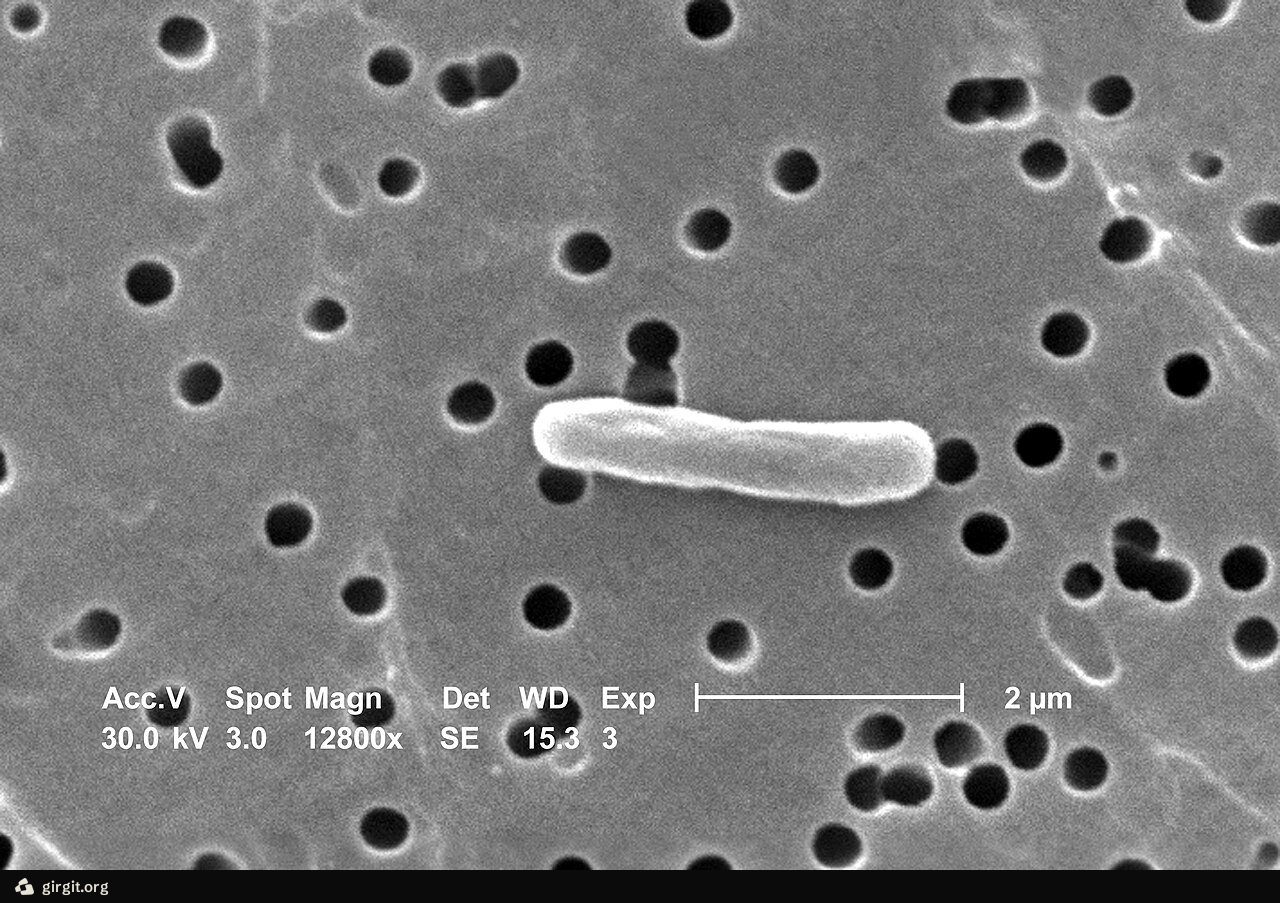 rod (bacillus)
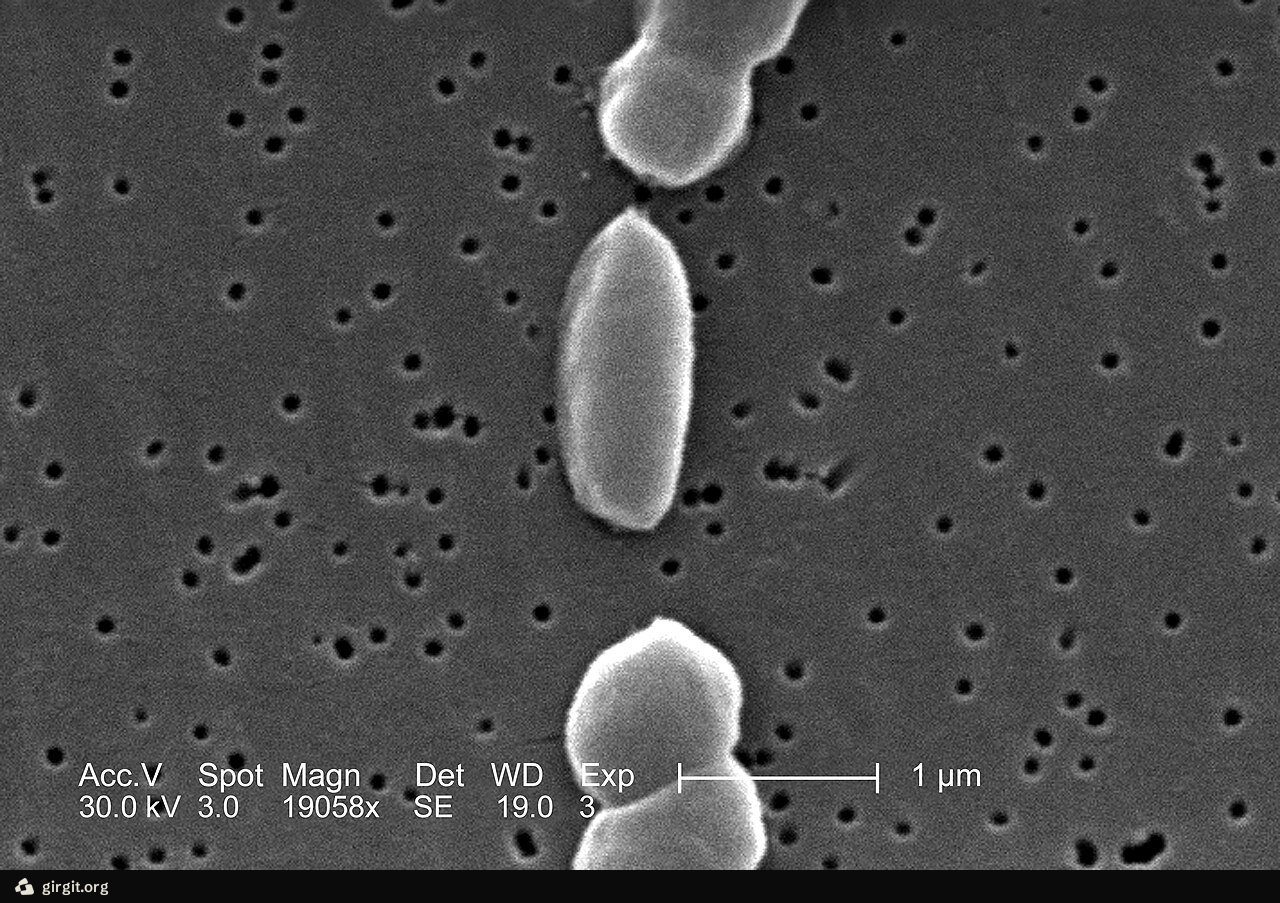 curved rod (vibrio)
What every prokaryote has in common:
- A cell wall round the membrane (except mycoplasma, which has none).
- No proper nucleus. Its DNA is one loop, "naked", not wrapped in a membrane. The area it sits in is the nucleoid.
- Many also carry small extra loops of DNA, plasmids. Plasmids give special powers, like resistance to antibiotics.
- No organelles except ribosomes.
- Special to prokaryotes: inclusion bodies (stored food) and the mesosome, a fold of the membrane.
Textbook check · §8.4Bacteria do have organelles, and their DNA is not bare
- The textbook says
- No organelles like the ones in eukaryotes are found in prokaryotic cells, except ribosomes. The genetic material is basically naked.
- What we know now
- Many bacteria do have compartments. Magnetotactic bacteria make magnetosomes, membrane-bound sacs of magnetic crystals that work as a compass; cyanobacteria have thylakoids and protein-shelled carboxysomes that concentrate CO₂ for RuBisCO. And bacterial DNA is not bare: it is folded and packed by proteins into the nucleoid, though not wrapped in a membrane.Source: Greening & Lowe, Nature Reviews Microbiology 2020 · Nucleoid
- In the exam
- Answer as the textbook says: prokaryotes have no membrane-bound organelles like those of eukaryotes, and their DNA is not enclosed by a nuclear membrane.
The cell envelope
Most bacteria wear a three-layer coat, the cell envelope. From outside in:
- Glycocalyx: a sugary outer coat. Loose, it's a slime layer; thick and tough, a capsule.
- Cell wall: gives the shape and stops the cell bursting.
- Plasma membrane: chooses what goes in and out.
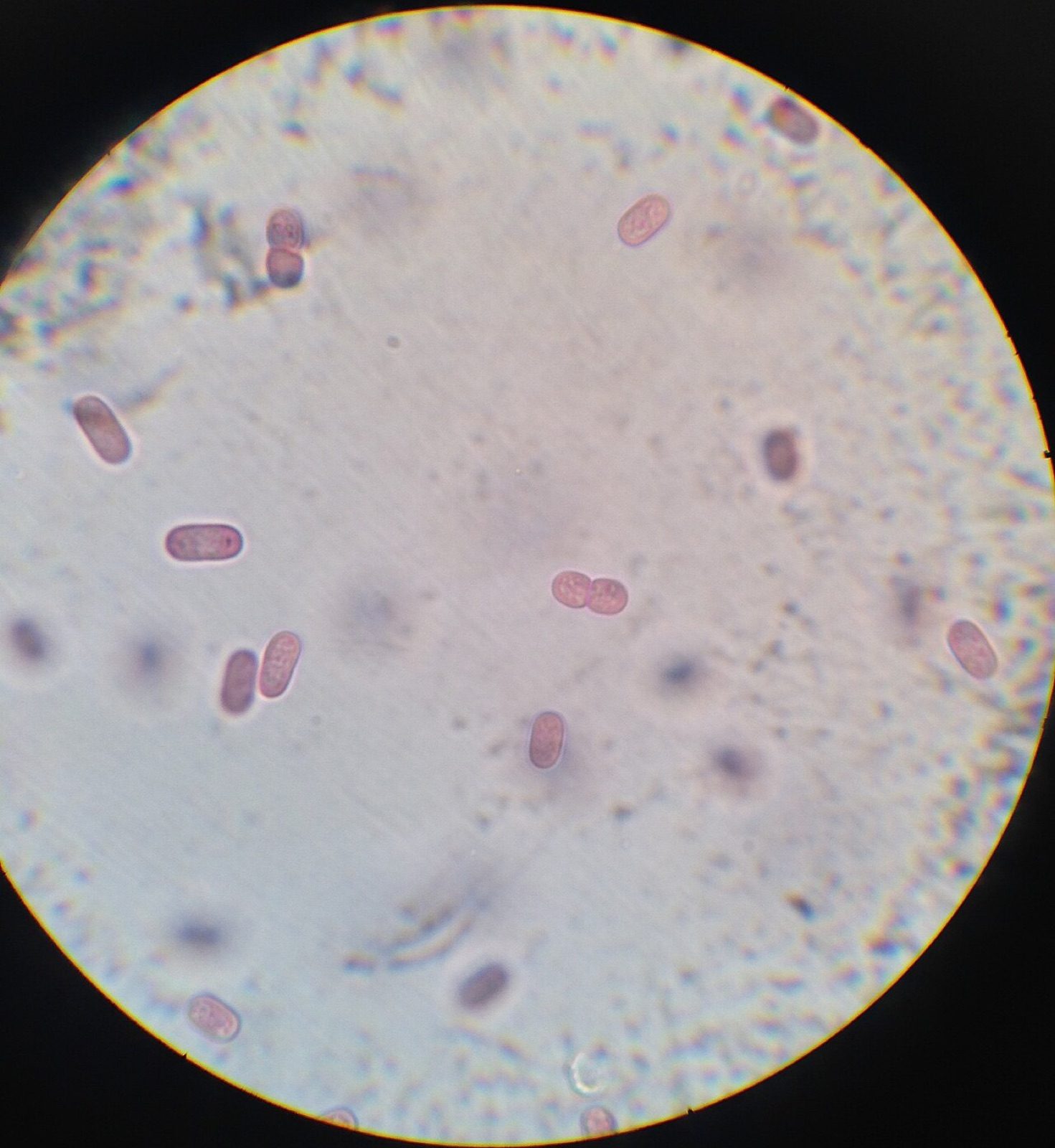
The envelope also explains the Gram stain: bacteria that keep the purple dye are Gram-positive; those that lose it are Gram-negative.
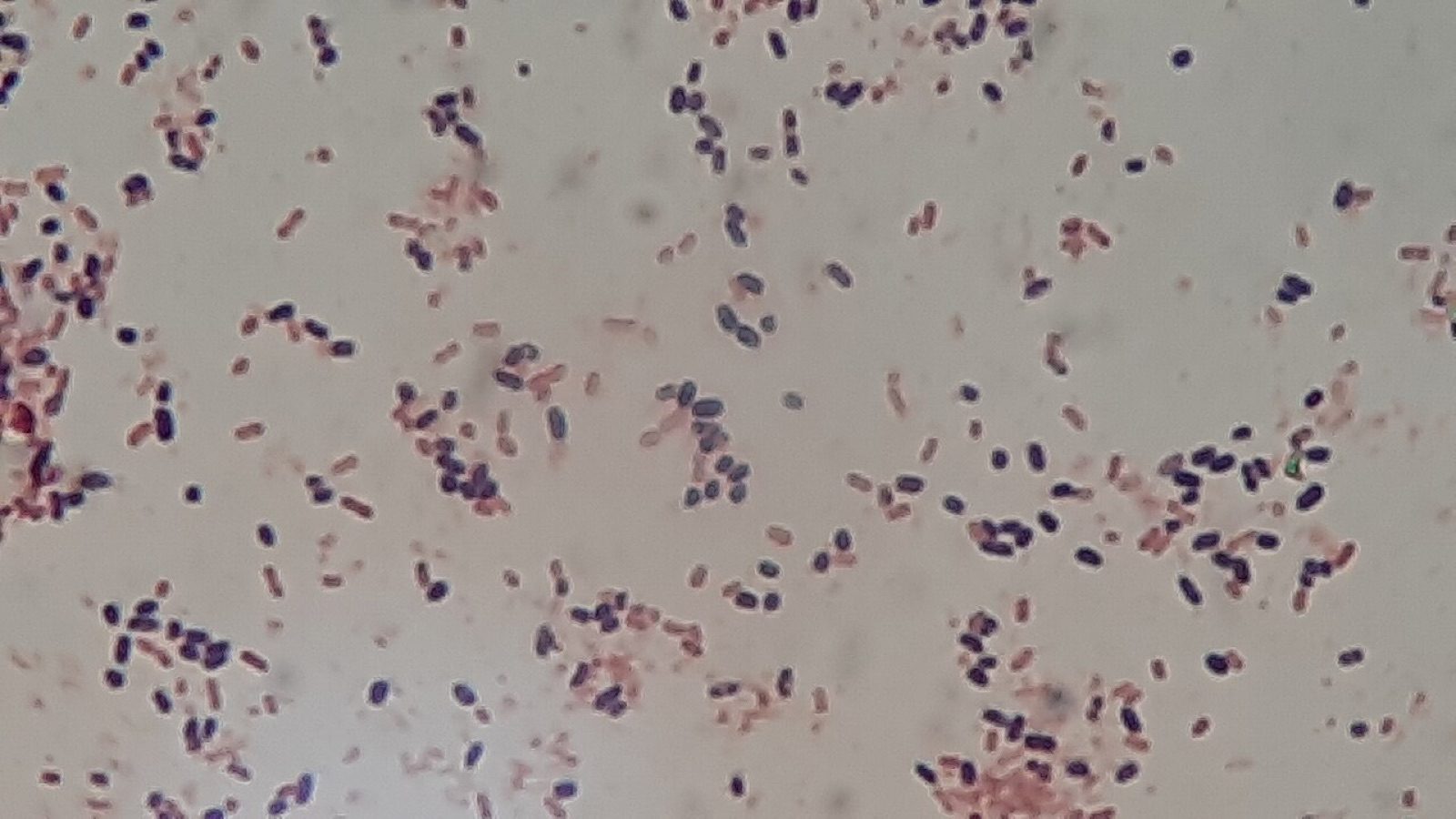 Gram-positive (purple)Gram-negative (pink)
Textbook check · §8.4.1Both kinds take up the stain; one loses it
- The textbook says
- Bacteria that take up the Gram stain are Gram-positive, and the others that do not are Gram-negative.
- What we know now
- Both kinds take up the purple stain at first. The difference is what happens in the alcohol wash: Gram-positive cells, with a thick peptidoglycan wall, keep the dye; Gram-negative cells, with a thin wall and an outer membrane, lose it and are then counterstained pink. Try it in the widget above.Source: Gram stain
- In the exam
- Gram-positive bacteria retain the stain; Gram-negative do not.
The membrane can fold inward into sacs and tubes, the mesosome. The textbook says it helps build the wall, copy and share the DNA, and in respiration and secretion. In cyanobacteria, other folds called chromatophores hold the pigments for photosynthesis.
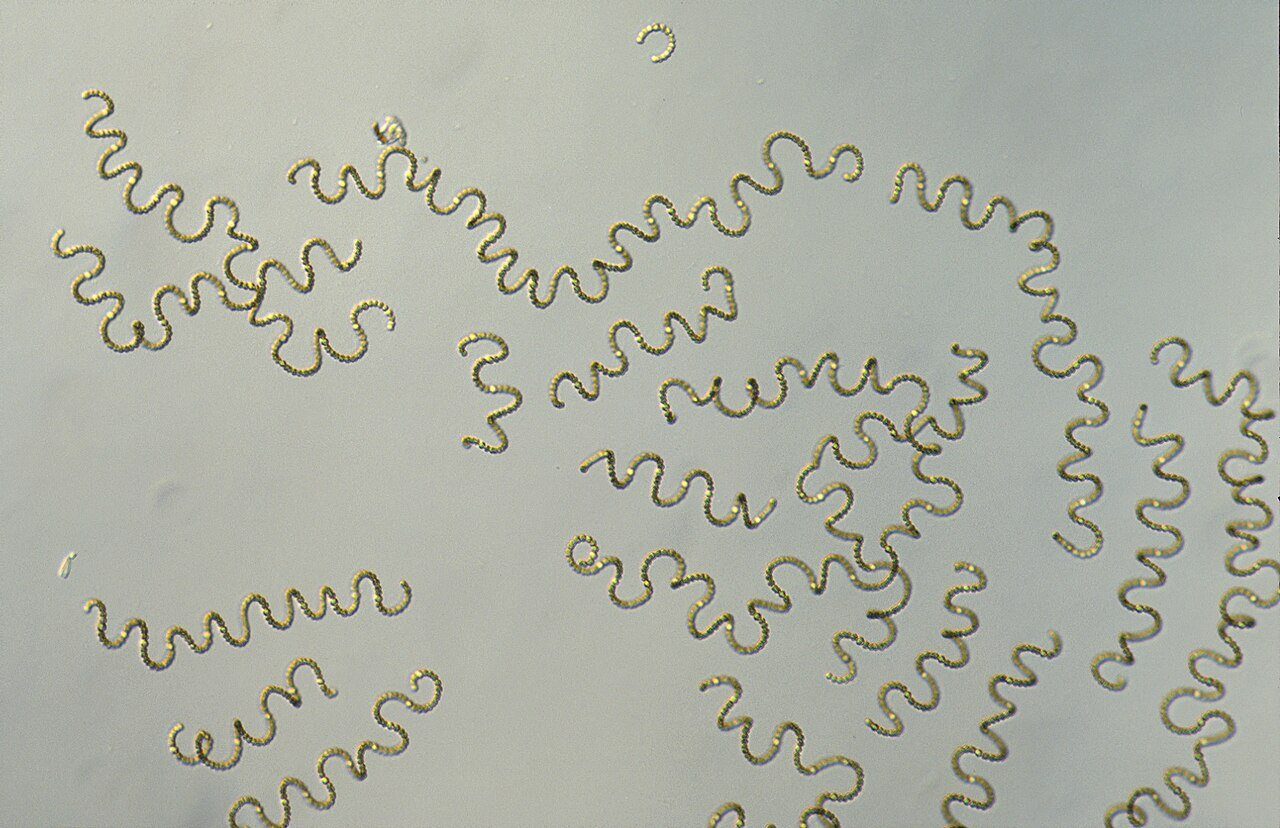 one chain of cells
Textbook check · §8.4, 8.4.1Mesosomes are probably an artefact
- The textbook says
- The mesosome is a characteristic structure of prokaryotes that helps in cell wall formation, DNA replication, respiration and secretion.
- What we know now
- Mesosomes are almost certainly artefacts: the membrane folds up when bacteria are chemically fixed for the electron microscope. Bacteria frozen instantly (cryofixation) and imaged by cryo-electron microscopy show no mesosomes. This was recognised by the late 1970s, and most university textbooks no longer describe them.Source: Mesosome · Bacterial TEM: new insights from cryo-microscopy (Caltech)
- In the exam
- NEET still asks about mesosomes and their functions as given in the textbook (see the 2026 question below). Learn the textbook list.
Tails and hairs
Swimming bacteria have flagella: long thin whips in three parts, the filament, a hook and a basal body that spins like a motor. Pili (long tubes) and fimbriae (short bristles) don't help swimming; fimbriae help bacteria stick to rocks or to the body they infect.
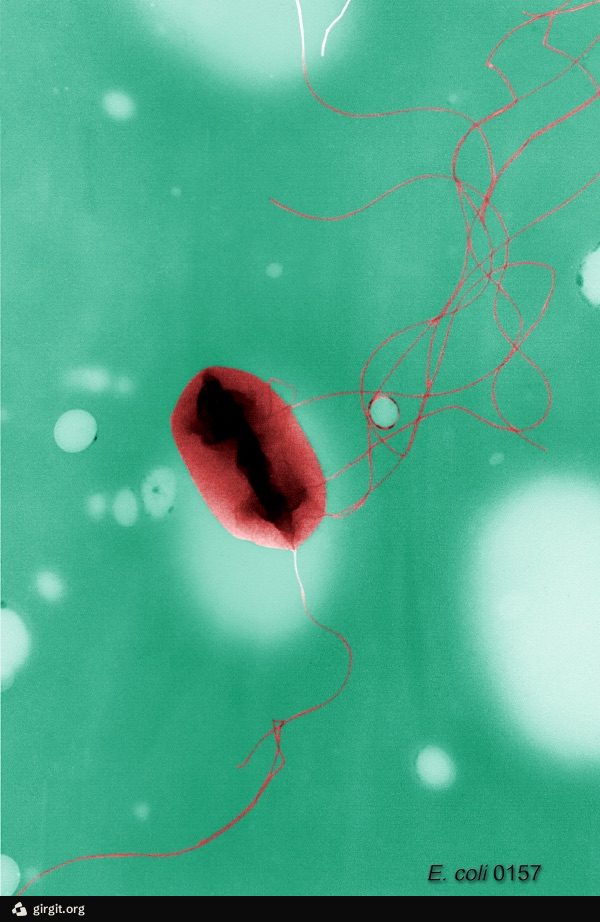 cellflagellum
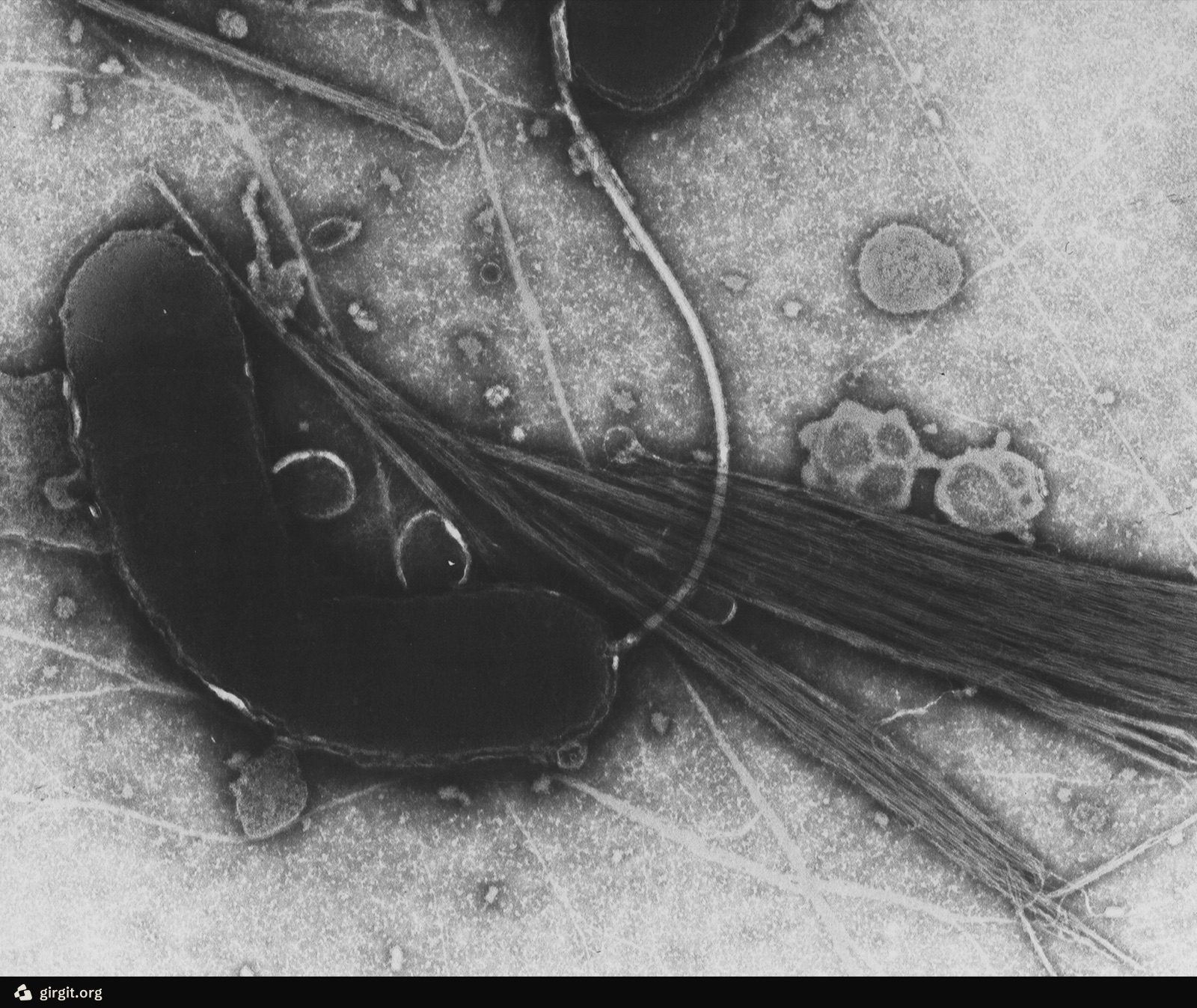 cellflagellum
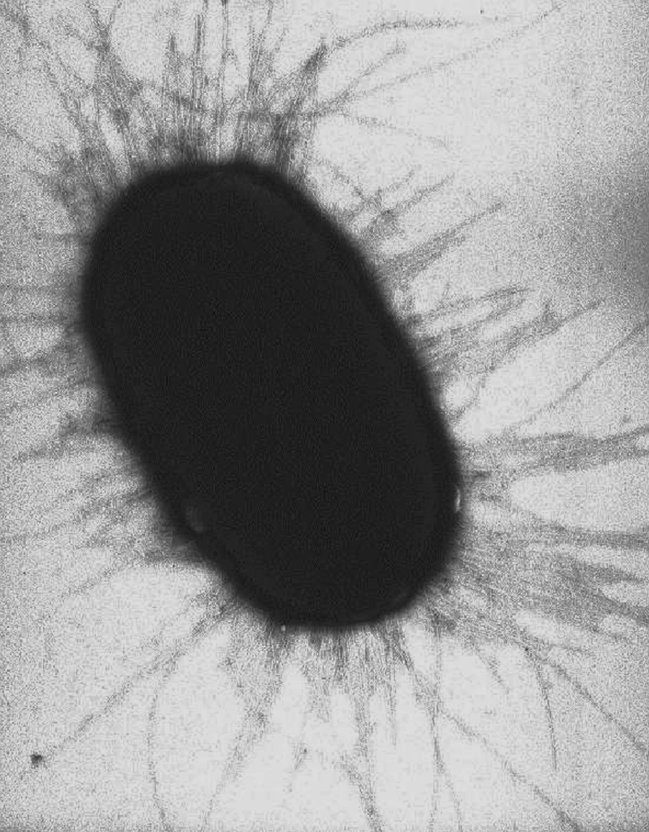 fimbriaeone E. coli cell
Ribosomes and stores
Bacterial ribosomes are 70S, made of a 50S and a 30S part (yes, 50 + 30 ≠ 70; see concept 10). Several ribosomes can read one message at once, like beads on a thread: a polysome. Food is stored as inclusion bodies with no membrane: phosphate, cyanophycean and glycogen granules. Some photosynthetic bacteria have gas vacuoles to float.
 cellsulphur granules
Just remember
No deeper reason for these: they are names and orders to learn. Use the hooks.
- Four shapes: coccus, bacillus, vibrio, spirillum
- The names describe the look. Kokkos is Greek for a berry (round), bacillus Latin for a little stick (rod), vibrio from vibrare, to wriggle (a comma that wriggles), spirillum a little spiral.
- Envelope, outside in: glycocalyx, cell wall, plasma membrane
- S-W-M, "swim": Sugar coat (glyco = sugar), Wall, Membrane. A bacterium wears all three to swim.
- Slime layer vs capsule
- Slime slips (loose); a capsule is tough, like the hard shell of a medicine capsule.
- Gram-positive keeps purple; Gram-negative turns pink
- Positive keeps Purple; Negative goes pink.
- Flagellum: filament, hook, basal body
- Like fishing tackle: the line (filament) trails out, a hook joins it on, and the reel at the base (basal body) does the spinning.
- Pili long tubes; fimbriae short bristles that help sticking
- Fimbria is Latin for a fringe: a short sticky fringe round the cell.
- Inclusion bodies: phosphate, cyanophycean and glycogen granules
- P-C-G, "Pocket Change Granules": food stored loose in the cytoplasm, with no membrane, like coins in a pocket.
- PPLO = pleuro-pneumonia-like organisms
- The first ones were found in the chest (pleura) of cattle with pneumonia. They are mycoplasmas.
- Nucleoid
- The area where a bacterium's DNA loop sits; no membrane round it.
- Plasmid
- A small extra loop of DNA, e.g. for antibiotic resistance.
- Cell envelope
- Glycocalyx + cell wall + plasma membrane.
- Mesosome
- An infolding of a bacterium's membrane (see the textbook check).
- Pili, fimbriae
- Surface hairs; not for swimming. Fimbriae help sticking.
- Polysome
- Several ribosomes reading one mRNA.
Words to know
Deep dive · optional
How can a bacterium copy itself in twenty minutes?
Why having no nucleus makes a cell fast, the puzzle of copying 40 minutes of DNA in 20, what doubling really does to numbers, the Danish doctor who gave us the purple stain, and the scientist from Birbhum whose plasmid-packed bacterium went to the US Supreme Court. The exam won't ask, but it makes the page stick.
The roots: small, open-plan and always copying
- Why can E. coli divide in as little as 20 minutes, when a human cell in a dish takes about a day (24 hours)?Because it has far less to build and nothing to take apart. One loop of DNA, no nucleus to dismantle and rebuild, no organelles to share out between the daughters: it simply grows, copies its loop and pinches in two.
- Why does having no nucleus make it faster?In a bacterium the DNA and the ribosomes share one open room. A ribosome can jump onto a gene's message (mRNA) and start making protein while the message is still being written. In your cells the message must first be finished, processed and sent out through the nuclear pores. That is also why bacteria show so many polysomes: ribosomes queued along a message that is still growing.
- But copying the DNA takes about 40 minutes. How can the cell divide every 20?E. coli's DNA loop is about 4.6 million letters long. Two copying machines start at one point and run round the loop in opposite directions, and even so a full copy takes about 40 minutes. A fast-growing cell solves this by starting the next round of copying before the last one has finished. Its loop is copied for its daughters and its granddaughters at the same time, so a newborn cell receives DNA that is already half copied.
- Why do the numbers become so huge so fast?Because every division doubles. After 10 divisions there are \( 2^{10} = 1024 \) cells, after 20 about a million, after 30 about a billion. Adding a fixed number each time grows in a straight line; doubling multiplies, so each step is bigger than all the steps before it put together.
- Then why isn't the Earth buried under bacteria?Because food runs out and waste piles up. In a flask of broth, growth starts slowly (lag phase), then doubles steadily (log phase), then stops when the food is used up (stationary phase), and finally cells start to die. Doubling only lasts while the supplies do.
Speed has a price and a prize. The price: a bacterium can't build big, compartmented bodies. The prize: a population can adapt fast. A useful gene, for example one on a plasmid that lets a cell survive an antibiotic, can spread through millions of cells in a day, and plasmids can even pass from one bacterium to another, sometimes between different species.
The stories
See it
Caught in the act: one E. coli cell pinching into two. The waist in the middle is a ring of the protein FtsZ, a bacterial relative of tubulin, tightening like a drawstring (bacteria have a cytoskeleton too: see the textbook check in concept 10).
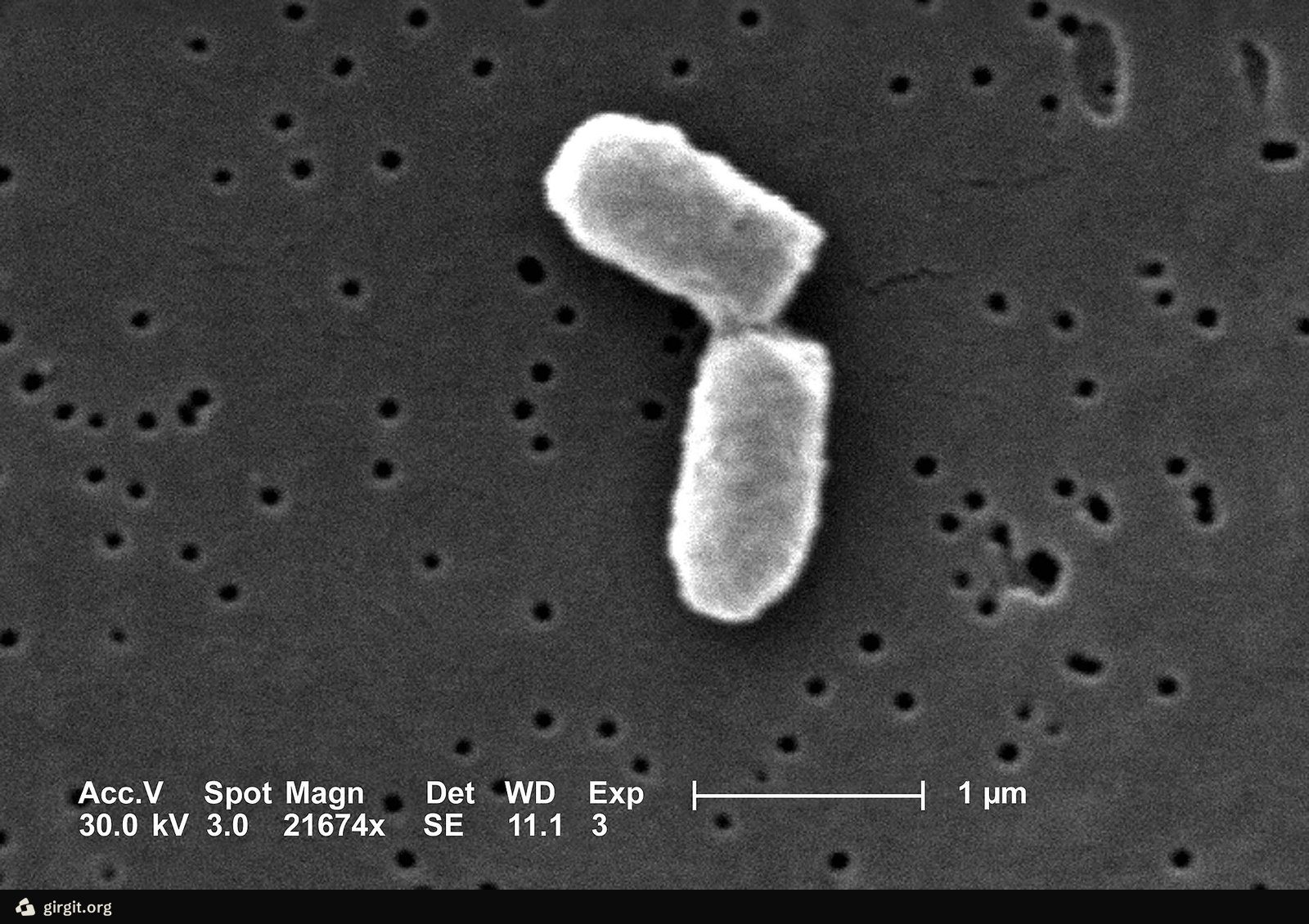 pinching in twodaughter cell
Now play with doubling. Guess first; then let the food run out and watch the straight line bend.
Solve it
Solve it
At 8 a.m. one bacterium that divides every 20 minutes is put in a jar of broth. At 8 p.m. the jar is completely full of bacteria. At what time was it half full? And at 7 p.m., how full was it?
Hint
Answer
Solve it
E. coli's DNA loop has about 4.6 million base pairs. Two copying machines start together at one point and move round the loop in opposite directions, each adding roughly 1,000 base pairs a second. How long does one full copy take? The cell can divide every 20 minutes. Explain, in words, how both can be true.
Answer
Penicillin kills bacteria by stopping them from building their peptidoglycan cell wall. Which of these can it not kill?
- Streptococcus, a Gram-positive coccus
- Mycoplasma
- Bacillus, a Gram-positive rod
Connect it
Connect it
- Ribosomes, concept 10. Why a 50S and a 30S part make a 70S ribosome, not 80S: the Svedberg unit.
- Mitochondria, concept 9. Circular DNA, 70S ribosomes, division by splitting: mitochondria look like bacteria for a reason.
- Kingdom Monera, Class 11 Ch 2. The same cells sorted by how they live: eubacteria, cyanobacteria and mycoplasma.
- Exponential growth, Class 11 Ch 13. Plant cells grow by the same doubling arithmetic, until they slow down: growth rates.
- Plasmids as tools, Class 12 Ch 9. Biotechnologists put new genes into bacteria on plasmids: cloning vectors.
- Antibiotics, Class 12 Ch 8. Where penicillin came from and how microbes make medicines: antibiotics.
Still confused?
Is the Gram stain about colour or about the wall?
About the wall; the colour only reports it. Every bacterium soaks up the violet dye and iodine at first. The alcohol wash is the test: a thick peptidoglycan wall traps the dye, so the cell stays purple (Gram-positive); a thin wall under an outer membrane lets it wash out, and a pink counterstain then shows the cell (Gram-negative).
Do all bacteria divide every 20 minutes?
No. Twenty minutes is the fast end for E. coli in rich food. With less food the same bacterium divides more slowly, and many other bacteria are much slower. The point is not the exact number but that a simple cell can be very fast when it has everything it needs.
If prokaryotes have no nucleus, where is the DNA?
In a region of the cytoplasm called the nucleoid, with no membrane round it. It is one long loop, folded up with proteins (not truly "naked": see the textbook check above), and many bacteria also carry small extra loops, the plasmids.
Sources
- Cell Biology by the Numbers: how long does it take cells to copy their genomes? (about 40 minutes for E. coli, nested replication forks)
- Cell Biology by the Numbers: E. coli volume about 1 µm³, mass about 1 pg and NASA Earth fact sheet: mass 5.97 × 10²⁴ kg
- Escherichia coli: as little as 20 minutes to reproduce; overlapping replication at fast growth
- FtsZ: the Z ring that constricts a dividing bacterium; a relative of tubulin
- Transcription-translation coupling in prokaryotes
- Bacterial growth: lag, log, stationary and death phases
- Gram stain: history (Berlin, 1884, Friedländer, lung tissue) and mechanism and Hans Christian Gram (1853 to 1938), with his "defective and imperfect" remark
- Ananda Mohan Chakrabarty: Sainthia, GE, oil-eating Pseudomonas, Padma Shri 2007 and Diamond v. Chakrabarty, 447 U.S. 303 (1980), 5 to 4
- Penicillin and Gram-positive bacteria and Mycoplasma: no cell wall, resistant to beta-lactams
Picture and video credits
Show 8 picture and video credits
- ecoli-microcolony-growth.mp4: Bergmiller T, Peña-Miller R, Boehm A, Ackermann M, CC BY 2.0
- mrsa-sem.jpg: NIAID, CC BY 2.0
- gram-cocci-rods.jpg: Microrao, CC BY-SA 4.0
- treponema-sem.jpg: NIAID, CC BY 2.0
- gram-stain-slide.jpg: Ajay Kumar Chaurasiya, CC BY 4.0
- anabaena-chain-csiro.jpg: CSIRO, CSIRO, CC BY 3.0
- ecoli-fimbriae-tem.jpg: (Image: Manu Forero), CC BY 2.5
- chromatium-okenii.jpg: Mariiantoniietta, CC BY-SA 4.0


