- 1. What is a cell?
- 2. Cell theory
- 3. What is inside a cell?
- 4. How big is a cell?
- 5. Bacteria: prokaryotic cells
- 6. Plant and animal cells
- 7. The cell membrane and cell wall
- 8. The endomembrane system
- 9. Mitochondria and plastids
- 10. Ribosomes, cytoskeleton, cilia and centrioles
- 11. The nucleus
- Review
3 of 11·NCERT §8.3·pp. 88–89·4 min
What is inside a cell?
The big ideaEvery cell has a skin, a jelly inside, and genes. Some keep their genes in a nucleus; some don't.
In simple words
Think of a cell as a tiny water balloon. The balloon's skin keeps the inside in. The inside is a thick jelly where all the work happens. The cell's instructions are written on long threads. In some cells those threads are locked in a small bag of their own; in others they just float about.
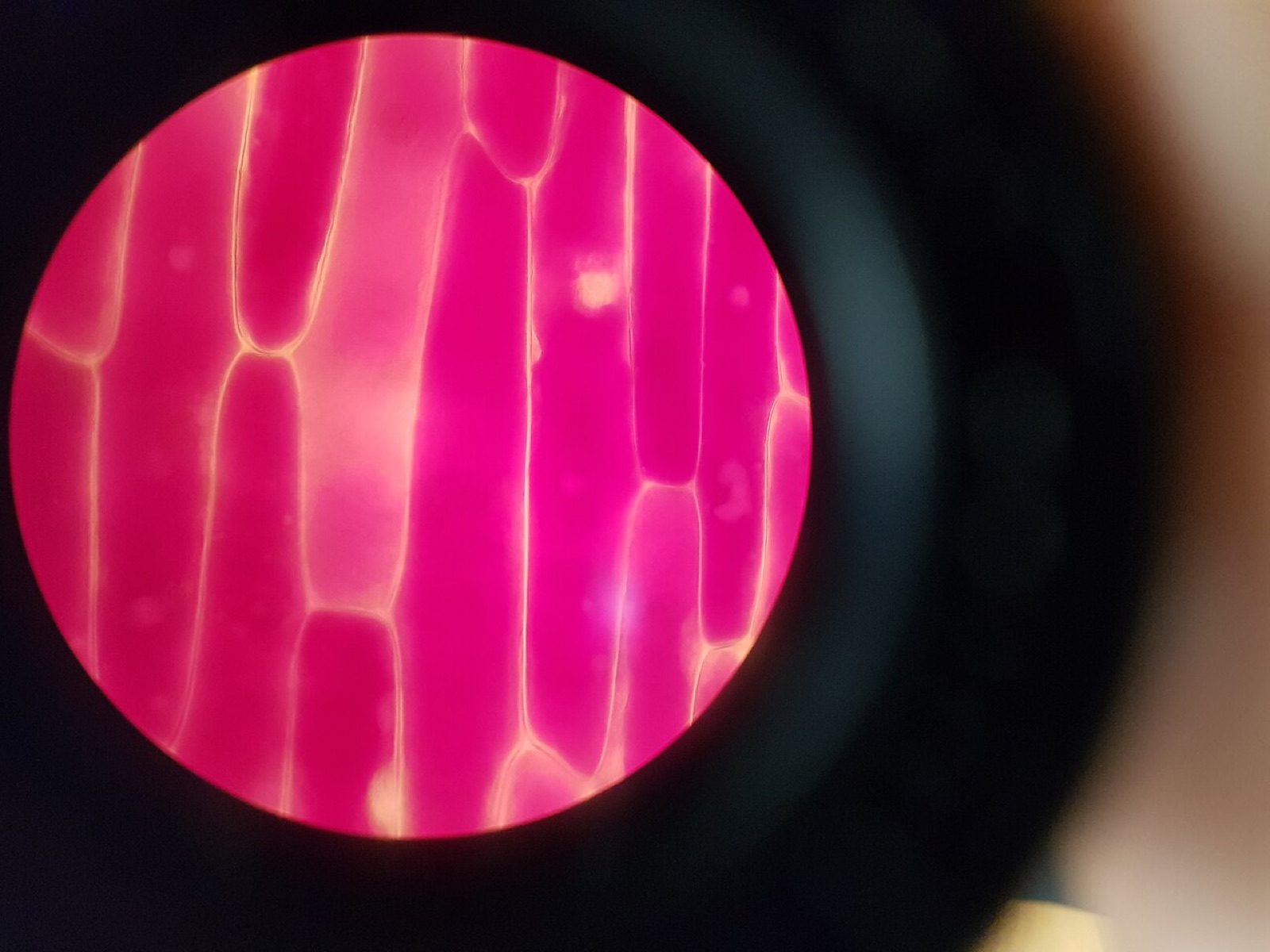
You may have seen two kinds of cells in the school lab: onion peel and cheek cells.
 cell wallcell
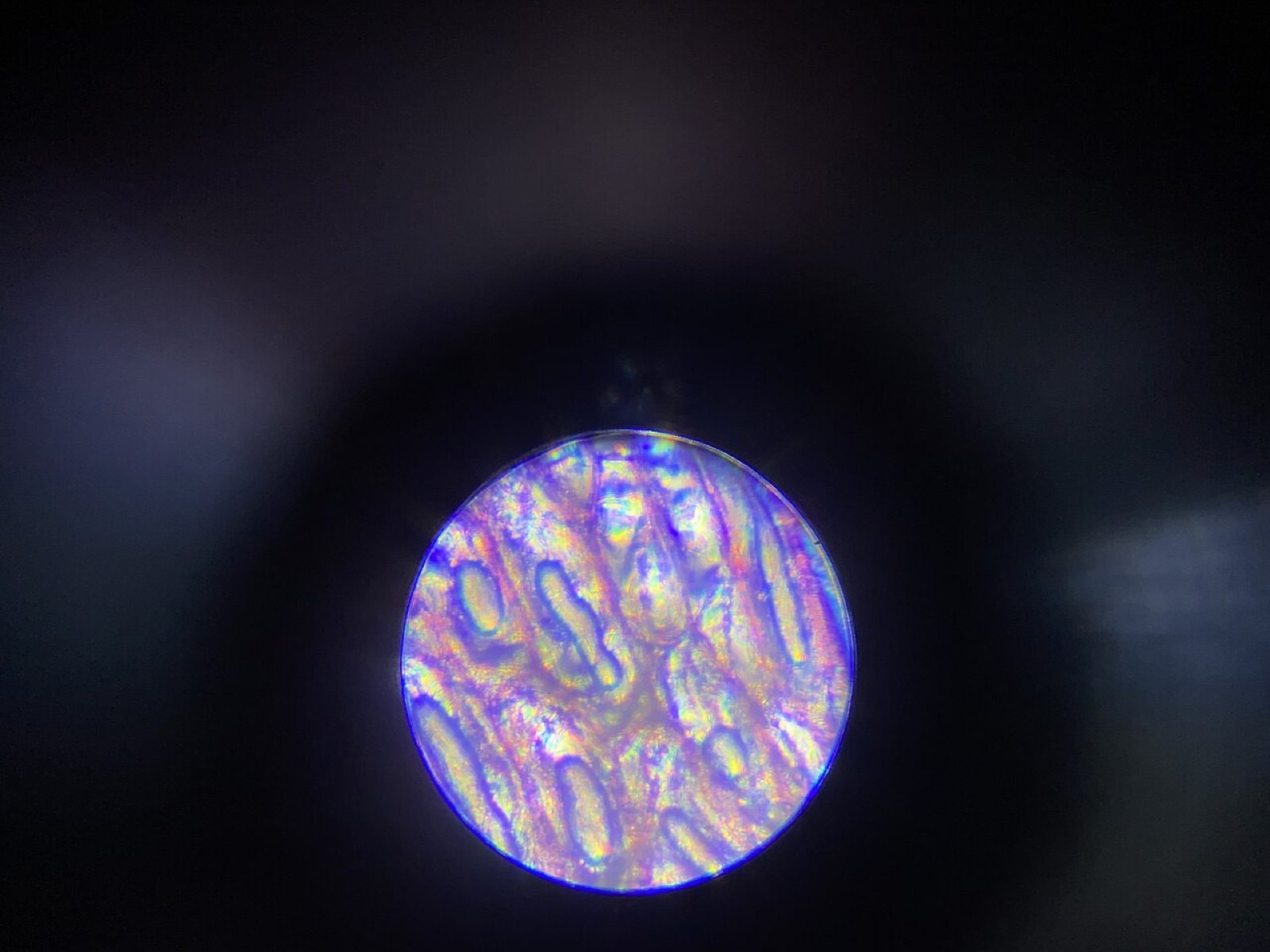
The onion cell is a plant cell. Its outer edge is a stiff cell wall, and just inside lies the cell membrane. A cheek cell has no wall; its membrane is its edge. Both have a dark round nucleus holding the chromosomes, the threads that carry the cell's instructions, the genetic material DNA.
Two great kinds of cell
The nucleus splits all life into two groups:
- Eukaryotic cells keep their DNA inside a nucleus wrapped in a membrane. "Eu" means true, "karyon" means kernel: a true kernel.
- Prokaryotic cells have no membrane round their DNA. "Pro" means before: before the kernel. Bacteria are prokaryotes.
The cytoplasm and the organelles
In every cell, the space inside is filled with a thick jelly, the cytoplasm. It is where most of the cell's chemistry happens, thousands of reactions at once. That busy chemistry is what keeps the cell in the "living state".
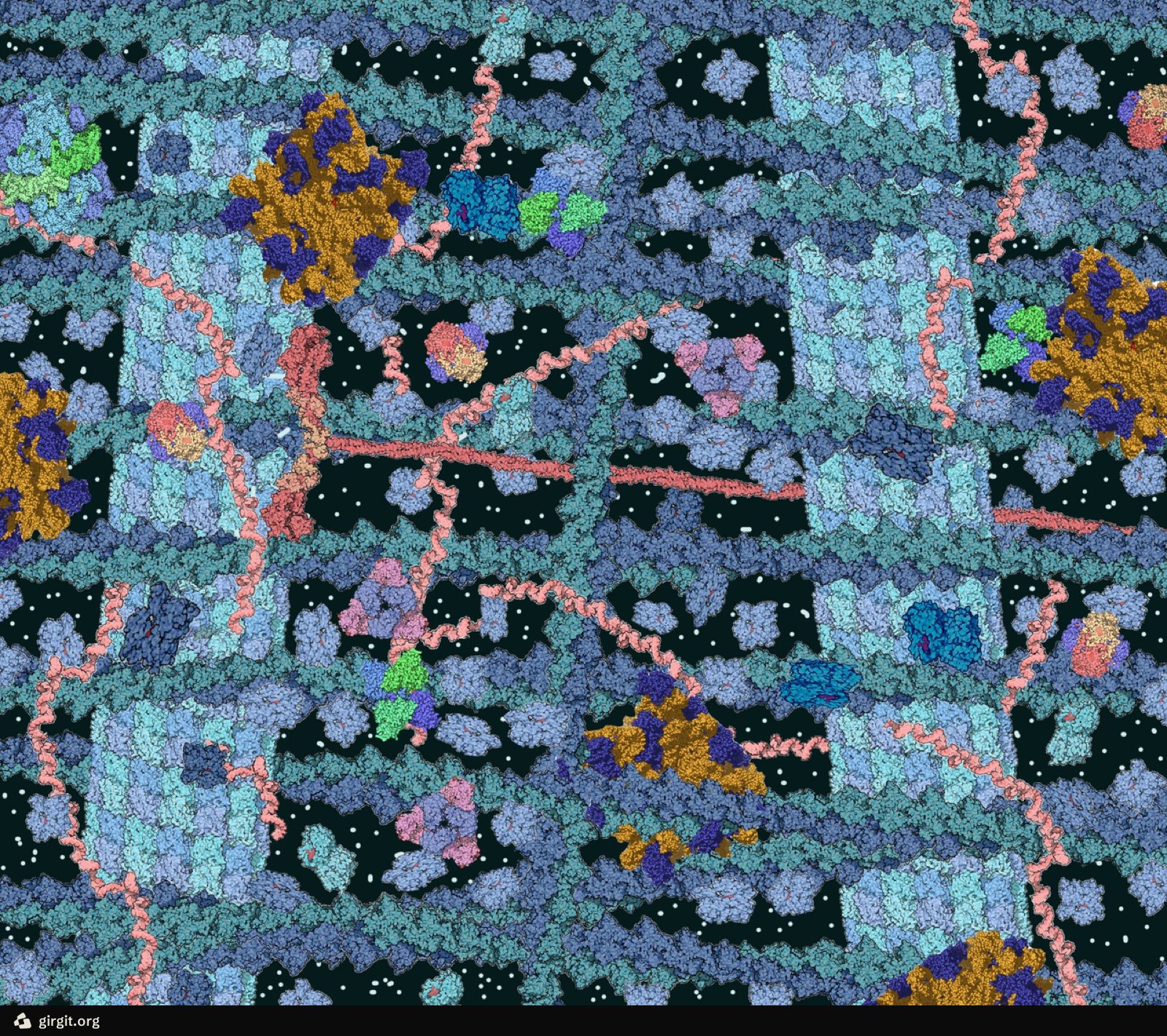
Eukaryotic cells also have little rooms with their own membranes, the organelles ("little organs"): the endoplasmic reticulum (ER), Golgi complex, lysosomes, mitochondria, microbodies and vacuoles. Prokaryotes have none of these.
Two parts have no membrane. Ribosomes, the machines that make proteins, are in every cell: free in the cytoplasm, stuck on the rough ER, and even inside mitochondria and chloroplasts. Animal cells also have a centrosome, which helps the cell divide.
- Cytoplasm
- The thick jelly filling a cell, where its chemistry happens.
- Eukaryotic
- With a true nucleus inside a membrane (plants, animals, fungi, protists).
- Prokaryotic
- No membrane round the DNA (bacteria, blue-green algae).
- Organelle
- A "little organ": a part of the cell with its own job, usually in its own membrane.
- Ribosome
- A protein-making machine with no membrane, found in every cell.
Words to know
Which structure is found in both prokaryotic and eukaryotic cells?
- Nucleus
- Ribosome
- Mitochondrion
Which of these does not have a membrane?
- Lysosome
- Vacuole
- Centrosome
Picture and video credits
Show 2 picture and video credits
- onion-peel-stained.jpg: Alvy16, CC BY 4.0
- onion-cell.jpg: Farhan Sazid, CC BY-SA 4.0

