Act 06NCERT §3.6–3.6.4 · pp. 82–856 min
The s, p, d and f blocks
The table splits into four blocks pulled apart: s on the left, p on the right, d in the middle, f below. Each block's height is the number of electrons its sub-shell holds: 2, 6, 10 and 14.
Four blocks pull apart: 2, 6, 10 and 14 high.
From the textbookpp. 82–85
NCERT Chemistry Part I, Class 11 · Reprint 2026-27
- 3.6Electronic Configurations and Types of Elements: s-, p-, d-, f- Blocksp. 82
- 3.6.1The S-block Elementsp. 82
- 3.6.2The P-block Elementsp. 84
- 3.6.3The d-Block Elements (Transition Elements)p. 84
- 3.6.4The F-block Elementsp. 84
6.0A map of the four blocks
Named for the last electron's orbital
- The aufbau principle,"building up": electrons fill the lowest-energy orbitals first. It gives the table its theory.
- Widths 2, 6, 10, 14: exactly what an s, p, d or f subshell holds.
Full text
The big ideaThe periodic table splits into four blocks, s, p, d and f, named after the kind of orbital that receives the last electron, and each block has its own typical behaviour.
In simple words
Imagine a big building with four wings. Which wing a family lives in depends on which kind of room their newest member moved into. Families in the same wing live in a similar way. The chart works like that: four wings, and the last tiny bit added to each building block decides its wing.
A map of the four blocks
The aufbau principle ("building up": electrons fill the lowest-energy orbitals first) gives the periodic table its theory. Elements in one group have the same number and arrangement of outer electrons, so they act alike. Sorting by the orbital being filled gives four blocks. In words, picture the long-form table:
| Block | Where it sits | Groups | Last electron enters | Outer configuration |
|---|---|---|---|---|
| s-block | Two tall columns at the far left | 1, 2 | ns | ns1 or ns2 |
| p-block | Six columns at the right | 13 to 18 | np | ns2np1 to ns2np6 |
| d-block | Ten columns in the middle, from period 4 down | 3 to 12 | (n−1)d | (n−1)d1–10ns0–2 |
| f-block | Two rows of 14 in the panel below the table | (placed with group 3) | (n−2)f | (n−2)f1–14(n−1)d0–1ns2 |
Notice the widths: 2, 6, 10 and 14 columns, exactly the number of electrons an s, p, d or f subshell can hold.
One real element from each block. The label on each gives the end of its configuration: look at which subshell took the last electron.
6.1Where each sits, what it ends in
Four blocks, four outer patterns
s
Two tall columns, far left
- Groups
- 1, 2
- Last electron
- ns
- Outer
- ns¹ or ns²
p
Six columns at the right
- Groups
- 13 to 18
- Last electron
- np
- Outer
- ns²np¹ to ns²np⁶
d
Ten columns in the middle, from period 4 down
- Groups
- 3 to 12
- Last electron
- (n−1)d
- Outer
- (n−1)d¹⁻¹⁰ns⁰⁻²
f
Two rows of 14 in the panel below
- Groups
- placed with group 3
- Last electron
- (n−2)f
- Outer
- (n−2)f¹⁻¹⁴(n−1)d⁰⁻¹ns²
Try itThree of them are traps
Read it, pick its block
Look at which subshell took the last electron.
6.2Sort by the orbital being filled
One table, four wings
Which wing depends on which kind of room the newest electron moved into.
s holds 2, p 6, d 10, f 14. Families in one wing live alike.
6.3Two exceptions
Hydrogen and helium don't fit
Helium · 1s²
Strictly s-block, but in group 18: its outer shell is completely full, like the other noble gases.
Hydrogen · 1s¹
One s electron, like group 1; but it can also gain one, like group 17. Usually shown on its own.
Full text
Two exceptions: hydrogen and helium
- Helium (1s2) is strictly an s-block element, but it is placed with the noble gases in group 18 (p-block). Its outer shell is completely full, so it behaves like the other noble gases.
- Hydrogen (1s1) has one s electron like the alkali metals, so it could go in group 1. But it can also gain one electron to reach helium's arrangement, like the halogens of group 17. Because it fits both, it is usually shown on its own at the top of the table.
CheckHelium
Why is helium in group 18?
Why is helium placed in group 18 although its last electron is in an s orbital?
- Its valence shell is completely filled, so it behaves like a noble gas
- It has eight outer electrons
- Its last electron is actually in a p orbital
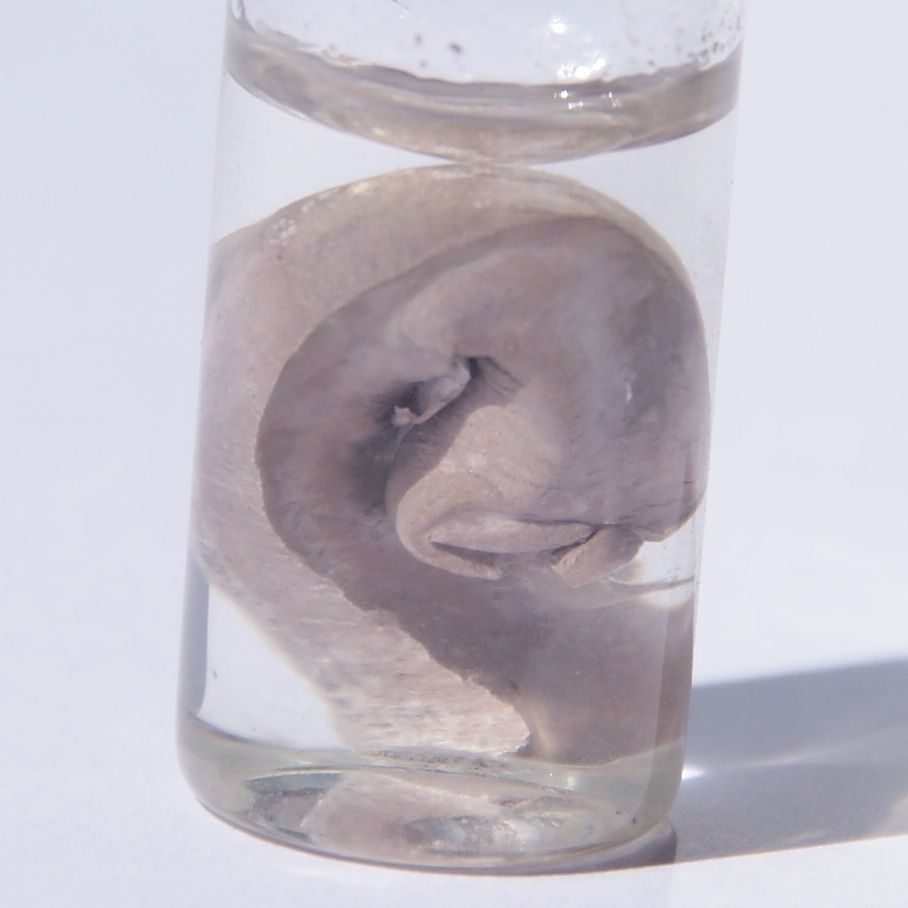
6.4The s-block: alkali metals (ns¹), alkaline earth metals (ns²)
Reactive metals that give electrons away
- Low ionization enthalpies: outer electrons come off easily, as 1+ or 2+ ions.
- Too reactiveto be found free; reactivity and metallic character increase down the group.
- Mostly ioniccompounds, except lithium and beryllium: more covalent.
6.5One electron or two, and gone
Na⁺ and Mg²⁺
Full text
The s-block
Group 1, the alkali metals (ns1), and group 2, the alkaline earth metals (ns2).
- All are reactive metals with low ionization enthalpies (it is easy to remove their outer electrons).
- They readily lose their outer electrons to form 1+ ions (alkali metals) or 2+ ions (alkaline earth metals): \(\ce{Na -> Na+ + e-}\), \(\ce{Mg -> Mg^2+ + 2e-}\).
- Metallic character and reactivity increase down the group.
- Too reactive to be found free in nature.
- Their compounds are mostly ionic, except those of lithium and beryllium, which are more covalent.
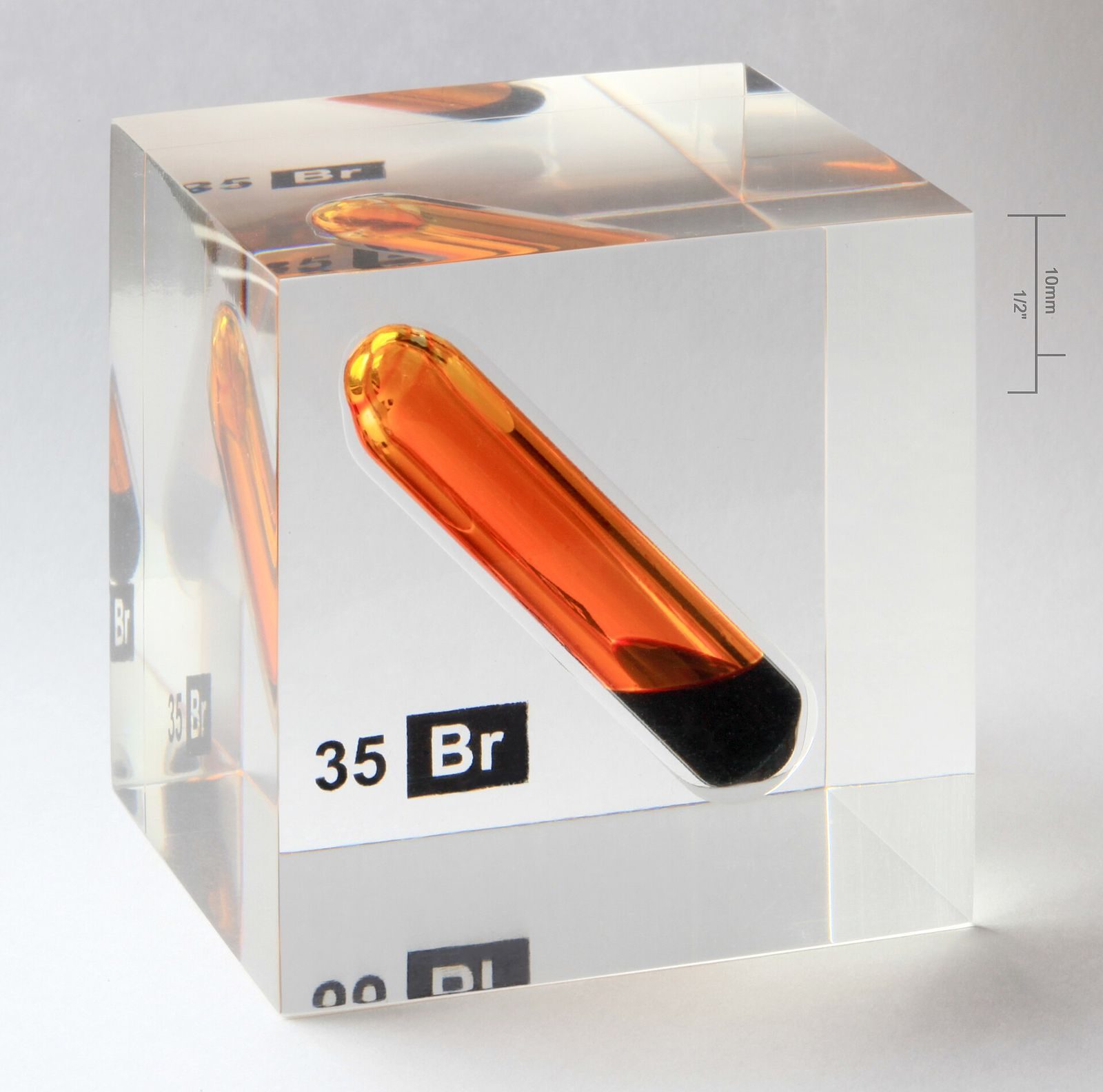
6.6The p-block, groups 13 to 18
Closed shells, and electron grabbers
- A noble gas ends each period: a closed shell, ns²np⁶, so very unreactive.
- Just before: halogens (17) take one electron, chalcogens (16) two: highly negative electron gain enthalpies.
- Non-metallic characterrises left to right; metallic, down a group.
6.7s-block + p-block together
2 + 6
columns: the representative elements, or main group elements.
- Only s and p. The d- and f-blocks are not main group.
Full text
The p-block
Groups 13 to 18. Together, the s-block and p-block are the representative elements or main group elements.
- Each period ends in a noble gas with a closed shell, ns2np6. Adding or removing electrons from it is very hard, so noble gases are very unreactive.
- Just before them are two important non-metal groups: the halogens (group 17) and the chalcogens (group 16). Both have highly negative electron gain enthalpies: they readily take one (halogens) or two (chalcogens) electrons to reach a noble gas configuration.
- Non-metallic character increases left to right across a period; metallic character increases down a group.
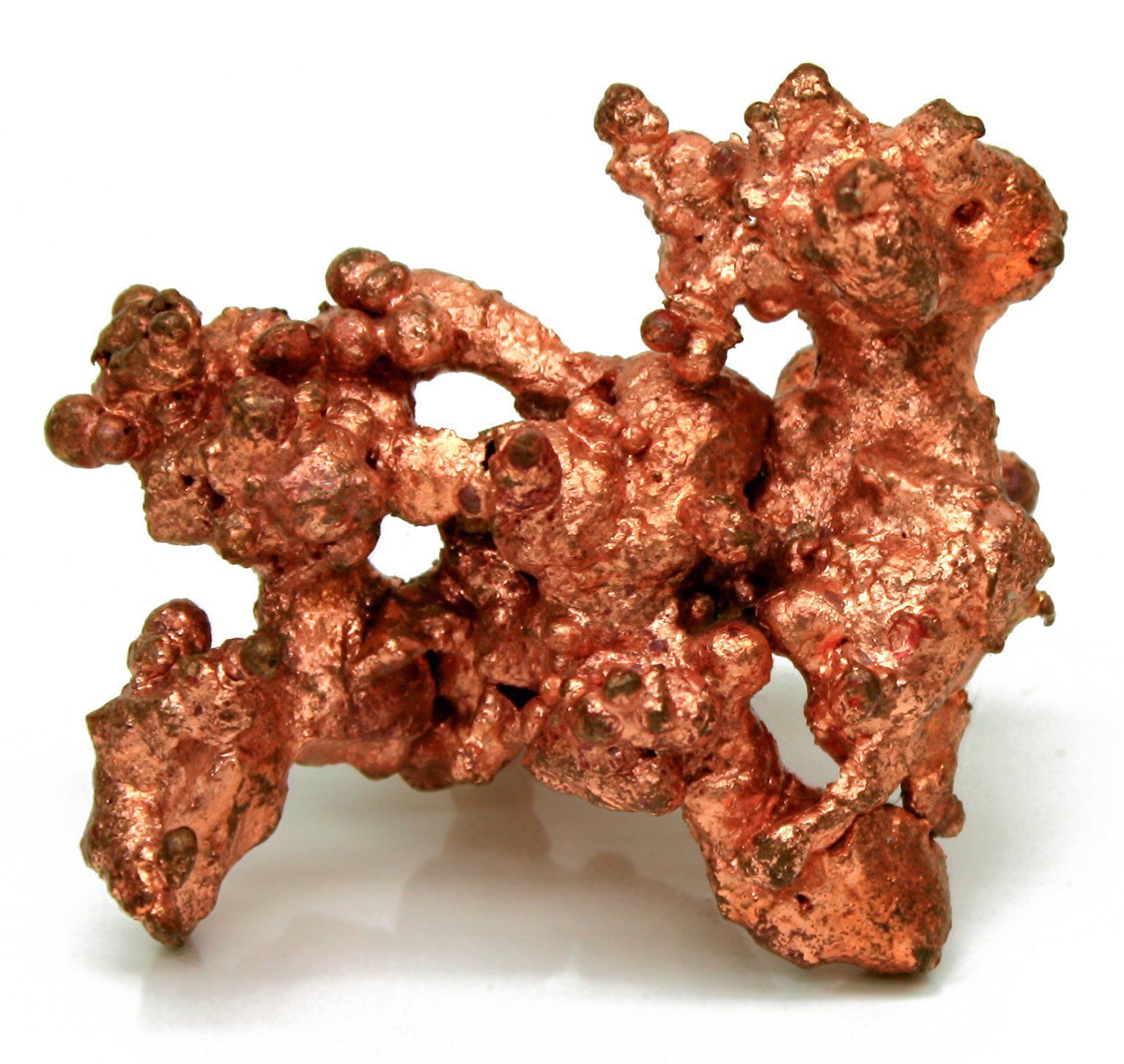
6.8The d-block: transition elements, groups 3 to 12
The filling happens one floor down
- An inner d subshell: (n−1)d¹⁻¹⁰ns⁰⁻². Palladium is odd: 4d¹⁰5s⁰.
- All metals; mostly coloured ions, variable valence, often paramagnetic (unpaired electrons), many catalysts.
- Zn, Cd, Hg(full (n−1)d¹⁰ns²) show few of these.
Full text
The d-block: transition elements
Groups 3 to 12, the middle of the table. Here electrons go into an inner d subshell, one shell below the outermost. General outer configuration: (n−1)d1–10ns0–2. Palladium is an odd one: 4d105s0.
- All are metals.
- They mostly form coloured ions, show variable valence (several oxidation states), are often paramagnetic (attracted by a magnet, because of unpaired electrons), and many are used as catalysts.
- Zn, Cd and Hg, with a full (n−1)d10ns2, show few of these typical properties.
- They form a bridge between the very reactive s-block metals and the less reactive elements of groups 13 and 14, hence the name transition elements.
6.9Why "transition"?
A flyover between market and quiet streets.
The d-block is a bridge from the restless s-block metals to the calmer elements of groups 13 and 14. Properties change gradually across it.
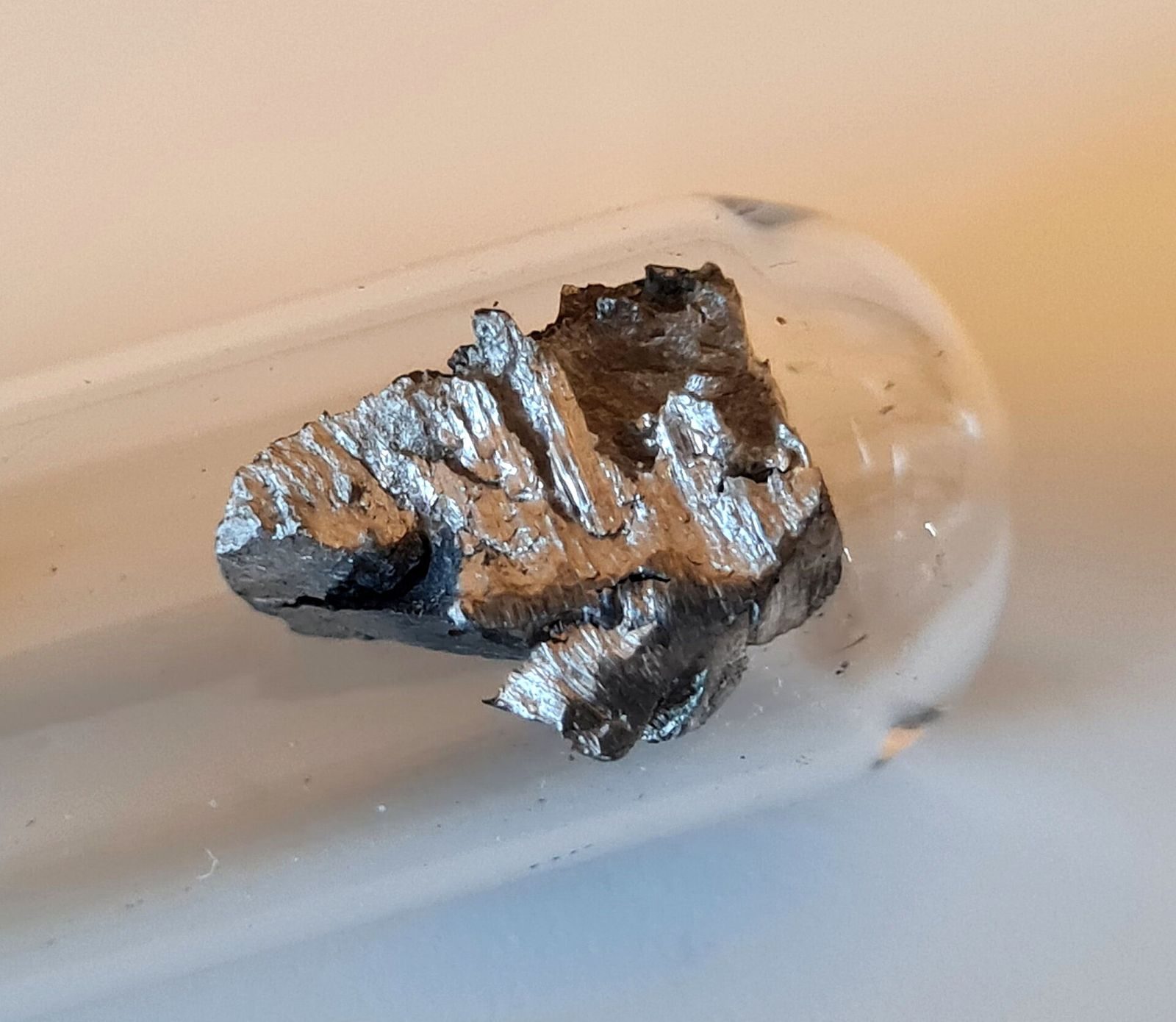
6.10The f-block: inner transition elements
Two shells in: near twins
- Lanthanoids Ce (58) to Lu (71); actinoids Th (90) to Lr (103). (n−2)f¹⁻¹⁴(n−1)d⁰⁻¹ns².
- All metals, very alike within each series. Early actinoids show many oxidation states.
- All actinoids are radioactive; many made only in nanogram amounts. After uranium (92): transuranium elements.
Full text
The f-block: inner transition elements
The two rows below the main table: the lanthanoids, Ce (Z = 58) to Lu (Z = 71), and the actinoids, Th (Z = 90) to Lr (Z = 103). The last electron enters an f orbital two shells in: (n−2)f1–14(n−1)d0–1ns2. They are the inner transition elements.
- All are metals, and within each series the properties are very similar.
- Early actinoids have more complicated chemistry than the lanthanoids, because they show many oxidation states.
- All actinoids are radioactive. Many have been made only in nanogram amounts or less, so their chemistry is not fully known.
- Elements after uranium (Z = 92) are the transuranium elements.
Textbook check · §3.6.4Which element goes in group 3: lanthanum or lutetium?
- The textbook says
- Lanthanum (57) and actinium (89) sit in group 3; the f-block rows are Ce to Lu and Th to Lr.
- What we know now
- Chemists have argued about this for a century. An IUPAC report in 1988 put scandium, yttrium, lutetium and lawrencium in group 3, which makes the f-block La to Yb and Ac to No. A 2021 IUPAC project called the choice a matter of convention but still suggested the lutetium form, because it is the only one that keeps the atomic numbers in order, keeps the d-block in one piece and gives the blocks the widths quantum mechanics demands: 2, 6, 10 and 14. Most chemists and physicists who have studied the question now agree. The widget in the deep dive below lets you cut the table both ways.Source: E. Scerri, "Provisional report on discussions on group 3 of the periodic table", Chemistry International, 2021; Group 3 element (Wikipedia)
- In the exam
- Follow NCERT: lanthanoids Ce (58) to Lu (71), actinoids Th (90) to Lr (103), with La and Ac in group 3.
Worked example: placing element 115
- The last noble gas before it is radon (Z = 86). 115 − 86 = 29 more electrons.
- Period 7 fills 7s (2), then 5f (14), then 6d (10): that is 26. The remaining 3 go into 7p.
- Configuration: [Rn]5f146d107s27p3.
- ns2np3 is the nitrogen family, group 15, p-block. (It is moscovium, Mc.)
Answer
Textbook check · Problem 3.3Element 117 has been made, and Uuo is now Og
- The textbook says
- Element 117 "has not yet been discovered", and element 120 would be [Uuo]8s2.
- What we know now
- Element 117 was announced by a Russian–American team at Dubna in April 2010 and named tennessine (Ts) in November 2016, the same year element 118 got its name, oganesson (Og). So the core in brackets is now written [Og], and element 120 is [Og]8s2: period 8, group 2, s-block. The address does not change, only the name of the core.Source: IUPAC, names of elements 113, 115, 117 and 118 (2016); Tennessine (Wikipedia)
- In the exam
- Write [Og]8s2, group 2, period 8. The reasoning is exactly the book's.
Don't mix these up
- Main group (representative) = s-block + p-block only. d- and f-block are not main group.
- A configuration ending in (n−1)d10ns1, like [Ar]3d104s1 (copper), is d-block, not group 1.
- Lanthanoids start at Ce (58), not La; actinoids at Th (90), not Ac.
Textbook check§3.6.4
Lanthanum or lutetium in group 3?
The textbook says
La (57) and Ac (89) in group 3
The f rows run Ce to Lu and Th to Lr.
What we know now
Most chemists now prefer Lu and Lr
An IUPAC report in 1988 put scandium, yttrium, lutetium and lawrencium in group 3 (f-block La to Yb, Ac to No). A 2021 IUPAC project (E. Scerri, Chemistry International) called it a convention but suggested the lutetium form: atomic numbers in order, one d-block, widths 2, 6, 10, 14. Exam: follow NCERT.
WorkedElement 115
From Z to block and group
Worked example: placing element 115
- The last noble gas before it is radon (Z = 86). 115 − 86 = 29 more electrons.
- Period 7 fills 7s (2), then 5f (14), then 6d (10): that is 26. The remaining 3 go into 7p.
- Configuration: [Rn]5f146d107s27p3.
- ns2np3 is the nitrogen family, group 15, p-block. (It is moscovium, Mc.)
Guess firstNot made yet
Where would 119 go?
Element 118 closes period 7. Write the next configuration.
Answer
Textbook checkProblem 3.3
117 is made, and Uuo is Og
The textbook says
117 "has not yet been discovered"; 120 is [Uuo]8s²
What we know now
Tennessine, and [Og]8s²
A Russian–American team at Dubna announced 117 in April 2010; named tennessine (Ts) in November 2016, with oganesson (Og) for 118. So 120 is [Og]8s²: period 8, group 2, s-block. Exam: write [Og]8s²; the reasoning is the book's.
Try itEven an element nobody has made
Find the element's address
Shell n gives the period; the last subshell, the block; its electrons, the group.
CheckThree configurations
Which one is d-block?
Which configuration belongs to a d-block element?
- [Ne]3s1
- [Ar]3d104s24p5
- [Ar]3d34s2
6.11Don't mix these up
Copper is not group 1
Myth
[Ar]3d¹⁰4s¹ ends in s¹, so group 1
Fact
It is copper: d-block
Main group means s and p only. And lanthanoids start at Ce, actinoids at Th.
Don't mix these up
- Main group (representative) = s-block + p-block only. d- and f-block are not main group.
- A configuration ending in (n−1)d10ns1, like [Ar]3d104s1 (copper), is d-block, not group 1.
- Lanthanoids start at Ce (58), not La; actinoids at Th (90), not Ac.
CheckTransition elements
Which is not typical?
Which property is NOT typical of transition elements?
- Forming coloured ions
- Showing variable oxidation states
- Being non-metals that readily gain electrons
- Acting as catalysts
NEETPast questions
As the exam asks it
KeepJust remember
Patterns, numbers, family names
Group numbers and names are conventions: tap a card for its hook.
WordsTo know
Seven words
- Block
- A region of the table where the same kind of orbital (s, p, d or f) is being filled.
- Representative elements
- The s- and p-block elements, also called main group elements.
- Halogens, chalcogens
- Group 17 and group 16 non-metals.
- Transition elements
- d-block metals, groups 3 to 12.
- Inner transition elements
- f-block metals: lanthanoids and actinoids.
- Paramagnetic
- Pulled towards a magnet, because of unpaired electrons.
- Transuranium elements
- Elements beyond uranium (Z above 92).
RootsOne column per electron
Orbitals × 2 = block width
Each step right adds one electron; a p subshell is full after six. Down a column the outer arrangement repeats, so behaviour repeats.
Full text
The roots: one column per electron
- Why is the p-block exactly 6 columns wide?Because each step to the right adds one electron, and a p subshell has room for 6. After six steps it is full and the next electron has to go somewhere else.
- Why room for 6, and 10 for d, 14 for f?A subshell with quantum number l has 2l + 1 orbitals, one for each way its shape can point in space: 1 for s, 3 for p, 5 for d, 7 for f (see Quantum numbers). Each orbital holds two electrons with opposite spins, the Pauli rule. So 2, 6, 10, 14.
- Why do elements in one column behave alike?Chemistry happens at the outside of an atom. Down a column the outer arrangement repeats (ns1, ns2np5, and so on), so the behaviour repeats. Across a block only one subshell is changing, one electron at a time.
- Then why are neighbours in the f-block far more alike than neighbours in the s- or p-block?Because the electron being added goes two shells in. The 4f orbitals lie inside the filled 5s and 5p shells, tucked into the core, and they take almost no part in bonding. From the outside, cerium, neodymium and gadolinium all look much the same: three electrons easy to give away (mostly 6s2 and one more), so nearly all of them form 3+ ions of almost the same size.
- And what does that do in nature?Elements that behave alike travel together. When rocks crystallise, the lanthanoids slip into the same mineral grains, so one ore holds a dozen of them at once, and separating them is one of the slowest jobs in chemistry.
- The bedrock2l + 1 orbitals, two electrons each, filled in order of energy, and only the outermost electrons meet the neighbours.
So "block" is not just a colouring scheme. The width of each block is a count of electrons, and the way properties change across it tells you how deep the changing electron sits. In the s- and p-blocks the change happens right at the surface, so each step is a big change in behaviour. In the d-block it is one floor down, so neighbours differ less. In the f-block it is two floors down, so neighbours are near twins.
RootsHow deep the changing electron sits
4f hides inside the core
- 4f lies insidethe filled 5s and 5p, almost no part in bonding.
- Cerium, neodymium, gadoliniumlook alike outside: mostly 6s² and one more, so 3+ ions of nearly one size.
- Bedrock: 2l + 1 orbitals, two electrons each, filled by energy; only the outside meets neighbours.
StoryThree homes for hydrogen, one for helium; and group 3
The quarrels the blocks cause
- HGroup 1, 17, twice, or floatingA gas of two-atom molecules; forms hydride ions like a halogen; no reaction with water. Eric Scerri objects to floating: no element is above the periodic law.
- 1892Henry Bassett, then Alfred Werner (1905), Charles Bury (1921)On chemical grounds, scandium and yttrium go with lutetium (the first two left the box empty: lutetium was not yet known).
- 1928Helium over berylliumCharles Janet put it there by its electrons. By behaviour, the most unreactive element of all.
- 1988IUPACTurned down moving helium to group 2; backed lutetium under yttrium. Early wrong configurations had put lanthanum there.
- OddSolid heliumpacks its atoms like beryllium and magnesium, not like neon.
- 2021A convention, not a factIUPAC still suggests the lutetium form; NCERT prints lanthanum.
Full text
The story
 Arabian Seabeach sand belt
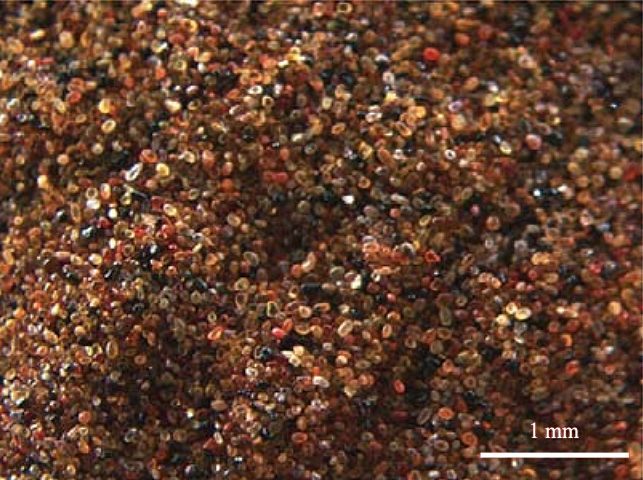 monazite grains
StoryThe f-block on Kerala's beaches
A dozen lanthanoids in one sand
- MonaziteIts rare-earth part: roughly 45 to 48% cerium, 24% lanthanum, 17% neodymium, with thorium.
- Before the Second World War,Indian and Brazilian monazite fed most of the world.
StoryKerala and Tamil Nadu coasts
From sand to a power plan
- 195018 AugustThe new Indian government sets up Indian Rare Earths Limited.
- 1952Aluva, near KochiThe first plant begins processing monazite.
- ThO₂9 to 10% thorium oxidein Indian monazite: roughly a quarter of the world's thorium by many estimates. So Homi Bhabha planned nuclear power in three stages, thorium last.
See itThe whole table as one machine
32 columns, 18, or left-step
Slide from 32 columns to 18, then to Janet's left-step table; switch the cut between NCERT's and IUPAC's. Tap any box.
Solve itFour problems
Your turn
Solve it: weigh the evidence
Use these NCERT values to decide whether hydrogen is more like lithium or more like fluorine. Ionization enthalpy (kJ mol−1): H 1312, Li 520, F 1681. Electron gain enthalpy (kJ mol−1): H −73, Li −60, F −328.
Answer
Solve it
Find the block, period and group (if it has one) of Z = 64, 80 and 114 without looking at a table.
Hint
Answer
Solve it: spot the error
"Zinc is 3d104s2. Its d subshell is full, so zinc is not a d-block element."
Answer
Solve it: think harder
Iron, cobalt and nickel are easy to separate from each other, but neodymium, praseodymium and samarium can only be pulled apart by repeating one extraction step over and over, in long chains of mixer tanks. Explain the difference from where the changing electron sits.
Answer
ConnectAnd still confused?
Where this goes next
Connect it
- Why 2l + 1 and two per orbital. Quantum numbers and Electronic configuration (Pauli, Hund, the filling order) in Chapter 2.
- Why the blocks come in this order. The n + l filling order, and a world where it is different: Why the table has the shape it has.
- Moving the actinoids. How Glenn Seaborg gave the 5f row its own place in 1944: The modern periodic table.
- Class 12. The lanthanoids' near-identical 3+ ions and the lanthanoid contraction are on The lanthanoids; their radioactive cousins on The actinoids.
- In your pocket. The strongest permanent magnets, neodymium–iron–boron, sit in headphones, hard disks and the motors of electric vehicles. A Toyota Prius's motors need about a kilogram of neodymium.
Are the "rare earths" actually rare?
No. Cerium is the 25th most common element in the earth's crust, more common than copper. They are called rare because they are spread thinly and always mixed together, and are hard to separate into pure elements.
If helium is in the s-block, why is it coloured like the p-block in some tables?
Tables colour it by where it is printed (group 18) or by its block (s). Both are used. By electrons it is s-block; by behaviour it is a noble gas. NCERT says exactly this: s-block element placed in group 18.
Why does the f-block have no group numbers?
The 18 group numbers belong to the 18-column table, where the f-block has been lifted out. In the 32-column table its 14 columns would sit between groups 2 and 3, but IUPAC has never given them numbers, so they are named by series: lanthanoids and actinoids.
Sources
- Periodic table, period 1 (Wikipedia): where to put hydrogen and helium; Scerri on floating hydrogen; IUPAC 1988 and helium; solid helium's packing
- Group 3 element (Wikipedia): Bassett 1892, Werner 1905, Bury; the 1988 IUPAC report; the 2021 view and E. Scerri, provisional report on group 3, Chemistry International (2021)
- Lanthanide (Wikipedia): 4f orbitals isolated inside the core, little part in bonding; separation by solvent extraction
- Monazite (Wikipedia): composition, Ce/La/Nd shares, Indian and Brazilian monazite before the Second World War
- IREL (India) Limited (Wikipedia): founded 18 August 1950; Rare Earths Division at Aluva/Eloor, 1952
- India's three-stage nuclear power programme (Wikipedia): Bhabha, thorium share, 9 to 10% ThO2 in Indian monazite
- Rare-earth element (Wikipedia): cerium more abundant than copper and Neodymium magnet (Wikipedia): uses; about 1 kg of neodymium in a Prius
- Transition metal (Wikipedia): the IUPAC Gold Book definition and group 12