Chemical Bonding and Molecular Structure
- 1. Why do atoms join at all?
- 2. How do you draw a Lewis structure?
- 3. What holds salt together?
- 4. How long, how strong? Bond parameters
- 5. When one drawing is not enough: resonance
- 6. Why does water have a plus end? Polarity of bonds
- 7. Why is water bent but CO₂ straight? VSEPR theory
- 8. What happens when two atoms bond? Valence bond theory
- 9. How does carbon make four equal bonds? Hybridisation
- 10. Electrons that belong to the whole molecule: MO theory
- 11. Why does oxygen stick to a magnet? Bond order
- 12. What makes water so sticky? Hydrogen bonding
- Review
8 of 12·NCERT §4.5 · §4.5.1 · §4.5.2 · §4.5.3 · §4.5.4 · §4.5.5·pp. 117–120·6 min
What happens when two atoms bond? Valence bond theory
The big ideaA covalent bond forms when half-filled orbitals of two atoms overlap and their electrons pair up with opposite spins; head-on overlap gives a strong sigma bond, side-on overlap a weaker pi bond.
In simple words
Each piece has a cloud where its tiny charged bit lives. When two pieces come close, their clouds partly melt into each other, and the two bits pair up in the shared space between them. The more the clouds melt together, the stronger the link. Clouds that meet nose to nose join strongly; clouds that only brush sideways join more weakly.
Why we need a better theory
Lewis structures say \(\ce{H2}\) and \(\ce{F2}\) both have one shared pair. Yet their bonds are very different: H–H is 74 pm long with bond enthalpy 435.8 kJ mol−1, while F–F is 144 pm with only 155 kJ mol−1. Lewis cannot explain the difference, or why a bond forms at all. VSEPR gives shapes but not the reason. Two theories based on quantum mechanics do better: valence bond (VB) theory and molecular orbital (MO) theory.
VB theory was put forward by Heitler and London (1927) and developed by Pauling and others. We will use it without the mathematics.
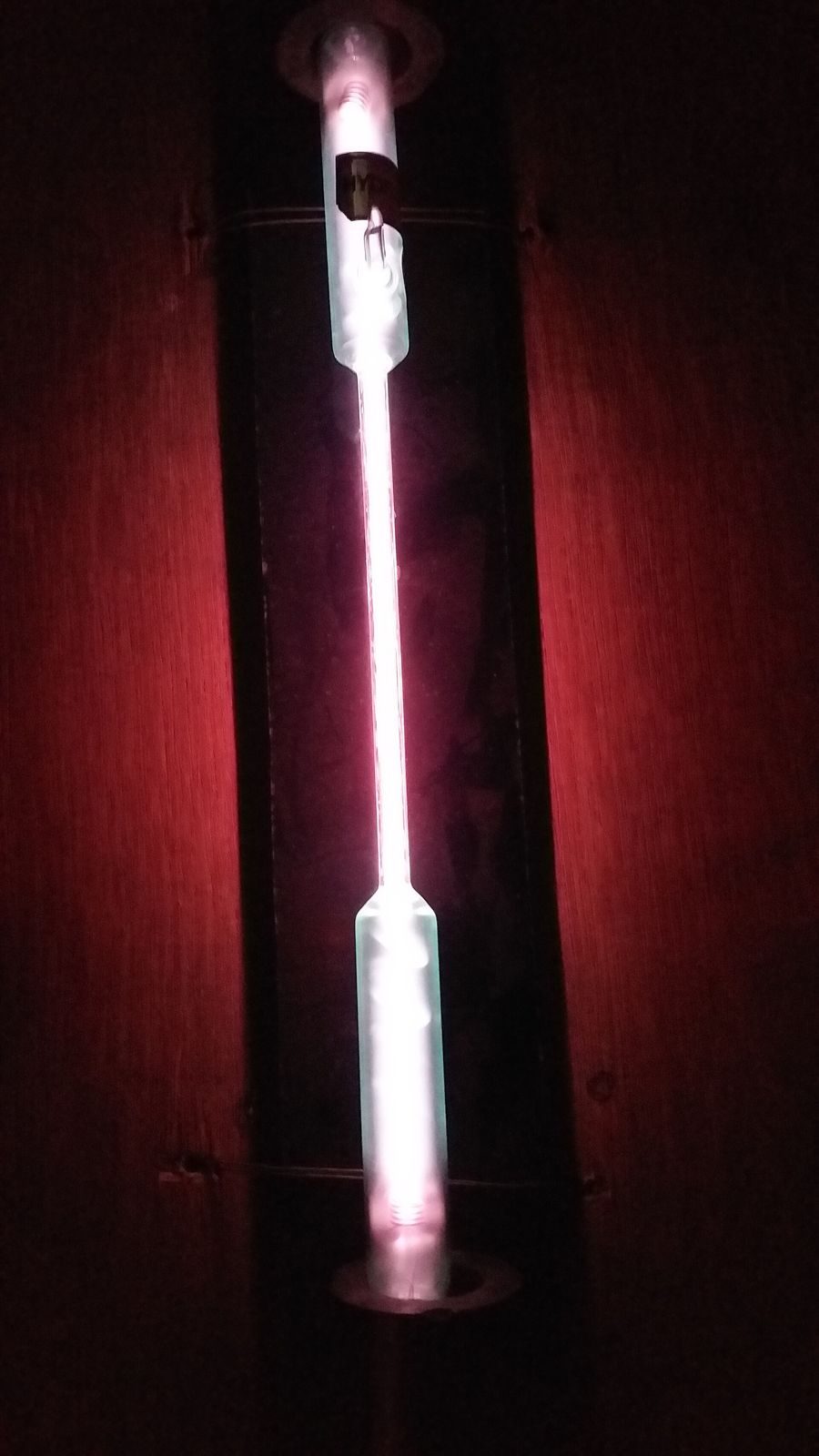 H–H: 74 pm
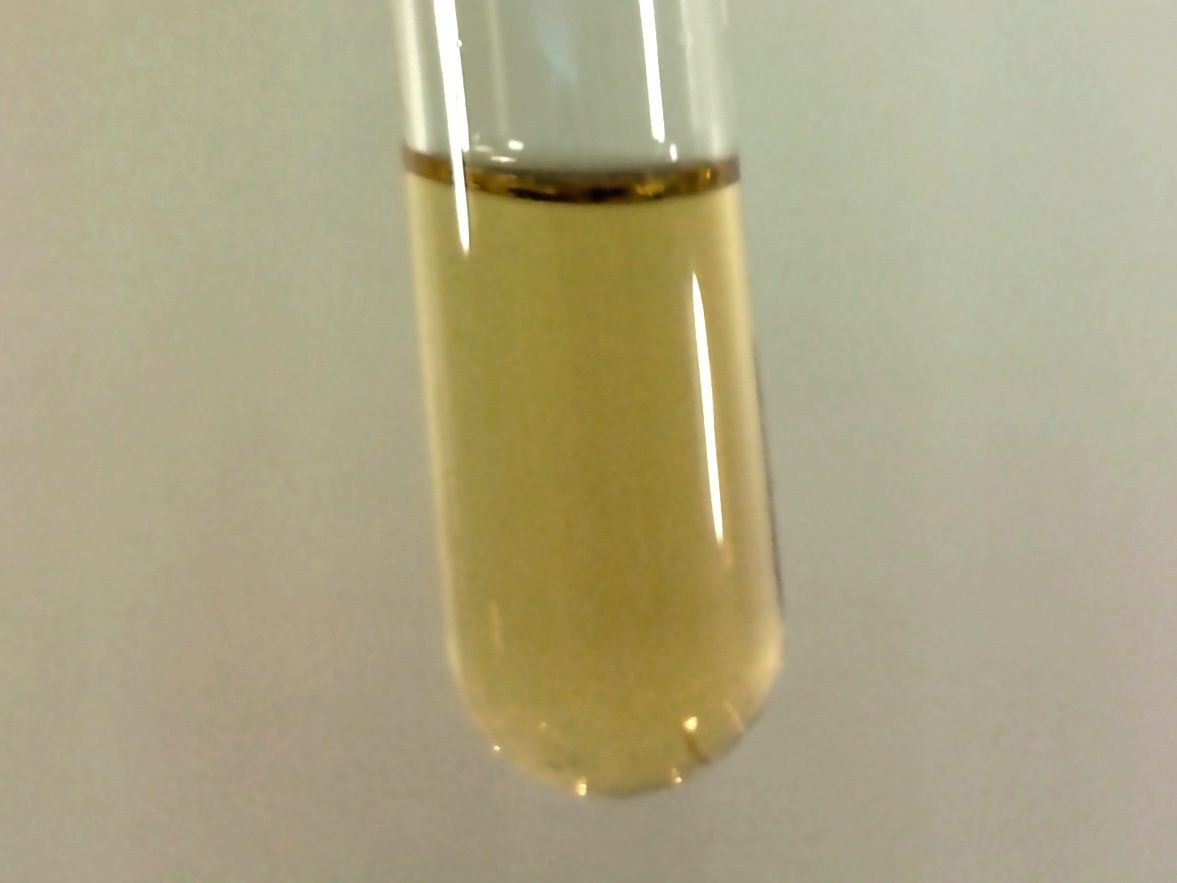 F–F: 144 pm
Textbook check · §4.5F–F: 155 or 159 kJ mol−1?
- The textbook says
- Section 4.5 gives the F–F bond enthalpy as 155 kJ mol−1; the energy diagram for F2 later in the chapter uses 159.
- What we know now
- The F–F bond enthalpy at 25 °C is about 158.8 kJ mol−1: twice the measured enthalpy of formation of gaseous fluorine atoms, 79.38 kJ mol−1. Figures a few kJ lower come from older measurements or from the energy at absolute zero, where the molecule has less heat energy to start with. The same thing happens with H2: 435.8 kJ mol−1 at 25 °C (the textbook's number) but 432 at absolute zero. The point of the comparison is untouched: F–F is less than half as strong as H–H.Source: NIST Chemistry WebBook, fluorine atom: ΔfH°(gas) = 79.38 kJ/mol
- In the exam
- Use the value the question gives. If you must quote one, "about 155 to 159 kJ mol−1" is safe; the comparison H–H > F–F is what is examined.
How a hydrogen molecule forms
Take two hydrogen atoms, A and B, with nuclei NA, NB and electrons eA, eB. Far apart, they ignore each other. As they approach, new forces appear:
- Attractions: each nucleus with its own electron (NA–eA, NB–eB), and each nucleus with the other atom's electron (NA–eB, NB–eA).
- Repulsions: between the two electrons (eA–eB) and between the two nuclei (NA–NB).
Experiments show the new attractions win at first, so the atoms draw closer and the energy drops. At one distance the net attraction just balances the repulsion and the energy is at its lowest: the atoms are bonded, and that distance, 74 pm, is the bond length. Push them closer and repulsion takes over; the energy shoots up.
A graph of energy against distance (a potential energy curve) is therefore a valley: high when far apart, lowest at 74 pm, rising steeply when too close. The depth of the valley is the energy released on forming the bond, the bond enthalpy. To pull a mole of \(\ce{H2}\) apart again costs 435.8 kJ:
\[ \ce{H2(g)} + 435.8\ \mathrm{kJ\,mol^{-1}} \ce{-> H(g) + H(g)} \]Try it: bring two hydrogen atoms together, then let go.
Orbital overlap
At that lowest-energy distance, the 1s orbitals of the two atoms partly merge. This partial merging is the overlapping of atomic orbitals, and it pairs up the two electrons. The orbital overlap concept says: a covalent bond forms when half-filled valence orbitals overlap and their electrons pair with opposite spins. The greater the overlap, the stronger the bond.
Overlap can be positive, negative or zero, depending on the sign (phase) of the orbitals' wave functions and how they are pointed. The + and − on orbital drawings are phases, not charges. Only positive overlap, same phase and suitable orientation, forms a bond.
Directions of bonds
Bonds in polyatomic molecules point in definite directions: methane is tetrahedral with H–C–H angles of 109.5°, ammonia is pyramidal. Can plain overlap explain this? Try methane. Carbon's ground state is \( [\mathrm{He}]\,2s^2 2p^2 \); promoting one electron gives \( 2s^1 2p_x^1 2p_y^1 2p_z^1 \), four half-filled orbitals. (The energy spent on promotion is repaid by the extra bonds formed.) But the three 2p orbitals are at 90° to each other, so three C–H bonds would be at 90°; the 2s orbital is a sphere, so the fourth bond would have no particular direction. That is not 109.5°. In the same way, plain p-orbital overlap predicts 90° in \(\ce{NH3}\) and \(\ce{H2O}\), not the real 107° and 104.5°. Overlap alone fails; the fix is hybridisation, the next concept.
Try it: start from pure p orbitals on carbon, then mix in the 2s.
Sigma and pi bonds
Sigma (σ) bond. Formed by end-to-end (head-on, axial) overlap along the line joining the two nuclei (the internuclear axis). It can come from:
- s–s overlap: two half-filled s orbitals, as in \(\ce{H2}\).
- s–p overlap: a half-filled s orbital and a half-filled p orbital, as in HCl (H 1s with Cl 3p).
- p–p overlap: two half-filled p orbitals end-on, as in \(\ce{Cl2}\).
Pi (π) bond. Formed by sideways overlap of two p orbitals whose axes are parallel to each other and perpendicular to the internuclear axis. The result is two saucer-shaped electron clouds, one above and one below the plane of the bonded atoms.
Which is stronger?
- A σ bond is stronger than a π bond, because head-on overlap is greater than sideways overlap.
- A double bond is 1 σ + 1 π; a triple bond is 1 σ + 2 π. A π bond never forms on its own between two atoms in these molecules; it always comes with a σ bond.
Try it: turn two p orbitals from head-on to side-on.
Worked example: counting σ and π bonds
Ethyne, \(\ce{H-C#C-H}\): two C–H single bonds (2 σ) and one C≡C (1 σ + 2 π). Total 3 σ, 2 π.
Try it. How many σ and π bonds are in benzene, \(\ce{C6H6}\) (a ring of six carbons with alternating single and double bonds, each carbon carrying one H)?
Answer
Just remember
The reasons are on this page, but these counts and numbers come up in every exam. Hooks:
- Single bond 1σ; double 1σ + 1π; triple 1σ + 2π
- Sigma is the spine: every bond between two atoms has exactly one, and the π bonds are the extras wrapped around it. Count σ = number of links, π = extra lines in the drawing.
- σ: head-on overlap (s–s, s–p, p–p); π: side-on overlap of parallel p orbitals
- Sigma = straight at each other. The letter π even looks like it: two parallel legs, two parallel p orbitals side by side.
- H2: 74 pm, 435.8 kJ mol−1; F2: 144 pm, about 155 to 159
- Hydrogen's bond is short and strong: "74 se 436", like a fast bowler's figures. Fluorine's is twice as long and less than half as strong.
- VB theory: Heitler and London, 1927; developed by Pauling
- H & L did Hydrogen first; Pauling built everything else on it (hybrid orbitals, next page).
- Valence bond theory
- Bonds form by overlap of half-filled atomic orbitals and pairing of electrons.
- Orbital overlap
- Partial merging of two atomic orbitals; more overlap, stronger bond.
- Internuclear axis
- The line joining the two bonded nuclei.
- Sigma (σ) bond
- A bond from head-on overlap along the internuclear axis.
- Pi (π) bond
- A bond from sideways overlap of parallel p orbitals, above and below the axis.
- Potential energy curve
- Energy against distance for two atoms; its lowest point gives bond length and bond enthalpy.
Words to know
Why is a σ bond stronger than a π bond?
- A σ bond has more electrons
- Head-on overlap is greater than sideways overlap
- Only s orbitals can form σ bonds
In the \(\ce{H2}\) potential energy curve, what happens if the nuclei are pushed closer than 74 pm?
- The bond gets stronger and energy falls further
- Repulsion wins and the energy rises steeply
- The electrons stop pairing
How many σ and π bonds are there in hydrogen cyanide, \(\ce{H-C#N}\)?
- 2 σ, 2 π
- 4 σ, 0 π
- 1 σ, 2 π
Deep dive · optional
Why does sharing two electrons hold two atoms together?
Where the energy of a bond really comes from, why the two electrons must spin opposite ways, and the night in 1927 when two young physicists first calculated a chemical bond. Not needed for the exam; it is here so "the orbitals overlap" means something.
The roots: identical electrons and the Pauli principle
- Why is H2 lower in energy than two H atoms?Because each electron, once it can spread over both atoms, spends time between the two nuclei, where it is pulled by both at once. Electron charge in the middle pulls each nucleus towards the other, like glue.
- Isn't that just two charge clouds attracting?Only a small part of it. If you treat the two atoms as ordinary clouds of charge that overlap, the attraction is weak: about 51 kJ mol−1 by Heitler and London's own formulas, a sixth of what their full calculation gives. The rest is a purely quantum effect called exchange.
- What is exchange?Electrons are perfectly identical. Once the atoms overlap, "electron 1 on atom A and electron 2 on atom B" cannot be told apart from the swapped version, so the true wave describes both at once, added (+) or subtracted (−). Added, the waves reinforce in the middle and pile charge between the nuclei: a bond. Subtracted, they cancel there and push charge out to the sides: repulsion.
- What decides plus or minus?Spin. The Pauli principle says that swapping two electrons must flip the sign of the complete wave (position and spin together). If the spins are opposite, the spin part takes the sign flip and the position part can be the "plus" kind: bonding. If the spins are the same, the position part must be the "minus" kind: no bond at any distance. That is why a covalent bond is a pair of electrons with opposite spins.
- The bedrockCoulomb's law, the fact that all electrons are identical, and the Pauli principle you met with the spin quantum number. Nothing else is needed to explain why H2 exists and why He2 does not.
The valley in the energy curve then has a simple shape. Far apart, nothing happens. Closer, the overlap grows and the exchange attraction deepens the valley. Too close, the two nuclei repel more and more strongly (their repulsion grows as 1/R without limit), and the curve shoots up. The bottom of the valley, where the two effects balance, is the bond length.
The story
See it
Heitler and London's calculation, done live from their formulas. Guess first. Then drag the right-hand atom, flip a spin, and watch the electron density along the line between the nuclei: it piles up in the middle for opposite spins and drains away for the same spins. "Without exchange" shows how little bonding is left if you treat the electrons as ordinary charge clouds.
The valley the theory finds is shallower and wider than the real one, because Heitler and London kept each electron in a plain hydrogen 1s orbital. Later calculations that let the orbitals shrink and bend close the gap almost completely; the physics stays the same.
Solve it
Solve it: light that breaks a bond
Breaking a mole of H–H bonds takes 435.8 kJ. What is that per molecule, in electronvolts (1 eV per molecule = 96.5 kJ mol−1)? Light of what wavelength carries at least that much energy per photon? Use \( E = \dfrac{1240}{\lambda} \) with E in eV and λ in nm.
Hint
Answer
Solve it: spot the error
A student argues: "More overlap means a stronger bond, and the overlap is largest when the two nuclei sit on top of each other. So H2 should be most stable at zero distance." What is wrong?
Answer
Solve it: why no He2?
Use the spin rule to explain why two helium atoms do not form a covalent bond, though each has two electrons in a 1s orbital.
Answer
Connect it
Connect it
- The same molecule, the other theory. MO theory builds H2 from a bonding orbital that spreads over both atoms; it starts from the same plus combination of two 1s waves: Molecular orbital theory.
- Orbitals and phases, Chapter 2. The 1s cloud, and the + and − signs that decide whether overlap helps or hurts, are on Shapes and energies of orbitals; spin and the Pauli principle on Quantum numbers.
- Covalent radius, Chapter 3. Half of the 74 pm bond length gives hydrogen's covalent radius, 37 pm: Atomic and ionic radius.
- Bond enthalpies, Chapter 5. The depth of the valley is the bond enthalpy you will add and subtract to get reaction enthalpies: Atomisation and bond enthalpy.
- Fridge magnets and steel. The same exchange effect, between electrons on neighbouring iron atoms, lines their spins up and makes iron magnetic. Heitler and London's "plus and minus" is behind both chemical bonds and magnets.
Still confused?
The widget's measured valley is 458 kJ mol−1 deep. Why does the page say 435.8?
A molecule never rests at the very bottom of its valley: even at absolute zero it keeps vibrating, and that vibration carries some energy. So the energy needed to break the bond, starting from the lowest vibration, is less than the full depth: about 432 kJ mol−1 at absolute zero and 435.8 kJ mol−1 as an enthalpy at 25 °C. The 458 is the depth of the curve itself, from spectroscopy.
Does the shared pair sit still between the nuclei?
No. Both electrons move all over the molecule. Bonding only shifts a little extra charge into the region between the nuclei, compared with two separate atoms; the density line in the widget shows how little a shift is enough.
Is valence bond theory wrong, now that MO theory is used more?
No. They are two ways of approximating the same quantum mechanics. MO theory became more popular from the 1960s because it was easier to program on computers; since the 1980s valence bond methods have been programmed too, and both, improved far enough, give the same answers.
Sources
- W. Heitler and F. London, "Wechselwirkung neutraler Atome und homöopolare Bindung nach der Quantenmechanik", Z. Phys. 44, 455 (1927); the widget evaluates their energy formulas (overlap, Coulomb and Sugiura exchange integrals): valley at 87 pm, 304 kJ/mol
- Walter Heitler, Linus Pauling and The Nature of the Chemical Bond: A Documentary History, Oregon State University: Heitler's 1963 interview (AHQP), Mulliken's "master salesman" quote, the 1927 Munich photograph of the Paulings with Heitler and London
- Walter Heitler and Fritz London, Wikipedia: Zurich, exile after 1933, Dublin, Duke, superfluidity and superconductivity
- Valence bond theory, Wikipedia: 1927 Heitler–London theory, Pauling's resonance and hybridisation, decline and return after the 1980s (Shaik, Danovich and Hiberty, Molecules 26, 1624, 2021)
- NIST Chemistry WebBook, H2 constants (Huber and Herzberg): rₑ 0.74144 Å, ωₑ 4401.21 cm⁻¹, D₀ 36118 cm⁻¹ (4.478 eV), used for the measured curve (depth 4.75 eV = 458 kJ/mol)
- NIST Chemistry WebBook, fluorine atom: ΔfH°(gas) 79.38 kJ/mol, so F–F 158.8 kJ/mol at 298 K
- Exchange interaction, Wikipedia: exchange energy favouring parallel spins as a primary cause of ferromagnetism (Heitler–London model)
Picture and video credits
Show 4 picture and video credits
- hydrogen-discharge-tube.jpg: Mohit Jhanjhotia, CC BY 4.0
- liquid-fluorine-in-a-tube.jpg: Fulvio314, CC BY-SA 3.0
- walter-heitler-1937.jpg: GFHund, CC BY 3.0
- fritz-london-1928.jpg: GFHund, CC BY 3.0


