- 1. What is a vector?
- 2. How do you add two arrows?
- 3. Breaking a vector into parts
- 4. Adding vectors with numbers
- 5. Velocity and acceleration in a plane
- 6. Motion in a plane with constant acceleration
- 7. How does a thrown ball move?
- 8. How high, how long, how far?
- 9. Why is steady circling still accelerating?
- Review
1 of 9·NCERT §3.1 · §3.2 · §3.2.1 · §3.2.2·pp. 27–29·5 min
What is a vector?
The big ideaSome quantities are fully told by one number and a unit; others also need a direction, and they add up in a special way.
In simple words
If I say a bag weighs 5 kg, you know all there is to know. If I say "walk 5 steps", you will ask: which way? Some things only need "how much". Other things need "how much" and "which way". We draw the second kind as arrows. The length of the arrow shows how much, and where it points shows which way.
Why we need a new tool
In the last chapter everything moved along one line. There were only two directions, so a plus or minus sign was enough. A cricket ball, a kite or a bird can move in any direction on a flat surface (a plane, two dimensions) or in space (three dimensions). Now there are endless directions, and a sign cannot hold them. We need vectors: quantities that carry a direction with them. In this chapter we learn how to work with vectors, then use them for velocity and acceleration in a plane, for projectile motion and for uniform circular motion.
Scalars: just a number and a unit
A scalar is a quantity with magnitude (size) only. One number with its unit says everything. Examples: the distance between two places, the mass of a mango, the temperature of a room, the time a train leaves.
Scalars follow ordinary algebra: you add, subtract, multiply and divide them like plain numbers.
- A classroom floor is 8 m long and 6 m wide. Its perimeter is 8 + 6 + 8 + 6 = 28 m. Each side is a scalar, and so is the perimeter.
- Delhi has a high of 41.2 °C and a low of 27.5 °C on a summer day. The difference is 13.7 °C, also a scalar.
- A brick has a mass of 3 kg and a volume of 0.0015 m3, so its density is 3 ÷ 0.0015 = 2000 kg m−3. Mass, volume and density are all scalars.
One rule: you can only add or subtract scalars with the same unit (2 kg + 3 s makes no sense), but you can multiply or divide scalars of different units (kg ÷ m3 gives density).
Vectors: size and direction
A vector is a quantity that has both magnitude and direction and adds by the triangle law (or the equivalent parallelogram law) of addition, which we meet in the next concept. Examples: displacement, velocity, acceleration and force. "50 km/h" is a speed (a scalar); "50 km/h towards Pune" is a velocity (a vector).
How we write them. In print, as in NCERT and on this site, a vector is written in bold type: \( \mathbf{v} \). Bold is hard to write by hand, so in your notebook put a small arrow over the letter instead. The magnitude of a vector is also called its absolute value, written \( |\mathbf{v}| \) or simply \( v \) in plain (not bold) type. So \( \mathbf{A} \) is the arrow, and \( A = |\mathbf{A}| \) is just its length, a positive number.
Wind is a good everyday vector. A weather station needs two instruments to report it: one for how fast, one for which way.
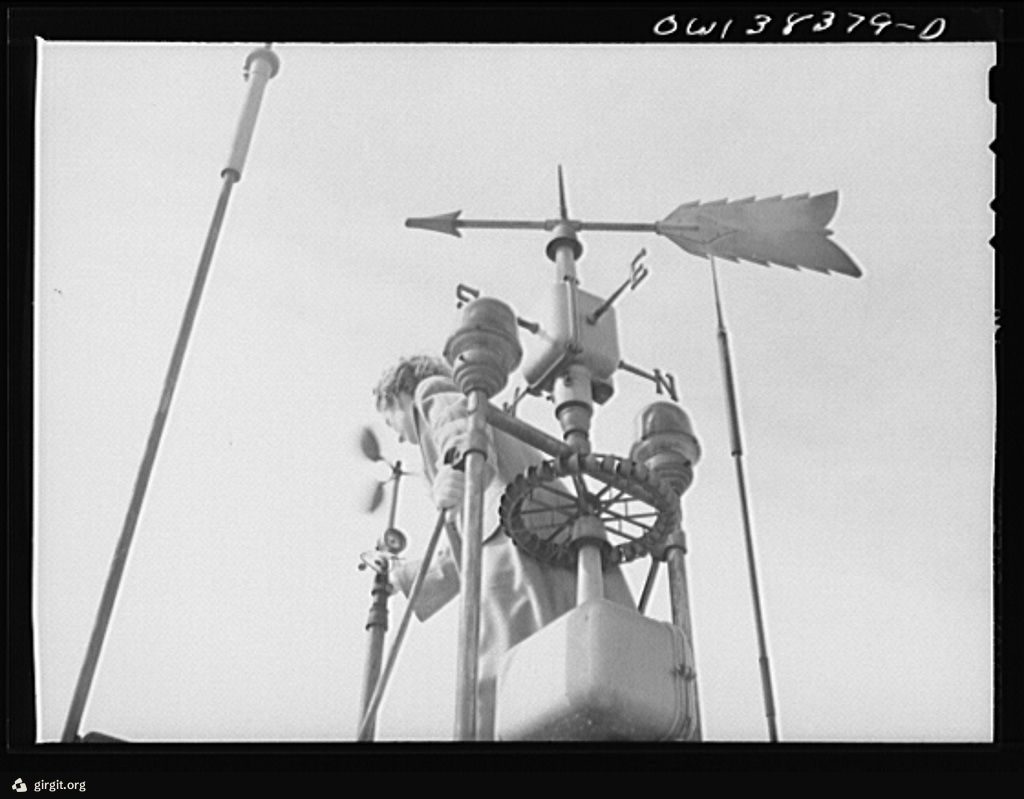 vane: which wayspinning cups: how fast
Position and displacement vectors
To say where something is on a plane, first pick a fixed point O, the origin. Suppose an object is at point P at time \( t \). Draw a straight line from O to P and put an arrowhead at P. This arrow is the position vector of the object, \( \mathbf{r} = \mathbf{OP} \). Its length is how far P is from O, and it points the way you would look from O to see P.
If the object later reaches P′ at time \( t' \), its new position vector is \( \mathbf{r}' = \mathbf{OP'} \). The arrow that starts at P (its tail) and ends at P′ (its head or tip) is the displacement vector \( \mathbf{PP'} \).
The displacement is always the straight arrow from start to finish. It does not care which road was taken. Picture three ways from your home P to your school Q: straight down the main road, a zigzag through the lanes, or a long loop past the market. All three have the same displacement \( \mathbf{PQ} \), but very different path lengths. So, just as on a line, the magnitude of the displacement is less than or equal to the path length; it is equal only for a straight trip without turning back.
A road sign looks like a vector, a number and an arrow, but read it carefully. The number is the distance along the road, a path length, and the arrow only shows which way the road leaves the junction. The displacement to the town is a straight arrow you would need a map to draw.
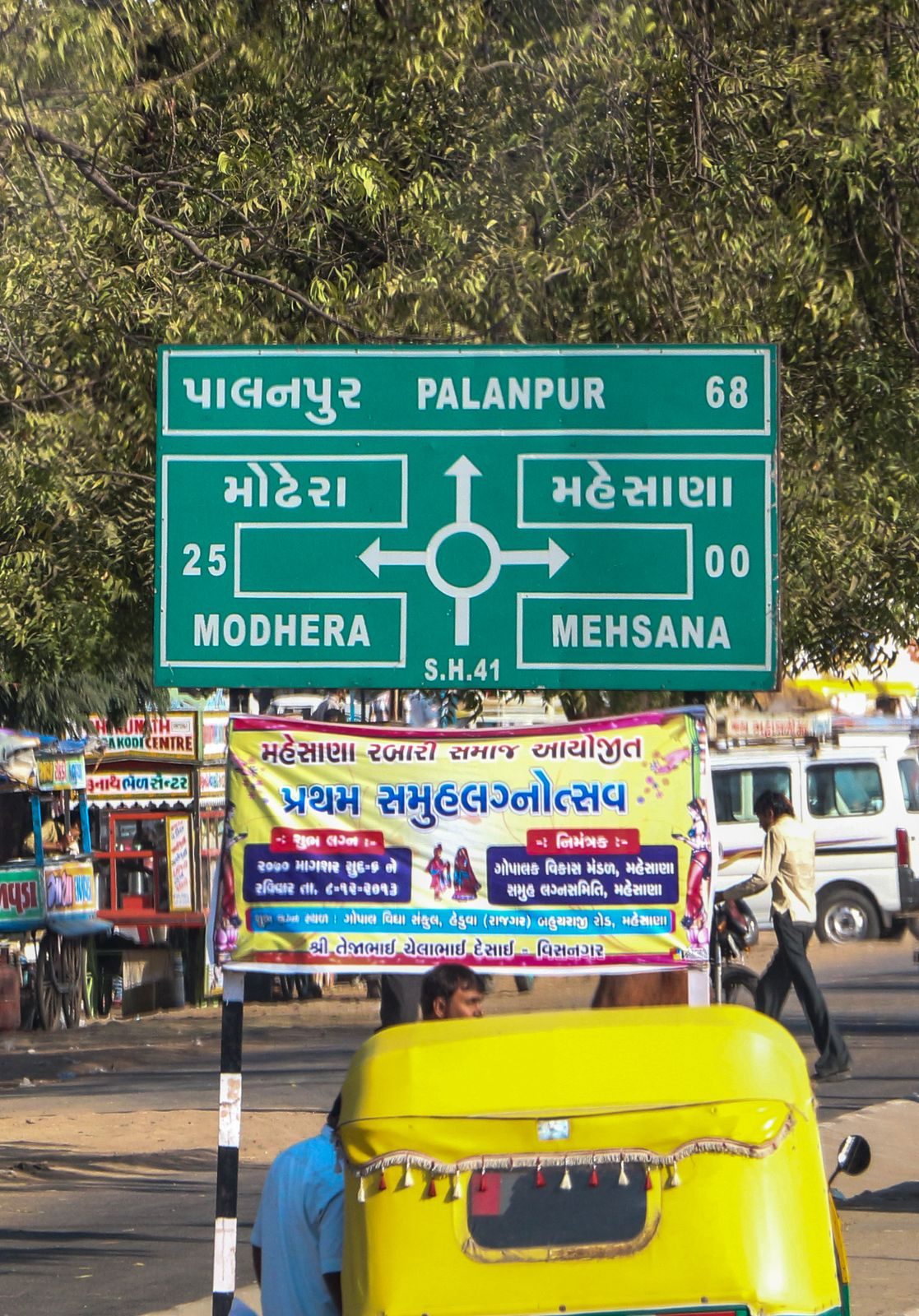 how much: 68 kmwhich way: the arrows
Try it: ride each road to school and watch the two numbers.
Worked example
An auto-rickshaw drives 3 km east, then turns and drives 4 km north. Find the path length and the displacement.
- Path length is everything driven: 3 + 4 = 7 km.
- The two legs make a right angle, so the straight arrow from start to finish is the long side of a right triangle: \( \sqrt{3^2 + 4^2} = \sqrt{25} = \) 5 km.
- Direction: if θ is the angle north of east, \( \tan\theta = 4/3 \), so θ ≈ 53°. The displacement is 5 km, 53° north of east.
When are two vectors equal?
Two vectors \( \mathbf{A} \) and \( \mathbf{B} \) are equal, \( \mathbf{A} = \mathbf{B} \), if and only if they have the same magnitude and the same direction. To test it, slide \( \mathbf{B} \) without turning it (keep it parallel to itself) until its tail sits on the tail of \( \mathbf{A} \). If the heads also land on the same point, the vectors are equal.
Two arrows of the same length that point different ways (say one north, one east) are not equal: after sliding tail to tail, their heads land in different places.
Notice that sliding a vector around does not change it. Vectors that can be moved parallel to themselves like this are called free vectors, and these are the vectors of this chapter. In some problems the exact place or line where a vector acts does matter (a push on a door near the hinge does less than the same push at the handle); such vectors are called localised vectors.
Don't mix these up
- Distance and speed are scalars; displacement and velocity are vectors.
- Having a direction is not enough to be a vector; the quantity must also add by the triangle law. Electric current flows in a direction in a wire, but currents meeting at a junction simply add as numbers, so current is a scalar.
- \( |\mathbf{A}| \) is never negative. The minus in \( -\mathbf{A} \) changes the direction, not the length.
Try it
A girl runs from one end of a diameter of a circular track of radius 70 m to the other end, along the track. What are her path length and the magnitude of her displacement? (Take π = 22/7.)
Answer
Just remember
Conventions and names: nothing to derive. Use the hooks.
- In print a vector is bold, \( \mathbf{A} \); by hand, an arrow on top, \( \vec A \). Plain \( A \) or \( |\mathbf{A}| \) is only its size.
- Bold is loud: it carries the direction too. Plain type is just the number.
- "Vector" and "scalar"
- Both words were coined by W. R. Hamilton in 1846. Vector is Latin for "carrier" (from vehere, to carry, as in vehicle): a vector carries you from here to there. A mosquito that carries malaria is called a vector for the same reason. Scalar comes from scala, a ladder or scale: a scalar is just a mark on a scale.
- Scalars: distance, speed, mass, time, temperature, energy, electric current. Vectors: displacement, velocity, acceleration, force.
- Ask "can it be towards Pune?" If not, it is a scalar. If yes, check it adds head to tail: current fails that check, so it stays a scalar.
- Scalar
- A quantity with size only, like mass or time.
- Vector
- A quantity with size and direction that adds by the triangle law, like displacement.
- Magnitude
- The size of a quantity; for a vector, the length of its arrow.
- Position vector
- The arrow from the origin to where the object is.
- Displacement vector
- The straight arrow from the starting point to the end point.
- Equal vectors
- Vectors with the same magnitude and the same direction.
- Free vector
- A vector that stays the same when slid parallel to itself.
Words to know
Which of these is a vector?
- Speed
- Mass
- Displacement
- Time
You walk 4 km around a park and stop at the gate you started from. What is your displacement?
- 4 km
- Zero
- It depends on the shape of the park
Arrow A is 5 units long and points north. Arrow B is 5 units long and points east. Are they equal vectors?
- Yes, they have the same magnitude
- No, their directions differ
- Yes, if they start from the same point
Deep dive · optional
What makes an arrow a vector?
Having a size and a direction is not enough. Why the way a quantity adds is the real test, a quantity that has both and still fails it, and the walk in Dublin where the words "vector" and "scalar" began. The exam doesn't need this; it makes the idea stick.
The roots: it is all about adding
- Electric current flows one way along a wire. Why is it not a vector?Because being a vector is not about having a direction. It is about how the quantity adds. Two currents of 3 A and 4 A flowing into a junction always give 7 A out, whatever the angle between the wires. They add like plain numbers.
- Why make "adds by the triangle law" part of the definition?Because everything we do with vectors depends on it: components, the parallelogram, the law of cosines, equations like \( \mathbf{v} = \mathbf{v}_0 + \mathbf{a}t \). A quantity with a direction that added some other way would break every one of those rules.
- Where does the triangle law come from in the first place?From displacements. Walk 3 m east and then 4 m north, and you end up exactly where one straight walk of 5 m would take you. Walk the 4 m first and you end at the same spot. Displacements are the model; a vector is anything that adds the way they do.
- Is there something with a size and a direction that fails the test?Yes: a turn. A rotation has a size (the angle) and a direction (along the axis it turns about). But give a book a quarter turn about one axis and then about another, and it ends up somewhere different from the same two turns done the other way round. Order matters, so turns do not add like displacements.
- So what is the bedrock?A vector is a quantity with a size and a direction that adds like displacements, head to tail, in any order. Any new quantity has to pass that test before we may draw it as an arrow and add it as one.
The turn example has a twist. Make the two turns small and the two orders almost agree: two turns of 10° end about 1.7° apart, and two turns of 1° only about 0.017° apart. Ten times smaller turns, a hundred times smaller gap. Tiny turns therefore do add like vectors, and that is why angular velocity, which is built from tiny turns in tiny times, is a vector even though a big turn is not. You will meet it in Chapter 6.
Notice also that "scalar" does not mean "less important". Mass, energy, time and temperature are scalars, and some of the deepest laws in physics (conservation of energy, for one) are about scalars. A scalar is simply a quantity that one number on a scale can fully describe.
The story
See it
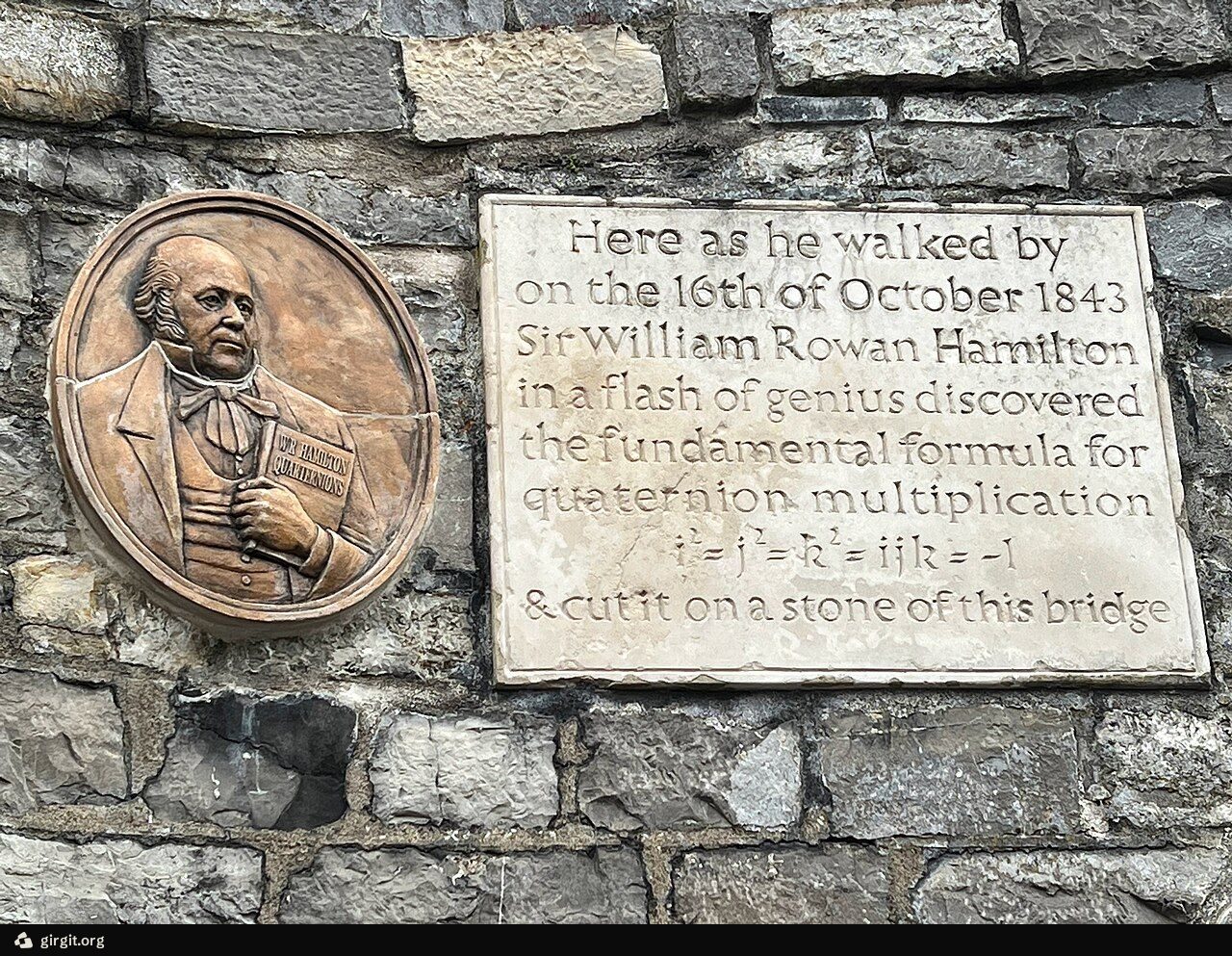 the rule for i, j, kHamilton
Now test a turn the way we tested currents. Guess first, then give two identical books the same two turns in opposite orders.
Solve it
Solve it
A beetle walks along three sides of a regular hexagon of side 2 m, from corner A to the opposite corner D. Find its path length and its displacement. Would the answer change if it went the other way round the hexagon?
Hint
Answer
Solve it
Spot the error. A student writes: "Time has a direction, because it only flows forward. So time is a vector." What is wrong with this?
Answer
Solve it
Predict, then check in the widget. Two quarter turns done in opposite orders end 120° apart. If both turns are made 10°, roughly how far apart will the endings be? And for turns of 1°?
Hint
Answer
Which of these has a direction but is still a scalar?
- Displacement
- Electric current
- Force
Connect it
Connect it
- Motion in a straight line, Chapter 2. On a line, plus and minus were already a tiny vector: a size and one of two directions. What is motion?
- Adding vectors, next. The triangle law, which this page uses as the test, drawn and proved: how do you add two arrows?
- Hamilton's letters. \( \hat i, \hat j, \hat k \) as unit vectors along the axes: breaking a vector into parts.
- Rotation, Chapter 6. Why tiny turns make angular velocity a vector: angular velocity.
- Current, Class 12. A flow with a direction that is still a scalar: electric current.
- Biology. The same Latin word, a "carrier": the Anopheles mosquito is the vector of malaria. Malaria.
Still confused?
Pressure pushes on things. Is pressure a vector?
No. At a point in a fluid, pressure pushes equally in every direction, so it has no single direction of its own. What has a direction is the force that pressure makes on a particular surface: it pushes at right angles to that surface. The force is a vector; the pressure is a scalar.
Is a negative vector one with a negative size?
No. The size of a vector is a length, never negative. \( -\mathbf{A} \) has the same length as \( \mathbf{A} \) and points the opposite way. On a line, a "negative velocity" just means "pointing the negative way".
If a turn is not a vector, why do books draw angular velocity as an arrow?
Because angular velocity is about turning rate, built from tiny turns, and tiny turns do add like vectors (see the widget's "Every size" view). A finite turn of 90° cannot be drawn as an arrow and added; a spin of 2 rad s−1 about an axis can.
Sources
- MacTutor, "William Rowan Hamilton": dates, the walk of 16 October 1843, Broome Bridge, the 1958 plaque.
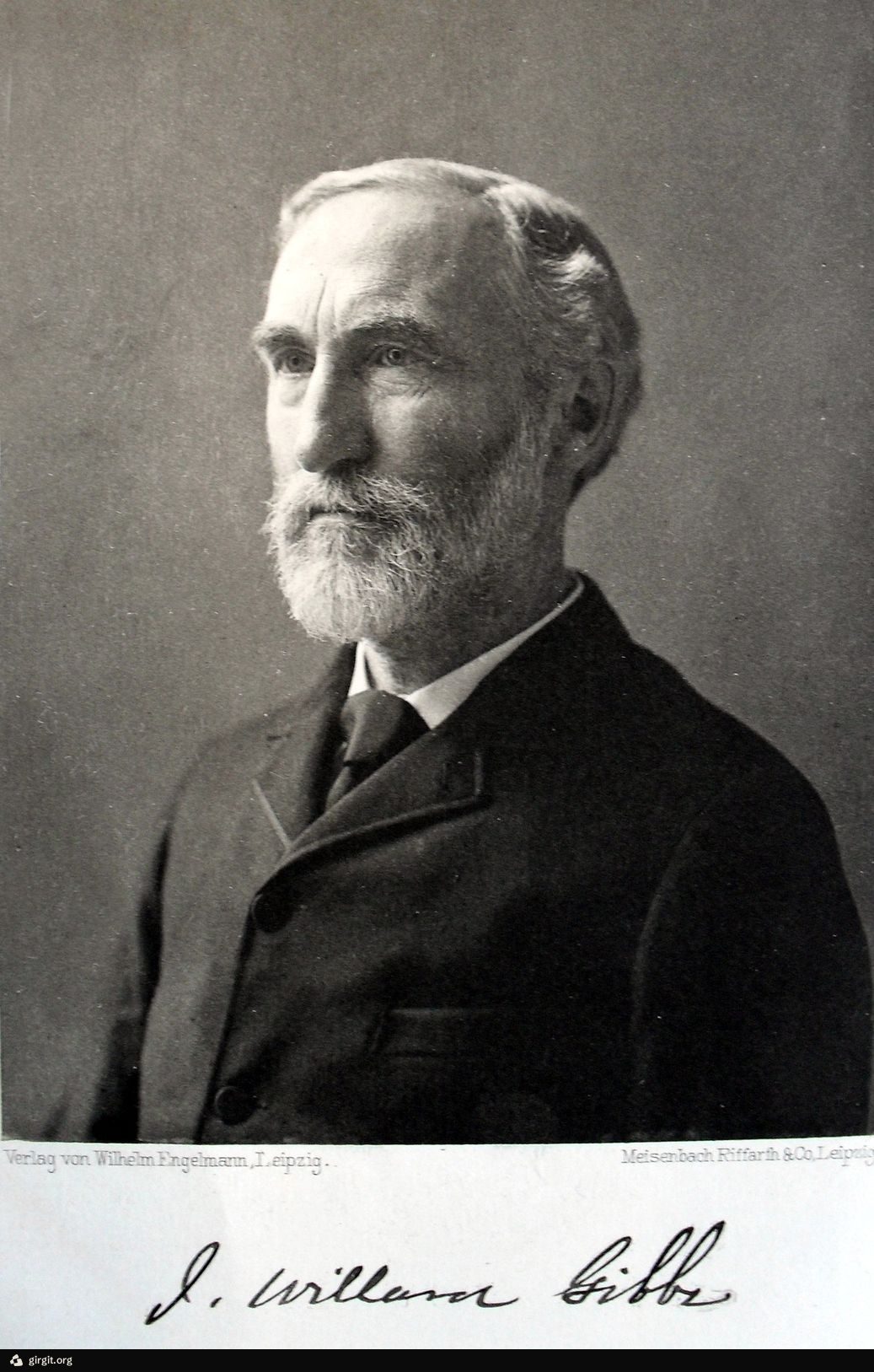
- Wikipedia, "History of quaternions": no trace of the carving remains; Heaviside's words from Electromagnetic Theory; Gibbs and Wilson (1901).
- Wikipedia, "Quaternion": the annual Hamilton Walk since 1989; vector analysis displacing quaternions from the mid-1880s.
- Wiktionary, "vector" and "scalar": Latin vector, carrier, from vehere; scala, ladder; both mathematical senses coined by Hamilton in 1846.
- Wikipedia, "Euclidean vector": the term vector introduced by Hamilton as part of a quaternion; Gibbs's 1881 system.
- MacTutor, "Josiah Willard Gibbs": printed notes for his students in 1881 and 1884, published version in 1901.
Picture and video credits
Show 1 picture and video credits
- mehsana-direction-sign.jpg: Bernard Gagnon, CC BY-SA 3.0
