- 1. How does one cell become a whole body?
- 2. What does a cell do between divisions?
- 3. Do all cells keep dividing?
- 4. Mitosis begins: prophase and metaphase
- 5. Mitosis ends: anaphase, telophase and cytokinesis
- 6. Why do we need mitosis?
- 7. Meiosis: why eggs and sperm get half
- 8. Prophase I: pairing and swapping
- 9. Two divisions, four cells
- Review
8 of 9·NCERT §10.4.1·pp. 126–127·6 min
Prophase I: pairing and swapping
The big ideaIn the long prophase of meiosis I, each chromosome finds its partner, zips up with it and swaps pieces.
In simple words
Every cell has two copies of each instruction thread, one from mum and one from dad. At the start of this special split, the threads wind up and each one finds its matching partner. The two lie side by side, held by a kind of zip. While they are zipped, they swap a few bits with each other. Then the zip opens, but they stay stuck where they swapped, until they let go.
Prophase I is longer and far more complex than the prophase of mitosis. It is divided into five stages, named by what the chromosomes are doing: leptotene, zygotene, pachytene, diplotene and diakinesis. A handy order to remember: Lazy Zebras Prefer Dining Daily.
Leptotene: thin threads
In leptotene ("thin thread"), the chromosomes slowly become visible under the light microscope. They keep condensing all through this stage.
Zygotene: pairing up
In zygotene ("paired thread"), the chromosomes start pairing. This pairing is called synapsis. Each chromosome finds its homologue, the matching chromosome from the other parent.
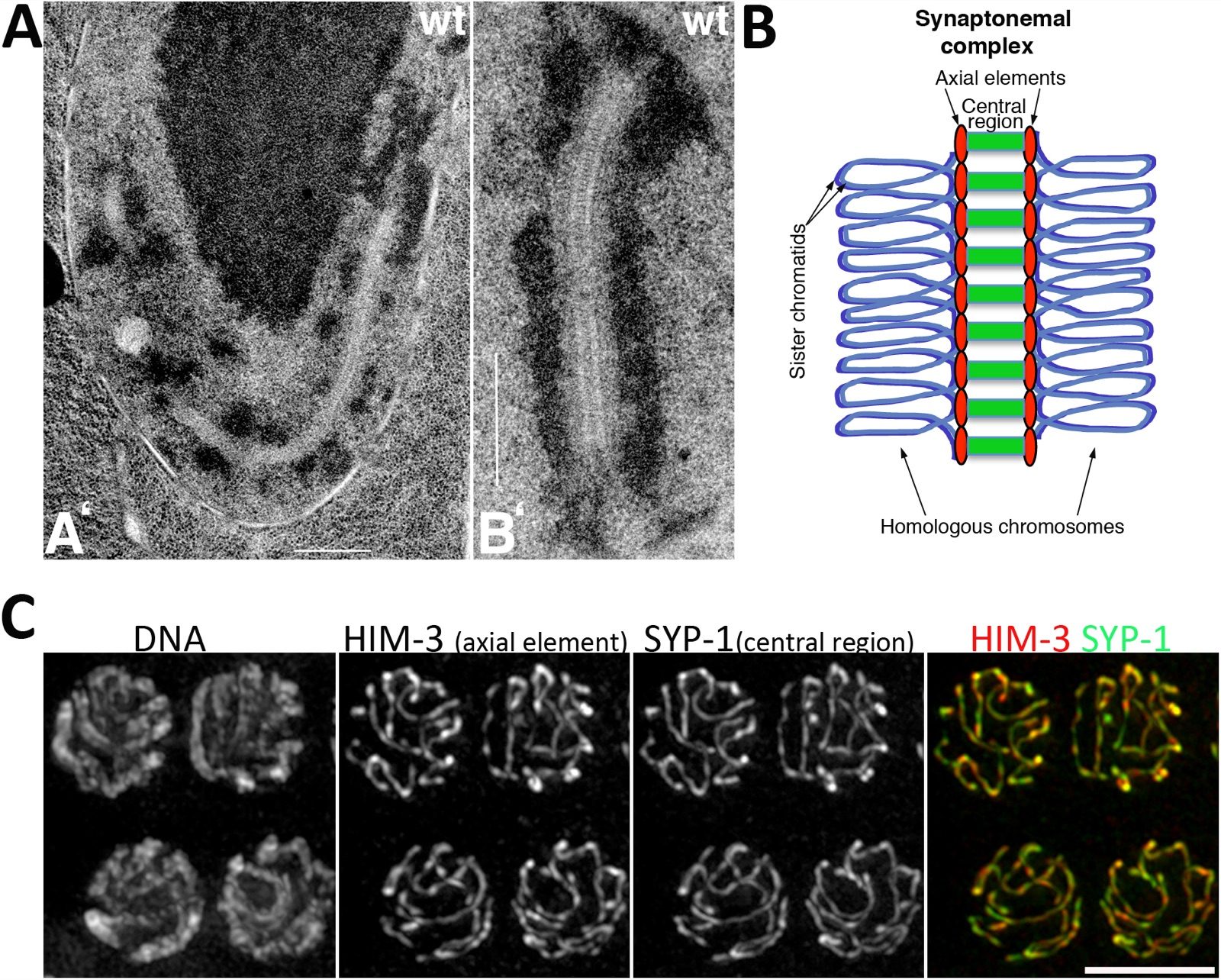
Electron micrographs show that synapsis comes with a ladder-like protein structure between the pair, the synaptonemal complex. Two homologues joined by synapsis make one unit, the bivalent, also called a tetrad because it holds four chromatids. Bivalents are seen more clearly in the next stage.
Textbook check · §10.4.1Homologues are homologous even when unpaired
- The textbook says
- Chromosomes start pairing together (synapsis); such paired chromosomes are called homologous chromosomes.
- What we know now
- Homologous chromosomes are the matching pair, one inherited from each parent, carrying the same genes in the same order. They are homologous whether or not they are paired, in every diploid cell, all the time. Pairing does not make them homologous; the paired couple is called a bivalent.Source: Homologous chromosome
- In the exam
- Synapsis is the pairing of homologous chromosomes; the paired unit is a bivalent or tetrad.
Pachytene: swapping pieces
Leptotene and zygotene are short. Pachytene ("thick thread") lasts much longer. The four chromatids of each bivalent become distinct, so the tetrads are clear.
Small recombination nodules appear. They mark the spots where crossing over takes place: a non-sister chromatid of one homologue trades a stretch of genetic material with a non-sister chromatid of its partner. It is carried out by enzymes; the textbook names the enzyme recombinase.
Crossing over gives recombination: new mixes of genes on each chromosome. By the end of pachytene, recombination is complete, and the homologues stay linked at the places where they crossed over.
Try it: drag where the chromatids cross, and see which ones come out with a new mix.
Textbook check · §10.4.1Crossing over takes a team of enzymes
- The textbook says
- Crossing over is an enzyme-mediated process and the enzyme involved is called recombinase.
- What we know now
- It takes a team. An enzyme called Spo11 first cuts the DNA of one chromatid; then recombinases, chiefly Dmc1 and Rad51, guide the broken end to find and invade the matching stretch on a non-sister chromatid, and many more proteins finish the swap.Source: DMC1 (meiotic recombinase)
- In the exam
- Write recombinase.
Diplotene: the zip opens
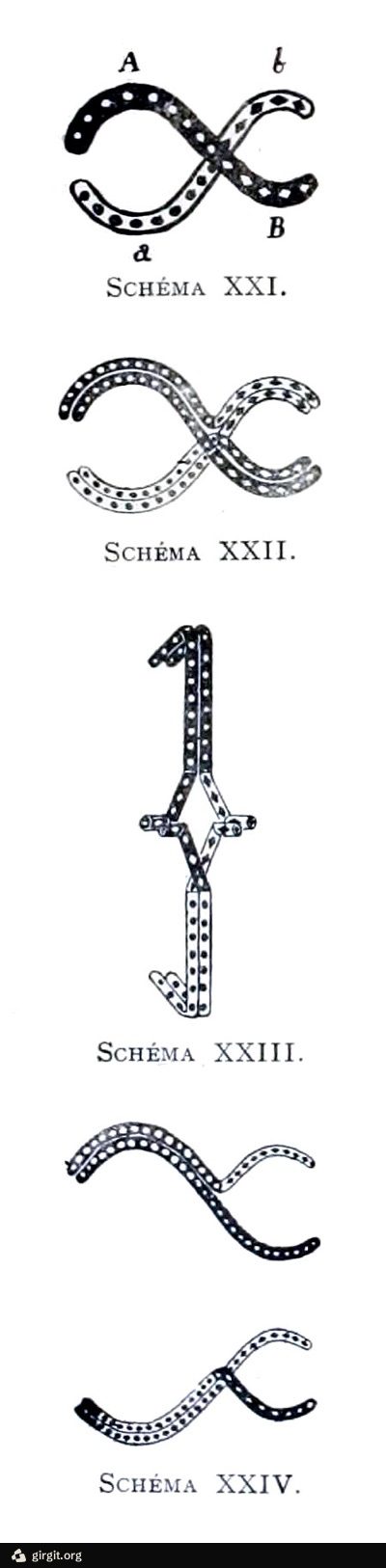
Diplotene ("double thread") starts when the synaptonemal complex dissolves. The recombined homologues of each bivalent start to pull apart, except at the places where they crossed over. These X-shaped links are the chiasmata (one: chiasma).
In the oocytes (egg cells) of some vertebrates, this stage goes on for months, even years. In a woman, the eggs in the ovaries wait in diplotene from before she is born until each one is released, up to fifty years later.
 chiasmachiasma
Diakinesis: ready to split
Diakinesis is the last stage. It is marked by terminalisation of chiasmata, the chiasmata moving towards the ends of the chromosomes. The chromosomes finish condensing, and the meiotic spindle is built so the homologues can be pulled apart. Before diakinesis ends, the nucleolus is gone and the nuclear envelope has broken down. Diakinesis leads into metaphase I.
Textbook check · §10.4.1Chiasmata do not always slide to the ends
- The textbook says
- Diakinesis is marked by terminalisation of chiasmata.
- What we know now
- "Terminalisation", the idea that chiasmata slide along the chromosome to its tips, is a classical claim that later studies questioned. Careful counts in mice, grasshoppers and some bugs found that chiasmata stay where the crossovers happened; in maize, true terminalisation has been seen. So it happens in some species but is not a universal rule.Source: Fox, Heredity 1989 (grasshopper) · John, Chromosoma 1976, "Myths and mechanisms of meiosis"
- In the exam
- Terminalisation of chiasmata is the textbook marker of diakinesis. Write it.
Now all five stages in one go: slide through prophase I and watch one pair.
| Stage | What to remember |
|---|---|
| Leptotene | Chromosomes become visible, keep condensing |
| Zygotene | Synapsis, synaptonemal complex, bivalents |
| Pachytene | Tetrads clear, recombination nodules, crossing over (recombinase) |
| Diplotene | Synaptonemal complex dissolves, chiasmata seen |
| Diakinesis | Terminalisation, spindle forms, nucleolus and envelope go |
- Synapsis
- Homologous chromosomes pairing up, in zygotene.
- Synaptonemal complex
- The protein "zip" that holds a synapsed pair together.
- Bivalent (tetrad)
- A paired couple of homologues: two chromosomes, four chromatids.
- Crossing over
- Swapping pieces between non-sister chromatids, in pachytene.
- Recombination nodules
- Small bodies marking where crossing over happens.
- Chiasmata
- X-shaped links where homologues crossed over, seen in diplotene.
- Terminalisation
- Chiasmata moving to the chromosome ends, in diakinesis.
Words to know
Crossing over swaps pieces between
- sister chromatids of one chromosome
- non-sister chromatids of homologous chromosomes
- any two chromosomes that touch
Crossing over happens in pachytene, but chiasmata are first seen in diplotene. Why the delay?
- Crossing over only finishes in diplotene
- The pair is zipped tight in pachytene; the links show only when the homologues pull apart
- Chiasmata are made by a new enzyme in diplotene
Which stage is marked by the dissolution of the synaptonemal complex?
- Zygotene
- Pachytene
- Diplotene
- Diakinesis
Picture and video credits
Show 1 picture and video credits
- synaptonemal-complex-tem.jpg: Hillers K.J., Jantsch V., Martinez-Perez E., Yanowitz J.L., CC BY 2.5
